
The Daily Broadcast: From Canadian Labs to Cosmic Spirals: New Frontiers in Space Tech and Discovery

NordSpace Opens New Space Systems Lab Ahead of Terra Nova Launch
Canadian space startup NordSpace is stepping up its game with the launch of a new in-house Space Systems Lab (SSL) in Montreal. Previously known for its work on launch vehicles and spaceport infrastructure, the company is now expanding into full spacecraft development—a strategic move mirroring industry leaders like SpaceX and Rocket Lab. The SSL features an ISO5 clean room, thermal vacuum chamber, vibration table, and is staffed by engineers with real-world space systems experience.
The lab’s first project is the self-funded Terra Nova mission, a dual-use satellite designed for both defense and commercial Earth observation. It will carry the Chronos Camera Imager with on-edge AI processing and test NordSpace’s own Zephyr-EP electric propulsion system—small, stackable Hall-effect thrusters generating about 50 millinewtons of thrust. Slated to fly aboard SpaceX’s Transporter-17 rideshare mission no earlier than June 2026, Terra Nova marks a significant milestone for Canada’s growing commercial space sector. As CEO Rahul Goel put it, “Building spacecraft in parallel with our launch vehicles ensures that we can support customers throughout the entire mission lifecycle.” So while other countries chase moonshots, Canada might just be quietly building the next generation of orbital know-how—one clean room at a time.
JWST Spots Ancient Spiral Galaxy That Shouldn’t Exist
In a discovery that could rewrite parts of galaxy formation theory, the James Webb Space Telescope (JWST) has identified a massive, mature spiral galaxy—dubbed Alaknanda—that existed when the universe was just 1.5 billion years old. Named after a Himalayan river (paired culturally with the Mandakini, the Hindi name for the Milky Way), this galaxy looks remarkably like our own, complete with well-defined spiral arms and a stable disk structure.
That’s surprising because current models suggest galaxies in the early universe were chaotic, clumpy, and still assembling through violent mergers—not yet settled into orderly spirals. Alaknanda’s existence implies that some galaxies matured far faster than astronomers expected. The discovery was made possible by gravitational lensing from the Abell 2744 galaxy cluster, which magnified Alaknanda’s light enough for JWST’s infrared instruments to resolve its structure. While more observations are needed, this find hints that the cosmic rulebook might need a few footnotes—or perhaps a new chapter. Either way, it’s a reminder that even in a field as precise as astrophysics, the universe loves to keep us humble.
NASA Tests Mars-Ready Drones in Earth’s Harshest Deserts
Before sending autonomous flyers to Mars, NASA is putting them through their paces in some of Earth’s most Mars-like environments—including Death Valley and the Mojave Desert. As part of 25 new technology projects under the Mars Exploration Program, teams are trialing drones, legged robots, and winged flyer concepts to refine navigation software that will one day operate independently on the Red Planet.
Unlike Earth, Mars lacks GPS, reliable landmarks, and thick atmosphere—making autonomous navigation extremely challenging. These desert trials simulate those conditions by testing how well systems can map terrain, avoid obstacles, and make real-time decisions with minimal human input. The goal is to develop “perception-aware” autonomy that allows future Mars aircraft to explore cliffs, caves, and craters inaccessible to rovers. While today’s tests involve engineers in windblown jackets chasing drones across sand dunes, tomorrow’s missions could feature fleets of aerial scouts relaying data from Martian canyons. It’s not quite The Martian, but it’s close—and it’s all in preparation for a future where Mars exploration takes flight, literally.
Citations
- “NordSpace announces its Space Systems Lab and provides new details on Terra Nova mission” – https://spaceq.ca/nordspace-announces-its-space-systems-lab-and-provides-new-details-on-terra-nova-mission/
- “JWST spots early Milky Way style spiral galaxy Alaknanda” – https://www.spacedaily.com/reports/JWST_spots_early_Milky_Way_style_spiral_galaxy_Alaknanda_999.html
- “NASA desert drone trials refine navigation software for future Mars explorers” – https://www.marsdaily.com/reports/NASA_desert_drone_trials_refine_navigation_software_for_future_Mars_explorers_999.html
Upcoming Launches
Unknown Payload
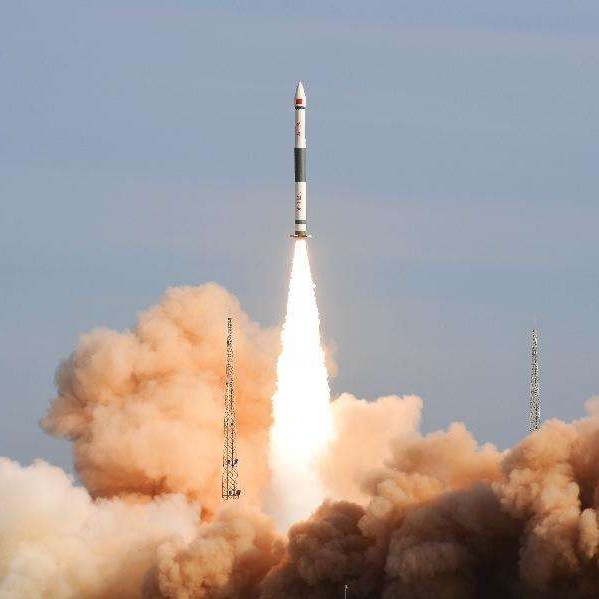
Launch Provider: ExPace – Commercial
Launch Date: December 4, 2025
Launch Time: 9:00 AM UTC
Vehicle: Kuaizhou-1A
Brief: Details TBD.
Starlink Group 11-25

Launch Provider: SpaceX – Commercial
Launch Date: December 4, 2025
Launch Time: 6:12 PM UTC
Vehicle: Falcon 9
Brief: A batch of 28 satellites for the Starlink mega-constellation – SpaceX’s project for space-based Internet communication system.
Unknown Payload
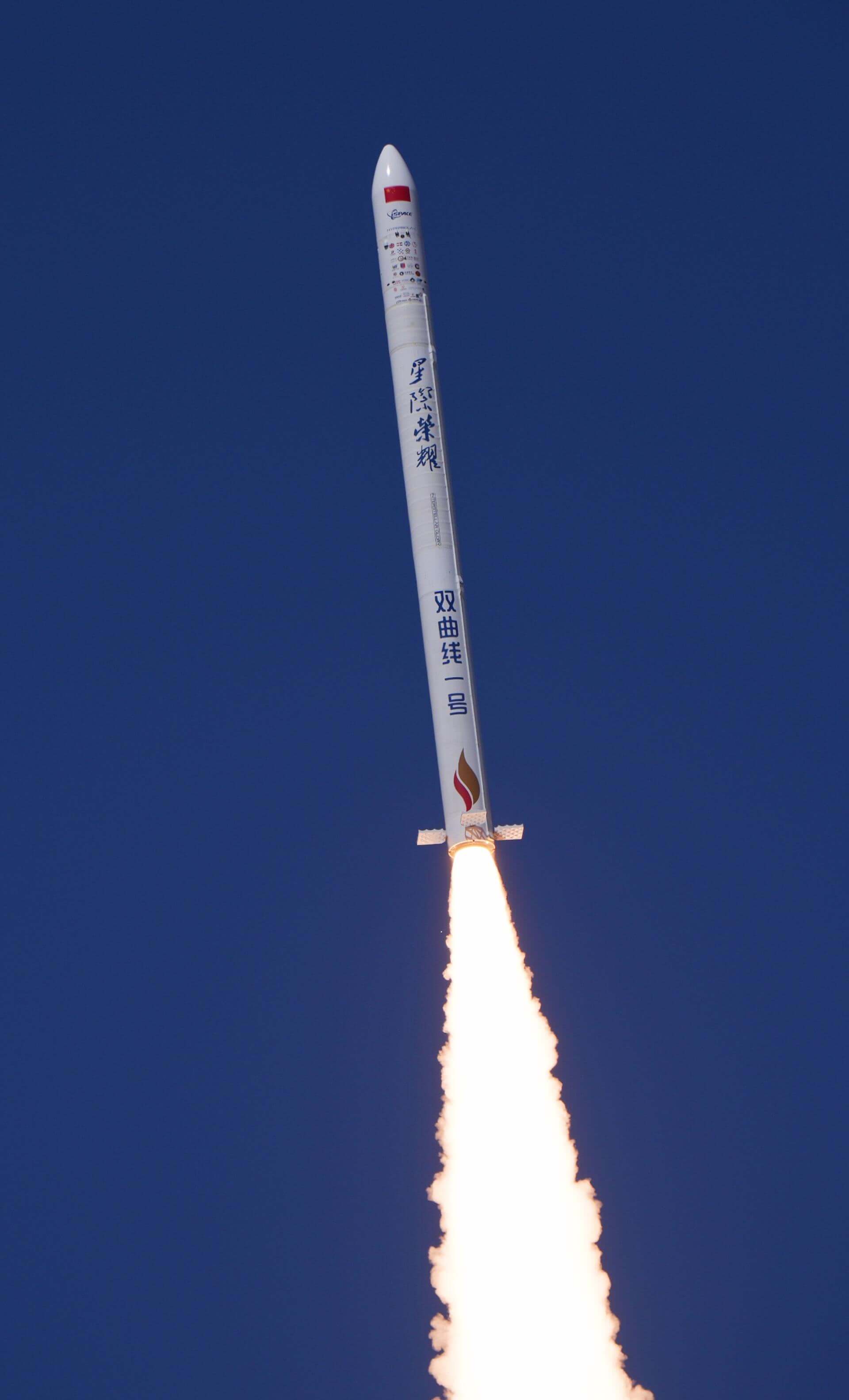
Launch Provider: i-Space – Commercial
Launch Date: December 6, 2025
Launch Time: 4:00 AM UTC
Vehicle: Hyperbola-1
Brief: Details TBD.
Unknown Payload
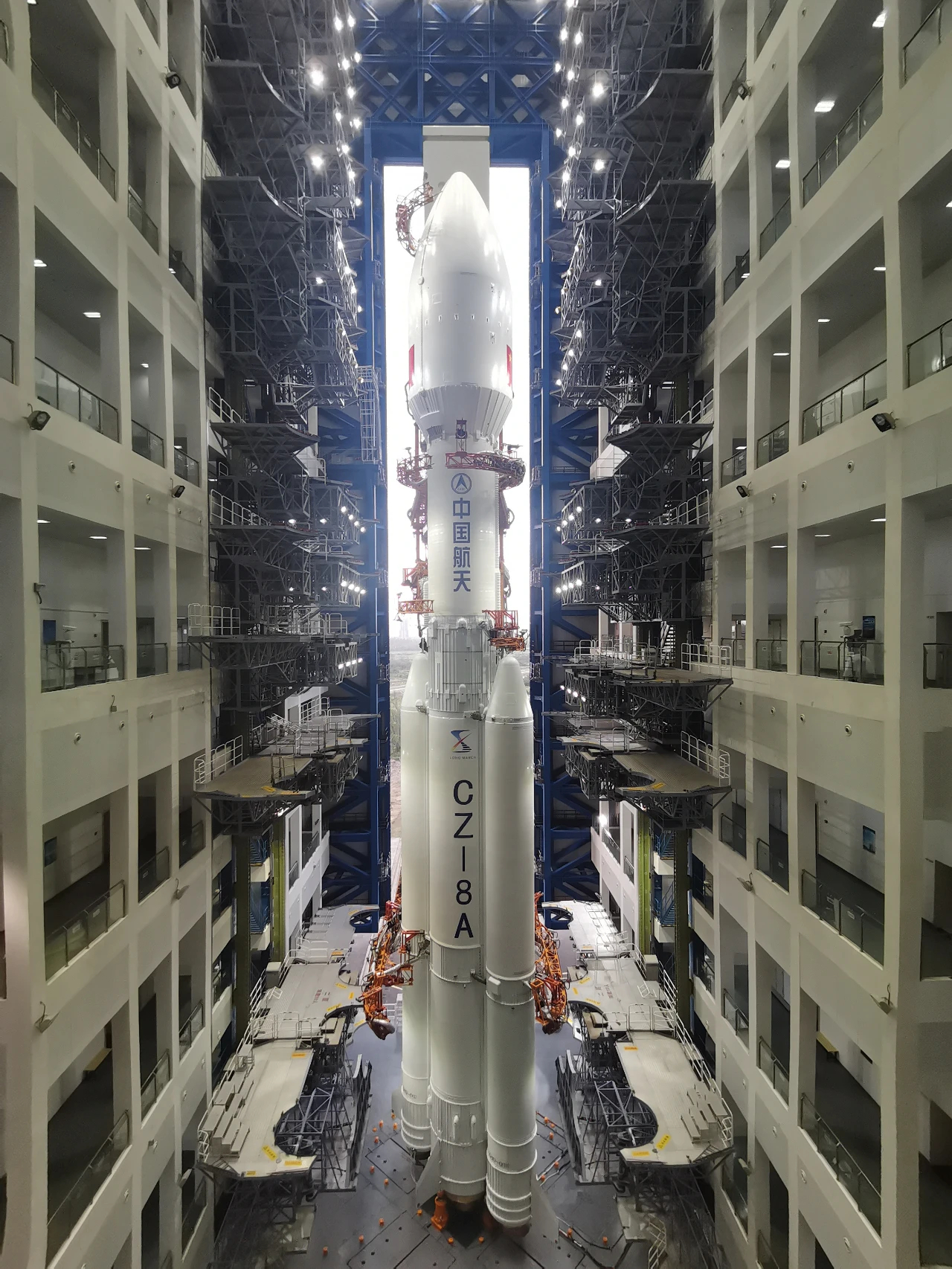
Launch Provider: China Aerospace Science and Technology Corporation – Government
Launch Date: December 6, 2025
Launch Time: 7:50 AM UTC
Vehicle: Long March 8A
Brief: Details TBD.
Michibiki 5 (QZS-5)
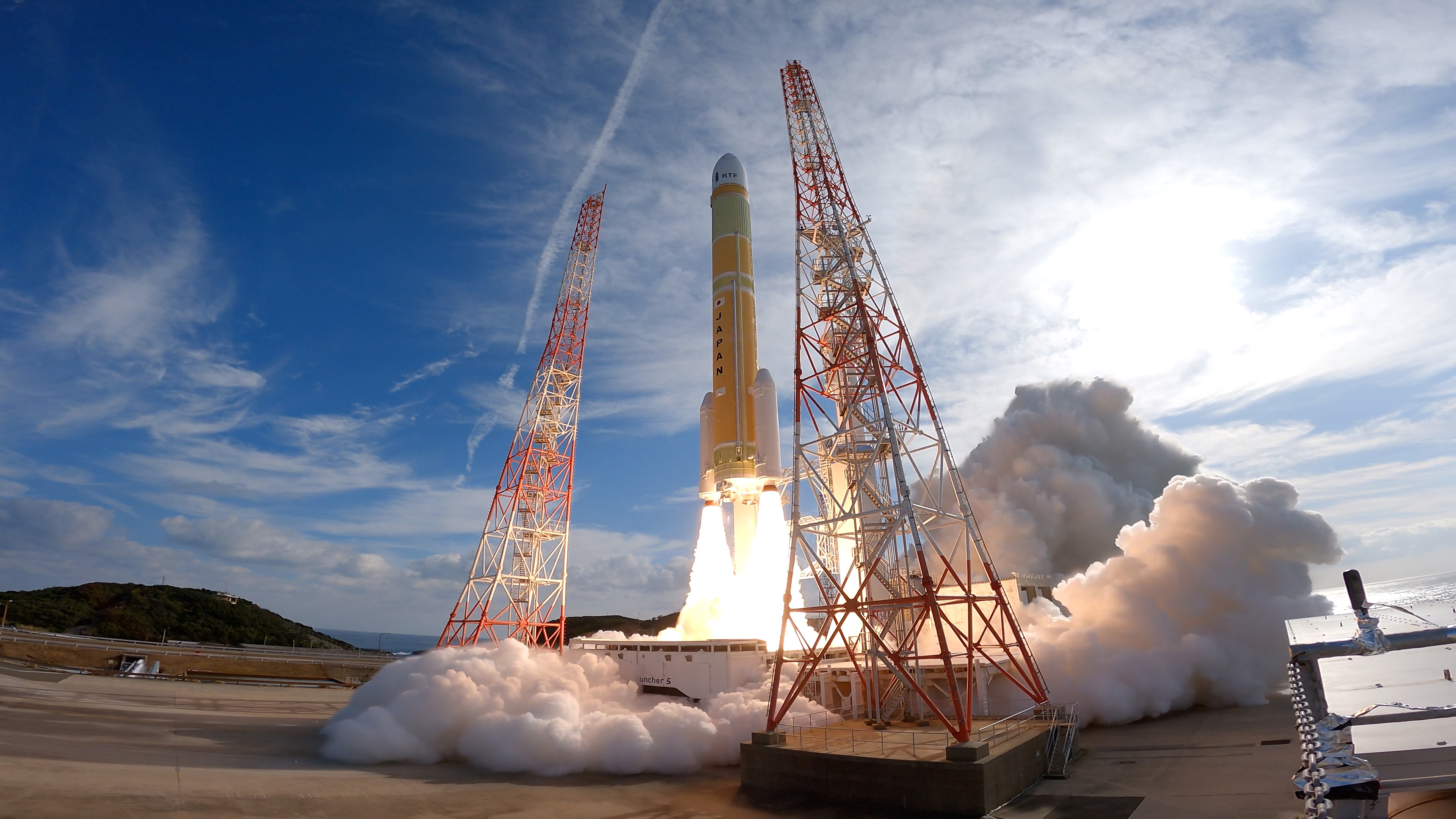
Launch Provider: Mitsubishi Heavy Industries – Commercial
Launch Date: December 7, 2025
Launch Time: 2:30 AM UTC
Vehicle: H3-22
Brief: QZSS (Quasi Zenith Satellite System) is a Japanese satellite navigation system operating from inclined, elliptical geosynchronous orbits to achieve optimal high-elevation visibility in urban canyons and mountainous areas. The navigation system objective is to broadcast GPS-interoperable and augmentation signals as well as original Japanese (QZSS) signals from a three-spacecraft constellation.
The navigation system objective is to broadcast GPS-interoperable and augmentation signals as well as original Japanese (QZSS) signals from a three-spacecraft constellation in inclined, elliptical geosynchronous orbits.
