
The SpaceX Report: Booster 19 Rises as Transporter-15 Carries 140 Payloads to Orbit

Starship’s Next Chapter Begins Amid B18 Setback
Just over a week after Super Heavy Booster 18 suffered a serious anomaly during a gas system pressure test, SpaceX is already stacking its successor. Booster 19 began assembly on November 27 in Mega Bay 1 at Starbase, Texas, marking a swift rebound from the incident that punctured B18’s side—likely due to a Composite Overwrapped Pressure Vessel (COPV) explosion. While no injuries were reported, the event paused Flight 12 preparations, redirecting focus to the next vehicle in line.
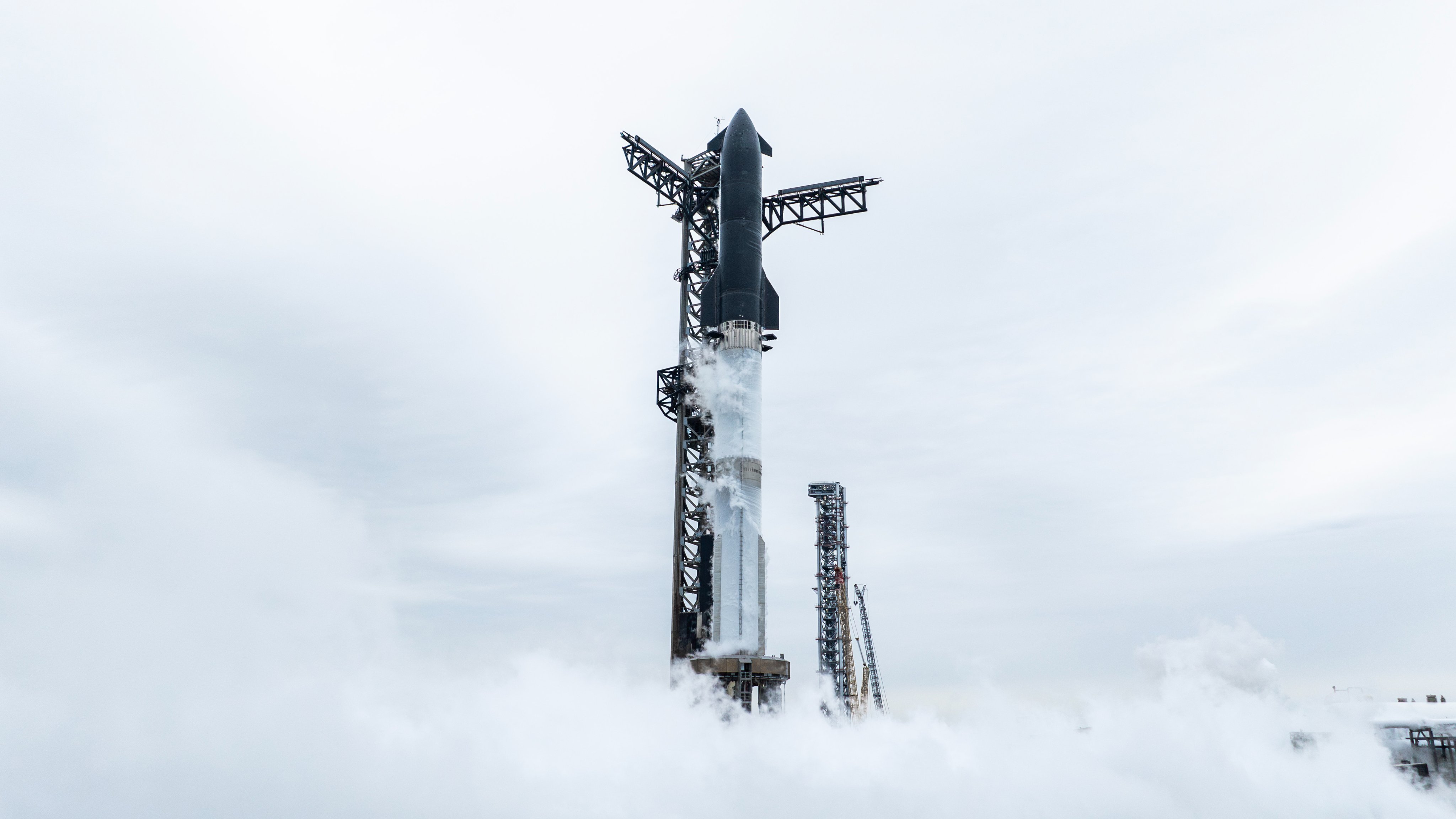
Booster 19 is slated to become the first Block 3 Super Heavy to fly, supporting Starship’s twelfth integrated test flight, still targeted for early 2026. This new iteration incorporates design refinements aimed at improving reliability and performance, though SpaceX hasn’t detailed specific changes publicly. What’s clear is the pace: if stacking in late November leads to cryogenic proof testing in December—as the company has suggested—it would represent the fastest booster build cycle in Starship history, eclipsing even the three-month turnaround of Booster 17.
Meanwhile, Ship 39, the Starship upper stage assigned to Flight 12, remains fully stacked in Mega Bay 2. However, it can’t yet proceed to cryogenic testing because the ship thrust simulator stand is occupied by S39.1, a Block 3 aft test article undergoing structural evaluation. Until that work concludes, Flight 12’s schedule hinges on parallel progress across multiple fronts.
Starbase Gears Up for Flight 12
Infrastructure work at Starbase is advancing in tandem with vehicle production. Pad 2—the newer of Starbase’s two orbital launch mounts—is nearing operational readiness. Recently, crews installed the main arm of the ship quick-disconnect (SQD) system onto the integration tower. The next step involves attaching the arm extension that houses the actual disconnect plate interfacing with Starship.
Other key components remain outstanding: one liquid methane pump is still missing from the ship-side tank farm, and a final blast door needs installation on the launch mount’s service structure. Perhaps most visibly, all 20 hold-down clamp doors for the launch mount have yet to be fitted—a critical system for securing Starship during propellant loading and engine start-up.
Pad 1, the original orbital launch mount, is idle while teams clear debris from the B18 anomaly and repair damage to the thrust simulation cryo stand. Hydraulic systems were reportedly compromised during the incident, and full restoration won’t occur until Booster 18’s remains are fully removed—work delayed slightly by the U.S. Thanksgiving holiday.
Despite these hurdles, the pace of construction suggests SpaceX remains committed to an aggressive Flight 12 timeline. With Pad 2 nearly complete and Booster 19 rising quickly, the stage is being set—literally—for Starship’s next leap.
Falcon 9 Hits New Reusability Milestone
The workhorse Falcon 9 enjoyed a banner week, notching two successful launches and a historic reuse achievement. On November 28, booster B1071 completed its 30th flight during the Transporter-15 rideshare mission from Vandenberg Space Force Base—a feat Elon Musk celebrated on X, calling it “previously impossible.” B1071 is now the second Falcon booster to reach 30 missions, trailing only B1067, which achieved its 31st flight in October.
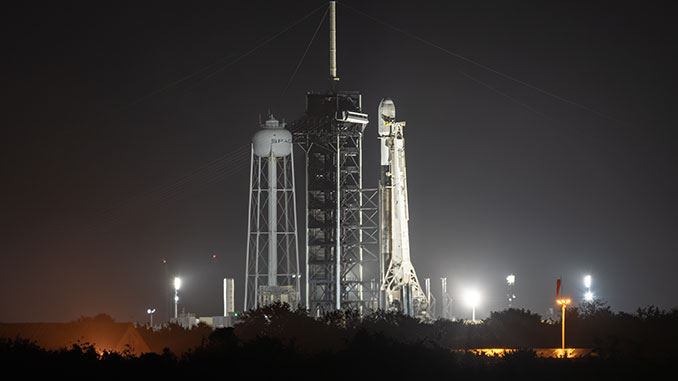
Transporter-15 delivered 140 payloads to sun-synchronous orbit, including satellites from Planet Labs, ICEYE, the Taiwanese Space Agency, and Varda Space’s Winnebago-5 reentry capsule. The mission marked SpaceX’s sixth dedicated rideshare flight of 2025 and its 157th launch of the year. Just days later, on December 1 at 12:00 a.m. EST, Falcon 9 launched 29 Starlink satellites from Kennedy Space Center’s LC-39A. That flight, using booster B1095 on its fourth mission, also marked SpaceX’s 200th consecutive successful booster landing.

Starlink Goes Disaster-Relief Mode
Beyond launches, SpaceX made headlines for its humanitarian stance on Starlink. In a November 28 tweet, Elon Musk reaffirmed company policy: “SpaceX standard policy is to make Starlink free whenever there is a natural disaster somewhere in the world. It would not be right to profit from misfortune.” The comment followed recent activations in flood-stricken Indonesia and areas affected by Cyclone Ditwah in Sri Lanka.
This approach underscores Starlink’s evolving role—not just as a commercial broadband service, but as emergency infrastructure. With over 2,800 satellites in orbit and weekly deployments continuing, the network’s global reach is increasingly leveraged during crises where terrestrial communications fail. Meanwhile, the December 1 Starlink launch (Group 6-86) added to this growing constellation, maintaining SpaceX’s rapid deployment cadence from both Florida and California.
Citations
- “Booster 19 stacking begins as SpaceX pushes forward from B18 anomaly” – https://www.nasaspaceflight.com/2025/11/booster-19-stacking-spacex-forward/
- “SpaceX’s Falcon 9 launches 140 payloads on Transporter-15” – https://www.nasaspaceflight.com/2025/11/transporter-15/
- “Live coverage: SpaceX kicks off December with midnight Falcon 9 rocket launch” – https://spaceflightnow.com/2025/11/30/live-coverage-spacex-kicks-off-december-with-midnight-falcon-9-rocket-launch/
- “Elon Musk gives nod to SpaceX’s massive, previously impossible feat” – https://www.teslarati.com/elon-musk-gives-nod-to-spacexs-massive-previously-impossible-feat/
- “Elon Musk shares SpaceX’s directive that destroys a prevalent media narrative” – https://www.teslarati.com/elon-musk-shares-spacex-directive-destroys-media-narrative/
- “Launch Roundup: Soyuz to launch crew; Vega C and Falcon 9 to launch customer missions” – https://www.nasaspaceflight.com/2025/11/launch-roundup-112525/
Upcoming Starship Launch
Flight 12
Launch Provider: SpaceX – Commercial
Launch Date: January 31, 2026
Launch Time: 1/31/2026, 12:00 AM UTC
Vehicle: Starship
Brief: 12th test flight of the two-stage Starship launch vehicle. Maiden Flight of Starship V3
