
The SpaceX Report: Booster 18 Busts, But Starlink Soars
Starship Stumbles in First V3 Test
SpaceX’s next-generation Starship program hit a snag this week when Booster 18—the first Super Heavy vehicle of the upgraded “Version 3” design—suffered significant damage during a gas-system pressure test at Starbase, Texas, on Friday, November 21. According to SpaceX’s official statement, the anomaly occurred during pre-structural proof testing, with no propellant onboard and no engines installed. Photos from the aftermath reveal a large rupture in the liquid oxygen (LOX) tank, likely originating from a failure in one of the composite overwrapped pressure vessels (COPVs) along a chine structure.
While unsettling, the incident occurred in a controlled ground test rather than during a high-stakes static fire or flight—potentially sparing SpaceX more serious setbacks. The company stressed that no personnel were injured, thanks to established safety protocols that keep teams at a distance during such tests. Despite the damage, Booster 18 remained upright, supported by its new liquid methane transfer tube, though its future appears limited to forensic analysis or scrapping.
This setback delays the debut of Starship’s V3 architecture, which features a slightly longer booster (by about one meter), redesigned propellant systems, and structural enhancements aimed at supporting higher launch cadence and eventual Mars missions. The anomaly also postpones the commissioning of Pad 2 at Starbase, which was slated to host Booster 18 for integrated testing. SpaceX now appears to be pivoting to Booster 19, though stacking hasn’t yet begun in Mega Bay 1. The company still targets Starship’s twelfth flight test for early 2026, but that timeline may shift depending on the investigation’s findings.
Notably, Elon Musk recently highlighted Starship’s long-term role in deploying solar-powered AI satellites, suggesting the vehicle could deliver “300–500 GW per year” of orbital computing infrastructure—though that vision remains distant amid current hardware hurdles.

Pad 2 Prep Continues Despite Setback
Even as Booster 18 lay crumpled, work pressed forward at Starbase’s Pad 2—the designated launch site for the new Starship V3 vehicles. Over the past week, SpaceX completed key installations on the pad’s service tower, including middle hood sections for the booster quick disconnects and hydraulic lines leading to the Ship Quick Disconnect (SQD) arm level. The SQD arm itself, recently rolled out from the Sanchez lot, has been outfitted with additional pipework and swivel joints ahead of mounting.
Interestingly, despite Starship V3’s increased length, the SQD arm on Pad 2 will be mounted lower than on Pad 1. This adjustment accounts for the redesigned launch mount and flame trench, which position the entire stack several meters lower to accommodate a more robust water deluge system and launch deck. SpaceX has already conducted preliminary tests on the deluge system and flame bucket, with more expected soon.
Meanwhile, demolition of the original Pad 1 is well underway. Most of the launch mount’s steel legs have been toppled, clearing the site for a rebuild aligned with the new standardized Starship pad architecture. This “reset” signals SpaceX’s commitment to iterating infrastructure as aggressively as its vehicles—a necessity if the company hopes to achieve its ambitious launch cadence goals.

Falcon 9 Keeps Canada (and Everyone Else) Online
While Starship grabbed headlines for the wrong reasons, Falcon 9 continued its relentless march, completing three successful Starlink missions this week alone. On Saturday, November 22, a Falcon 9 launched 29 Starlink satellites from Cape Canaveral—marking the 150th Falcon 9 mission of 2025. Just hours earlier, another Falcon 9 deployed 29 more from the same site, and before that, a third mission lifted off from Vandenberg Space Force Base in California on Sunday, November 23, carrying 28 Starlink v2 Mini satellites.
The Vandenberg launch used booster B1100 on its maiden flight, which successfully landed on the droneship Of Course I Still Love You in the Pacific. Meanwhile, the Florida missions utilized flight-proven boosters B1090 (9th flight) and B1080 (23rd flight), further demonstrating SpaceX’s mastery of reusability. These launches contributed to the historic milestone of over 100 orbital missions from Florida’s Space Coast in 2025—a testament to both demand for Starlink and Falcon 9’s reliability.
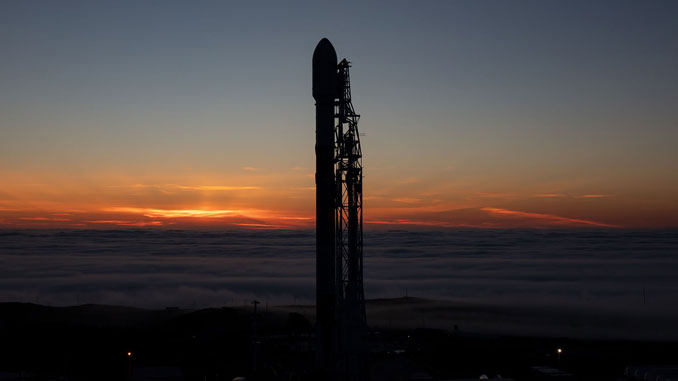
Spire’s Canadian-Linked HyMS Satellite Heads to Orbit
Among the more specialized payloads preparing for flight is Spire Global’s Hyperspectral Microwave Sounder (HyMS) demonstrator, shipped to Vandenberg for an upcoming Falcon 9 “Twilight” mission. While Spire is headquartered in the U.S., the HyMS sensor was developed in collaboration with the UK’s RAL Space and STAR-Dundee Ltd.—a company with strong ties to Canada’s space data ecosystem through its involvement in satellite data processing standards and partnerships with Canadian Earth observation firms.
The HyMS instrument aims to improve weather forecasting by capturing high-resolution atmospheric data—a capability that could eventually benefit Canadian meteorological services, especially in remote northern regions where traditional observation is sparse. Though not a Canadian-built satellite per se, its data may enhance global models used by Environment and Climate Change Canada.
Elsewhere, Starlink continues its global expansion. While not explicitly mentioned in this week’s reports, Canadian users have noted improved speeds and reliability as SpaceX fills out its Gen2 constellation—now exceeding 7,000 active satellites thanks to this week’s launches.

Citations
- “First next-generation Starship booster damaged in testing” – https://spacenews.com/first-next-generation-starship-booster-damaged-in-testing/
- “SpaceX issues statement on Starship V3 Booster 18 anomaly” – https://www.teslarati.com/spacex-issues-statement-on-starship-v3-booster-18-anomaly/
- “Live coverage: SpaceX to launch 28 Starlink satellites from Vandenberg on brand new Falcon 9 rocket” – https://spaceflightnow.com/2025/11/23/live-coverage-spacex-to-launch-28-starlink-satellites-from-vandenberg-on-brand-new-falcon-9-rocket/
- “Next-generation satellites from Spire Global prepared for SpaceX Falcon 9 Twilight mission” – https://www.spacedaily.com/reports/Next_generation_satellites_from_Spire_Global_prepared_for_SpaceX_Falcon_9_Twilight_mission_999.html
- “SpaceX Official Tweet on Booster 18 anomaly” – https://x.com/SpaceX/status/1991889258701885702
- “Elon Musk on Starship and orbital AI satellites” – https://x.com/elonmusk/status/1991215836959228322
- “Preparing pads for SpaceX’s future Starship cadence” – https://www.nasaspaceflight.com/2025/11/preparing-pads-spacexs-starship-cadence/
Upcoming Starship Launch
Flight 12
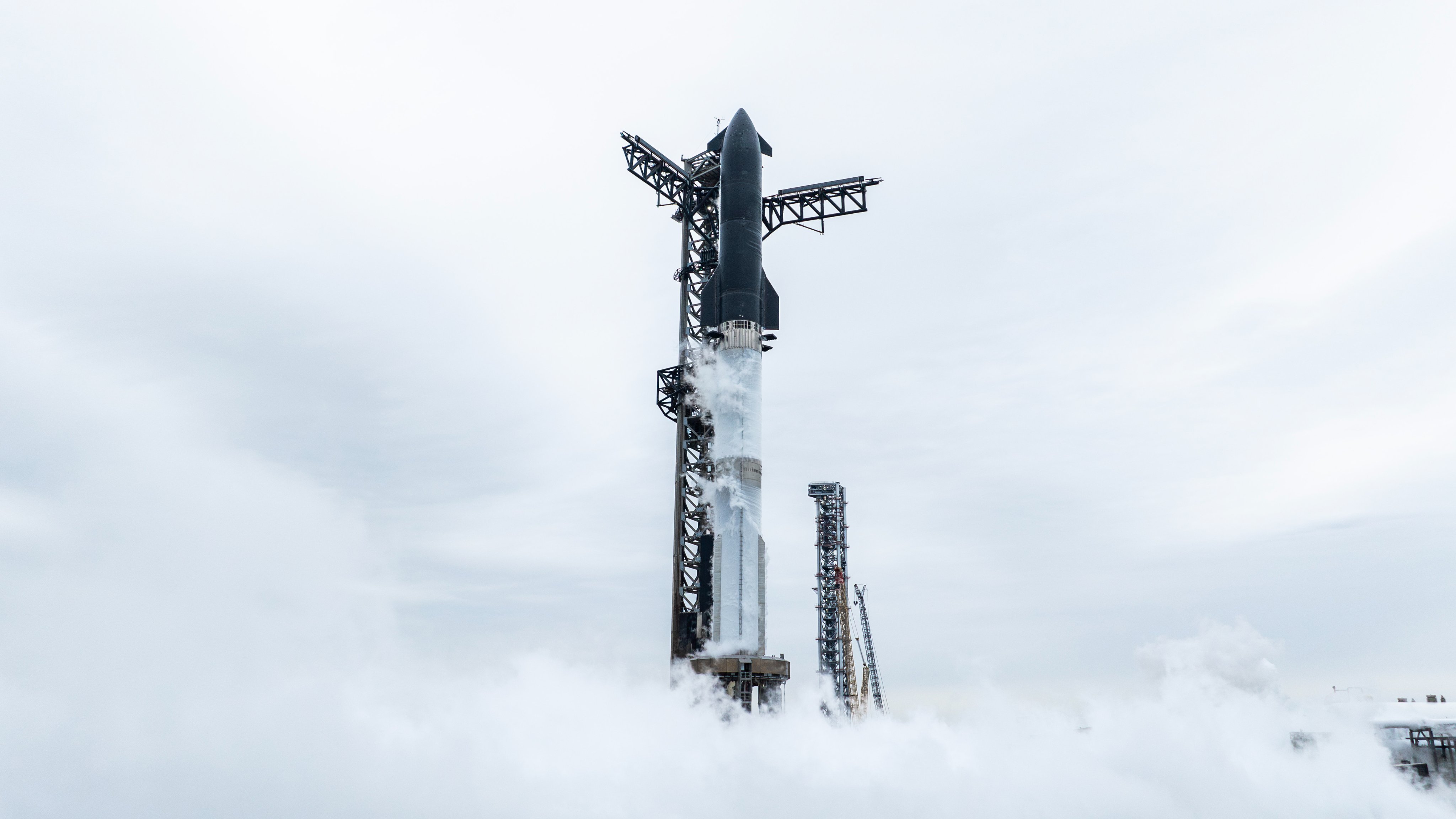
Launch Provider: SpaceX – Commercial
Launch Date: January 31, 2026
Launch Time: 1/31/2026, 12:00 AM UTC
Vehicle: Starship
Brief: 12th test flight of the two-stage Starship launch vehicle. Maiden Flight of Starship V3
