
The Daily Broadcast: Canada Bets Big on Europe, Isaacman Heads Back to Capitol Hill, and Kepler Eyes Laser-Powered Expansion

Canada Bets Big on Europe, Isaacman Heads Back to Capitol Hill, and Kepler Eyes Laser-Powered Expansion
Canada deepens space ties with €500M+ investment in ESA
In a strategic pivot reflecting shifting global dynamics, the Canadian government has committed $528.5 million to the European Space Agency (ESA)—a tenfold increase over previous contributions. Announced by Industry Minister Mélanie Joly at the SpaceBound conference in Ottawa, the investment underscores Canada’s intent to diversify its international space partnerships amid growing economic uncertainty with its traditional ally, the United States. As the only non-European Cooperating State in ESA—a status held since 1979—Canada gains selective access to ESA’s optional programmes, opening doors for Canadian firms in areas like satellite communications, Earth observation, and quantum sensing.
This move aligns with broader federal priorities emphasizing sovereignty, defence, and dual-use technologies. Notably, Quebec-based SBQuantum recently secured an ESA contract to develop quantum diamond magnetometer sensors, illustrating the tangible outcomes this funding could enable. Canadian delegations are already on the ground in Bremen, Germany, ahead of ESA’s Ministerial Council meeting on November 26–27, where program allocations will be finalized. While Canada remains committed to its role in NASA’s Artemis II mission—sending astronaut Jeremy Hansen around the Moon—the new investment signals a deliberate expansion of Canada’s space diplomacy beyond North America.
Isaacman faces second Senate hearing for NASA administrator role
Jared Isaacman, the billionaire entrepreneur and Polaris Program commander, is heading back to Capitol Hill for another confirmation hearing to become NASA’s next administrator. The Senate Commerce Committee has scheduled a second session for next month, following initial testimony that drew both praise for his spaceflight experience and scrutiny over his private-sector background. Isaacman, who funded and commanded the all-civilian Inspiration4 mission, was nominated by President Biden earlier this year and has since engaged with lawmakers on issues ranging from Artemis sustainability to commercial space regulation.
While his nomination enjoys support from key figures like Senator Ted Cruz, concerns remain about potential conflicts of interest given his leadership at Shift4 Payments and involvement with SpaceX-led missions. The second hearing suggests the committee seeks further clarity—perhaps on NASA’s budget trajectory, climate research priorities, or how a private astronaut-turned-administrator would balance public and commercial interests. For Canada, the outcome matters: NASA remains a critical partner in ISS operations, lunar exploration, and Earth science collaborations. A confirmed administrator could accelerate joint planning for post-ISS activities and deep-space initiatives where Canadian robotics and AI expertise may play a role.
Kepler sets January 2026 launch for optical data relay constellation
Toronto-based Kepler Communications is gearing up for a major expansion of its in-orbit connectivity network, with ten 300-kilogram satellites slated for launch in January 2026. The mission, set to lift off aboard a SpaceX Falcon 9 from Vandenberg Space Force Base in California, will deploy the first operational segment of Kepler’s optical data relay constellation. Each satellite will carry at least four optical terminals capable of establishing high-throughput laser links between spacecraft, aircraft, and ground stations—effectively creating a real-time data backbone in low Earth orbit.
This move positions Kepler at the forefront of a growing trend: space-based optical networking, which offers higher bandwidth and greater security than traditional radio-frequency systems. The company, founded in 2015 by Canadian engineers from the University of Toronto, has steadily matured from a CubeSat pioneer to a provider of “space internet” infrastructure. Its system could support everything from Arctic environmental monitoring to military reconnaissance and commercial Earth observation. With Canadian firms increasingly focused on dual-use satellite tech—as highlighted at this week’s SpaceBound conference—Kepler’s upcoming launch exemplifies homegrown innovation scaling to global relevance. The timing also aligns with Canada’s renewed emphasis on sovereign space capabilities and international market access.
Citations
- “Canada Commits $528.5 Million to European Space Agency Programmes” – https://europeanspaceflight.com/canada-commits-528-5-million-to-european-space-agency-programmes/
- “Senate Commerce Committee schedules hearing on Isaacman renomination” – https://spacenews.com/senate-commerce-committee-schedules-hearing-on-isaacman-renomination/
- “Kepler sets January launch for optical data relay satellites to expand in-orbit connectivity” – https://www.spacedaily.com/reports/Kepler_sets_January_launch_for_optical_data_relay_satellites_to_expand_in_orbit_connectivity_999.html
Upcoming Launches
Transporter 15 (Dedicated SSO Rideshare)
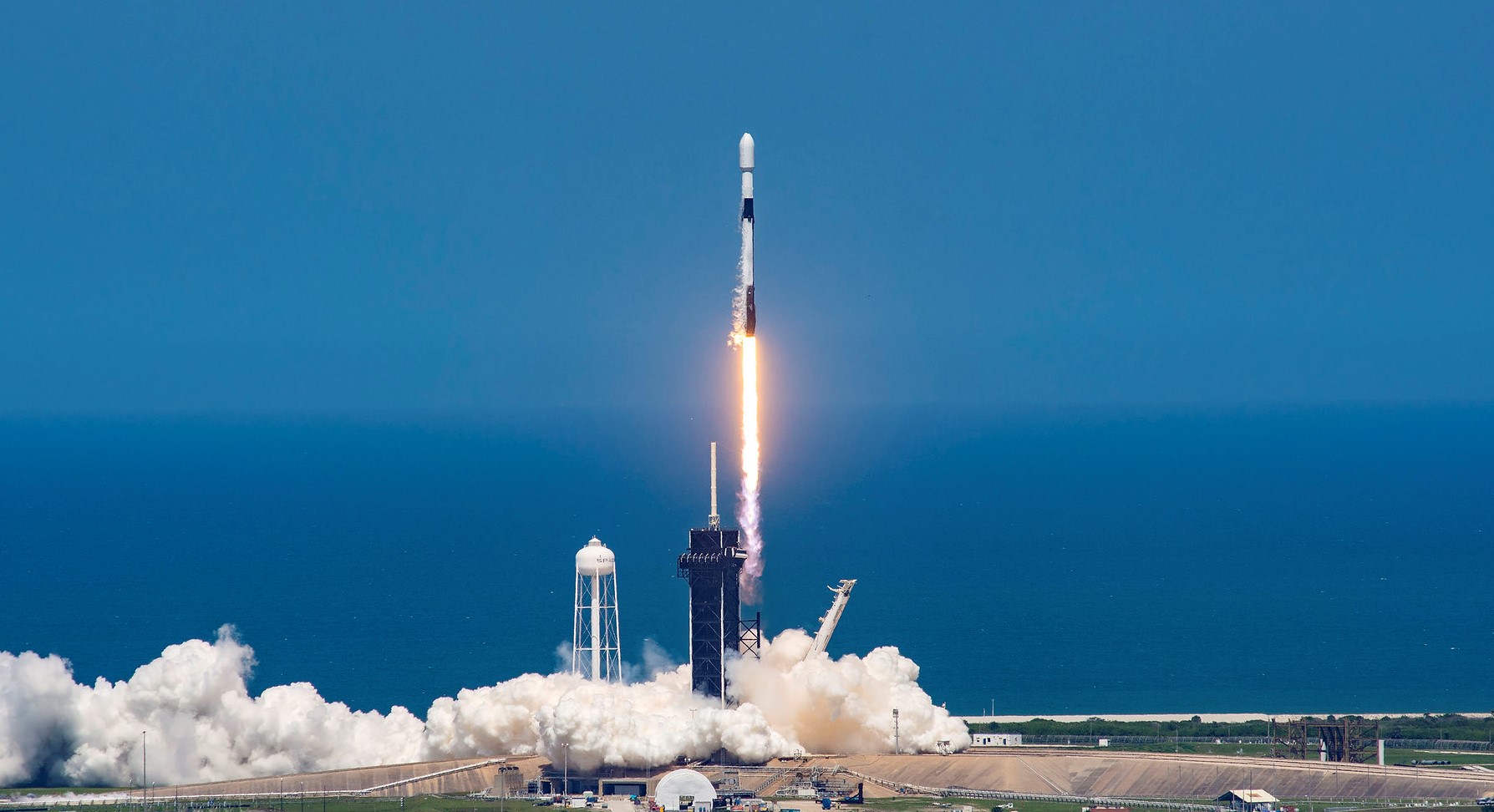
Launch Provider: SpaceX – Commercial
Launch Date: November 20, 2025
Launch Time: 6:18 PM UTC
Vehicle: Falcon 9
Brief: Dedicated rideshare flight to a sun-synchronous orbit with dozens of small microsatellites and nanosatellites for commercial and government customers.
Starlink Group 6-78
Launch Provider: SpaceX – Commercial
Launch Date: November 21, 2025
Launch Time: 3:01 AM UTC
Vehicle: Falcon 9
Brief: A batch of 29 satellites for the Starlink mega-constellation – SpaceX’s project for space-based Internet communication system.
Unknown Payload
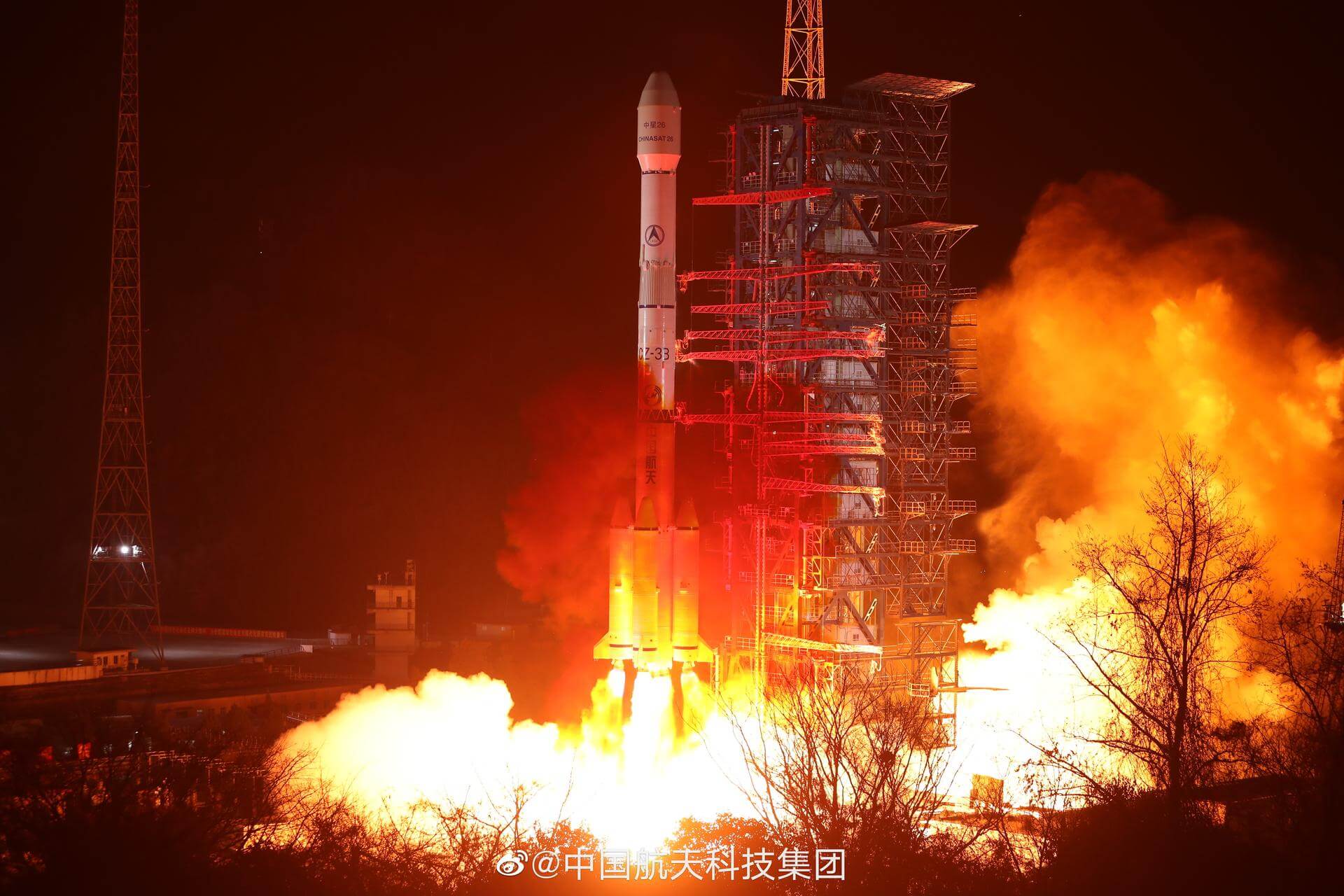
Launch Provider: China Aerospace Science and Technology Corporation – Government
Launch Date: November 21, 2025
Launch Time: 10:55 AM UTC
Vehicle: Long March 3
Brief: Details TBD.
Starlink Group 6-79
Launch Provider: SpaceX – Commercial
Launch Date: November 22, 2025
Launch Time: 6:59 AM UTC
Vehicle: Falcon 9
Brief: A batch of 29 satellites for the Starlink mega-constellation – SpaceX’s project for space-based Internet communication system.
Spaceward
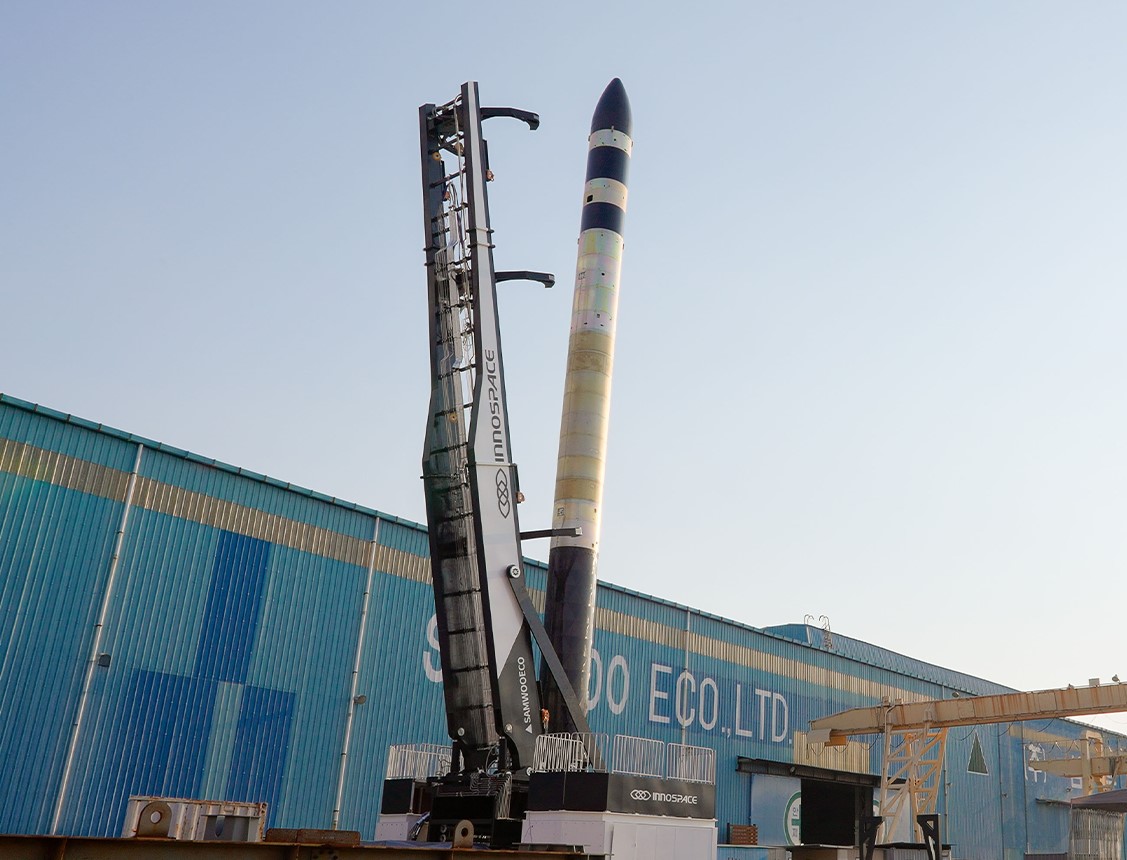
Launch Provider: Innospace – Private
Launch Date: November 22, 2025
Launch Time: 6:00 PM UTC
Vehicle: HANBIT-Nano
Brief: Maiden orbital launch attempt for the South Korean stratup Innospace and its HANBIT-Nano small launch vehicle. Onboard this flight are five small satellites from the Brazilian space agency AEB, Brazilian university Universidade Federal do Maranhão and Indian startup Grahaa Space, as well as three payloads from AEB and Brazilian company Castro Leite Consultoria that will remain attached to the rocket, and an empty aluminium can from the South Korean beverage company Brewguru.
