
The Daily Broadcast: Mining the Moon, Building in Orbit, and Keeping Astronauts Healthy
 Moon‘s surface” style=”display:block; margin:0 auto;”>
Mining the Moon, Building in Orbit, and Keeping Astronauts Healthy
Is the Moon Really Worth a Gold Rush?
There’s been a lot of buzz lately about a coming lunar “gold rush”—a frantic dash by nations and private companies to stake claims on the Moon’s resources. But as recent editorials in SpaceNews point out, this vision might be more science fiction than near-term reality. While the Moon does contain valuable materials like water ice (which can be split into hydrogen and oxygen for fuel) and rare earth elements, the infrastructure required to extract and utilize them is still years—if not decades—away.
More importantly, uncoordinated exploitation could lead to serious problems: orbital congestion, surface contamination, and even geopolitical tensions. Without clear international frameworks—beyond the outdated 1967 Outer Space Treaty—there’s a risk that the Moon becomes a free-for-all. Experts like Mustafa Bilal and Stirling Forbes argue that proactive cooperation, not competition, should guide lunar development. After all, nobody wants a repeat of terrestrial resource conflicts… just 384,000 km from home.
For Canada, which has contributed Canadarm3 to NASA’s Gateway lunar space station, the focus remains on sustainable exploration rather than extraction. That cautious, collaborative approach might just be the steady hand the new space age needs.

Solar Arrays That Build Themselves—in Space
German startup Dcubed is taking a bold step toward the future of satellite power by developing technology to manufacture solar arrays directly in orbit. Their upcoming demonstration missions aim to produce large, lightweight solar structures that would be impossible to launch fully assembled from Earth. This innovation could significantly reduce launch mass and volume constraints while enabling more powerful spacecraft for communications, Earth observation, and deep-space missions.
In-space manufacturing like this isn’t just about convenience—it’s a potential game-changer for mission design. Traditional solar panels must survive the violent vibrations of launch, limiting their size and efficiency. By building them in microgravity, engineers can use more delicate, high-efficiency materials and create larger surface areas. Dcubed’s approach could also pave the way for orbital construction of other components, from antennas to trusses.
While Canada isn’t directly involved in Dcubed’s efforts, the country has its own growing in-space manufacturing ecosystem. Companies like Kepler Communications and NorthStar Earth & Space are pushing the boundaries of what’s possible in orbit—proving that the final frontier might soon double as a factory floor.
Protecting Astronauts’ Eyes and Lungs—One Experiment at a Time
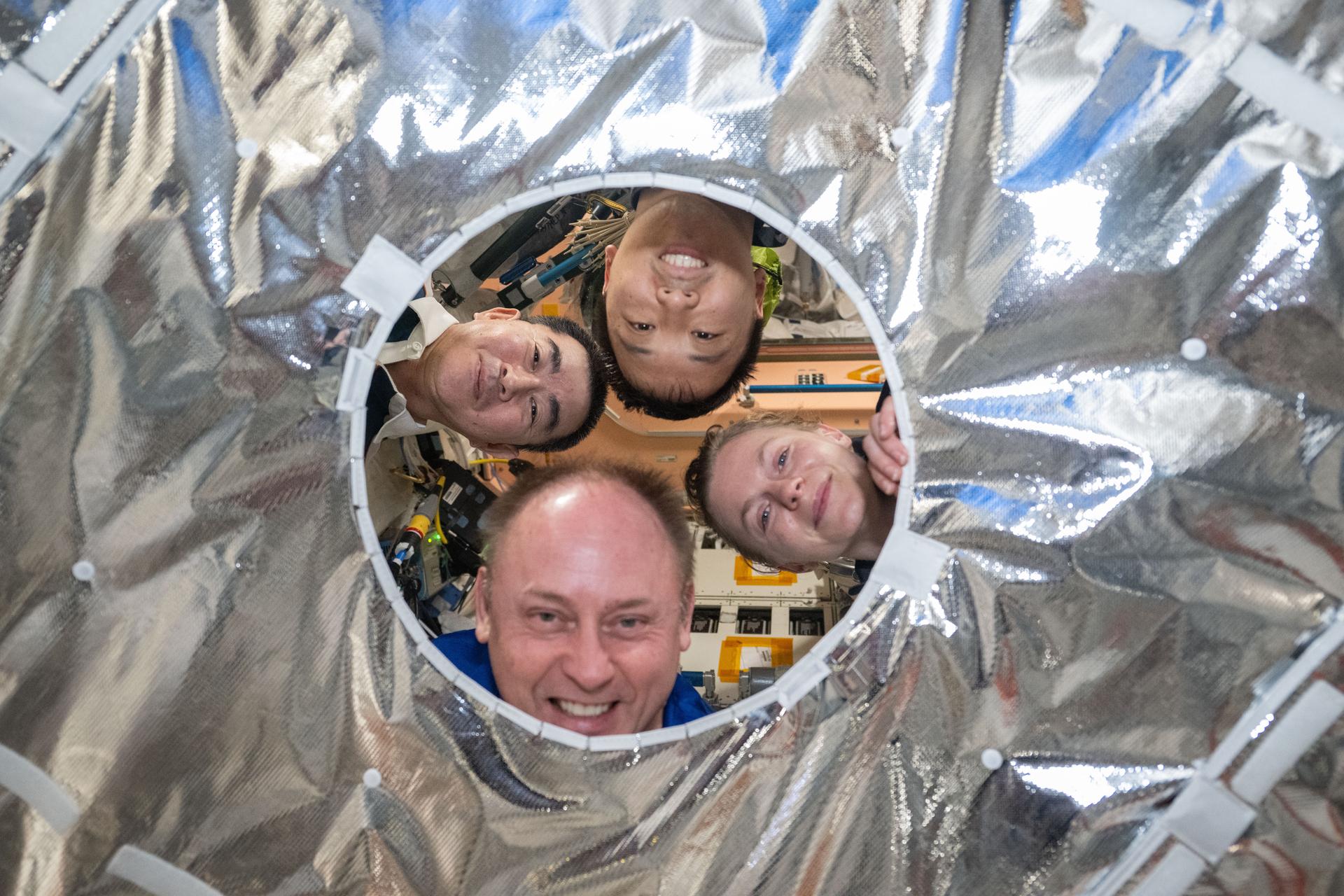
Life in microgravity comes with hidden health risks, and this week on the International Space Station (ISS), Expedition 73 crew members are tackling two of the biggest: vision impairment and respiratory changes. Researchers are studying how fluid shifts in the body—caused by the lack of gravity—contribute to vision problems known as Spaceflight-Associated Neuro-Ocular Syndrome (SANS). Meanwhile, another experiment examines how lung function adapts (or doesn’t) in space, which could impact everything from emergency response to long-duration missions.
These studies aren’t just academic. As agencies plan for Artemis lunar missions and eventual Mars trips, understanding and mitigating health risks becomes critical. Canadian astronaut Jeremy Hansen, training for Artemis II, will likely benefit directly from this research. Canada’s long-standing role in human spaceflight—through both astronauts and life sciences—means these findings also inform domestic expertise in remote health monitoring and telemedicine.
While it may not involve rocket launches or lunar landings, this quiet, meticulous work aboard the ISS is what keeps future explorers safe. After all, getting to the Moon is only half the mission—coming back healthy is the other.
Citations
- “Avoiding a harmful lunar ‘gold rush’” – https://spacenews.com/avoiding-a-harmful-lunar-gold-rush/
- “Dcubed to demonstrate in-space manufacturing of solar arrays” – https://spacenews.com/dcubed-to-demonstrate-in-space-manufacturing-of-solar-arrays/
- “Monday’s Research Studies Ways to Protect Eyes and Lungs in Space” – https://www.nasa.gov/blogs/spacestation/2025/11/17/mondays-research-studies-ways-to-protect-eyes-and-lungs-in-space/
Upcoming Launches
Starlink Group 6-94

Launch Provider: SpaceX – Commercial
Launch Date: November 19, 2025
Launch Time: 12:12 AM UTC
Vehicle: Falcon 9
Brief: A batch of 29 satellites for the Starlink mega-constellation – SpaceX’s project for space-based Internet communication system.
Unknown Payload
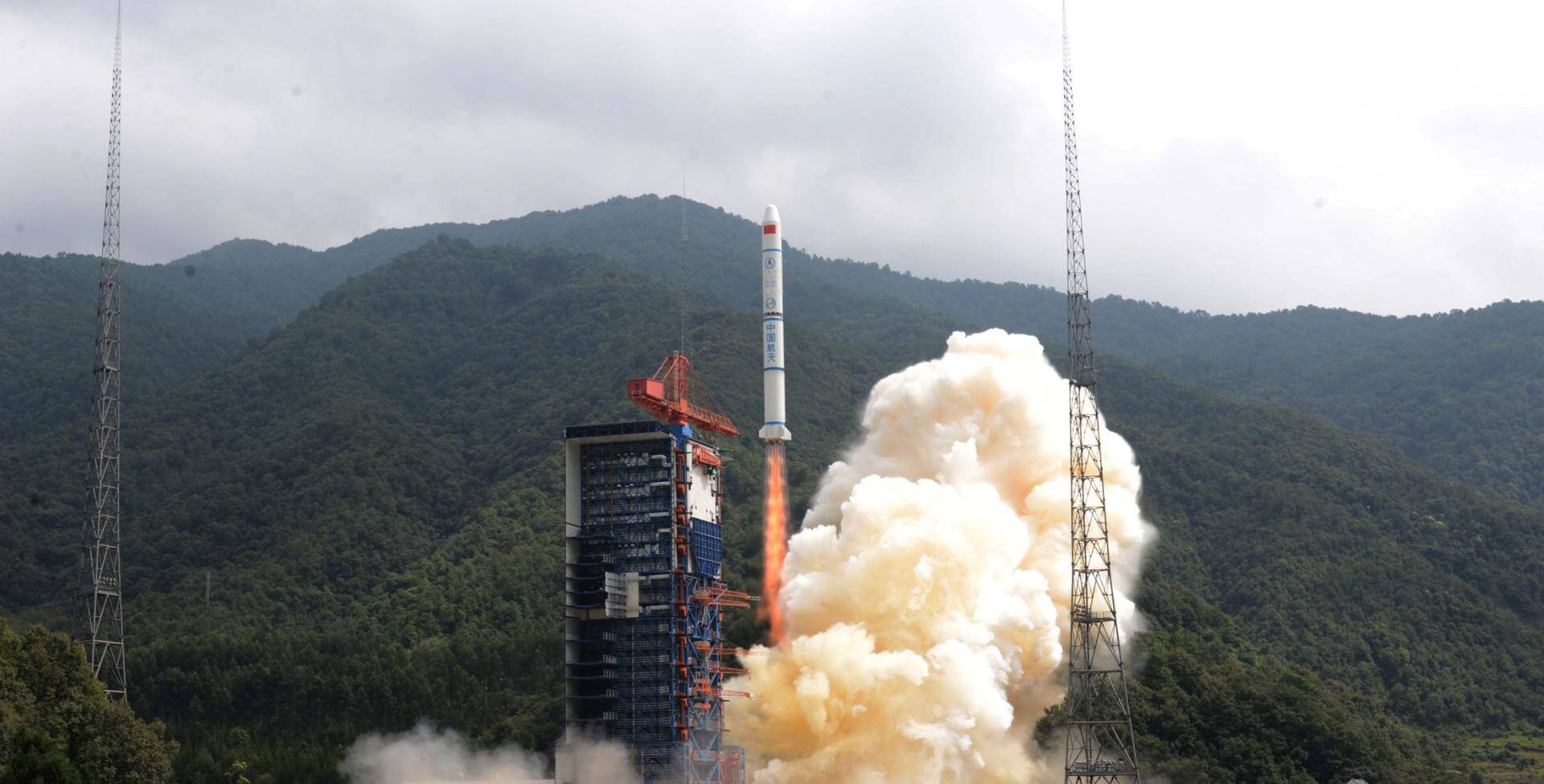
Launch Provider: China Aerospace Science and Technology Corporation – Government
Launch Date: November 19, 2025
Launch Time: 4:00 AM UTC
Vehicle: Long March 2C/YZ-1S
Brief: Details TBD.
Transporter 15 (Dedicated SSO Rideshare)
Launch Provider: SpaceX – Commercial
Launch Date: November 19, 2025
Launch Time: 6:18 PM UTC
Vehicle: Falcon 9
Brief: Dedicated rideshare flight to a sun-synchronous orbit with dozens of small microsatellites and nanosatellites for commercial and government customers.
Starlink Group 6-78
Launch Provider: SpaceX – Commercial
Launch Date: November 21, 2025
Launch Time: 3:01 AM UTC
Vehicle: Falcon 9
Brief: A batch of 29 satellites for the Starlink mega-constellation – SpaceX’s project for space-based Internet communication system.
Unknown Payload
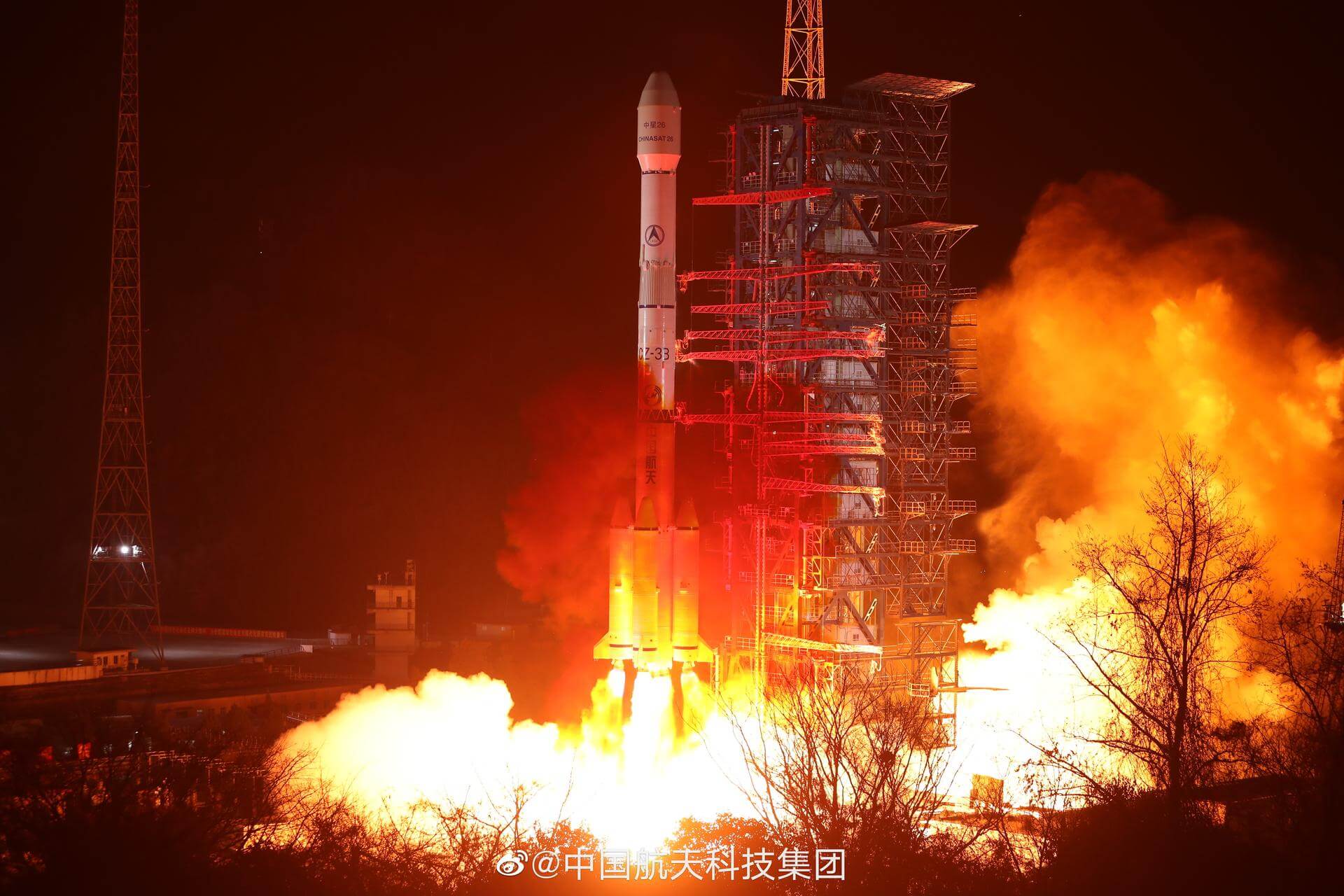
Launch Provider: China Aerospace Science and Technology Corporation – Government
Launch Date: November 21, 2025
Launch Time: 10:55 AM UTC
Vehicle: Long March 3
Brief: Details TBD.
