
The Daily Broadcast: Orion’s Final Approach: Reentry Readiness, Canadian Reflections, and a European Navigation Milestone

Artemis II Crew Prepares for Critical Reentry on Friday
On April 10, 2026, NASA managers expressed confidence in the Orion spacecraft’s readiness for its high-stakes return to Earth, scheduled for Friday, April 12. The four-person Artemis II crew—Reid Wiseman, Victor Glover, Christina Koch, and CSA astronaut Jeremy Hansen—completed Flight Day 8 stowing equipment and configuring the capsule for reentry. Orion is expected to pierce Earth’s atmosphere at 40,233 kph (25,000 mph), with its heat shield facing temperatures near those of the Sun’s surface.
According crosschecked data from NASA and SpaceQ, controllers have refined the reentry timeline: the Crew and Service Modules will separate at 6:33 p.m. CT, followed by a 20-minute communication blackout starting at 6:53 p.m. CT. Drogue and main parachutes are slated to deploy at 7:03 and 7:04 p.m. CT, respectively, with splashdown in the Pacific Ocean occurring at 7:07 p.m. CT.
Engineers also clarified a previously reported pressure leak as a non-critical helium leak in the European-built Service Module’s oxidizer pressurization system—no threat to crew or reentry. NASA Associate Administrator Amit Kshatriya emphasized that while hardware reliability is vital, the human element remains central: “If you can’t take love to the stars, then what are we doing?”

Canadian Contributions and Cultural Reflections from Deep Space
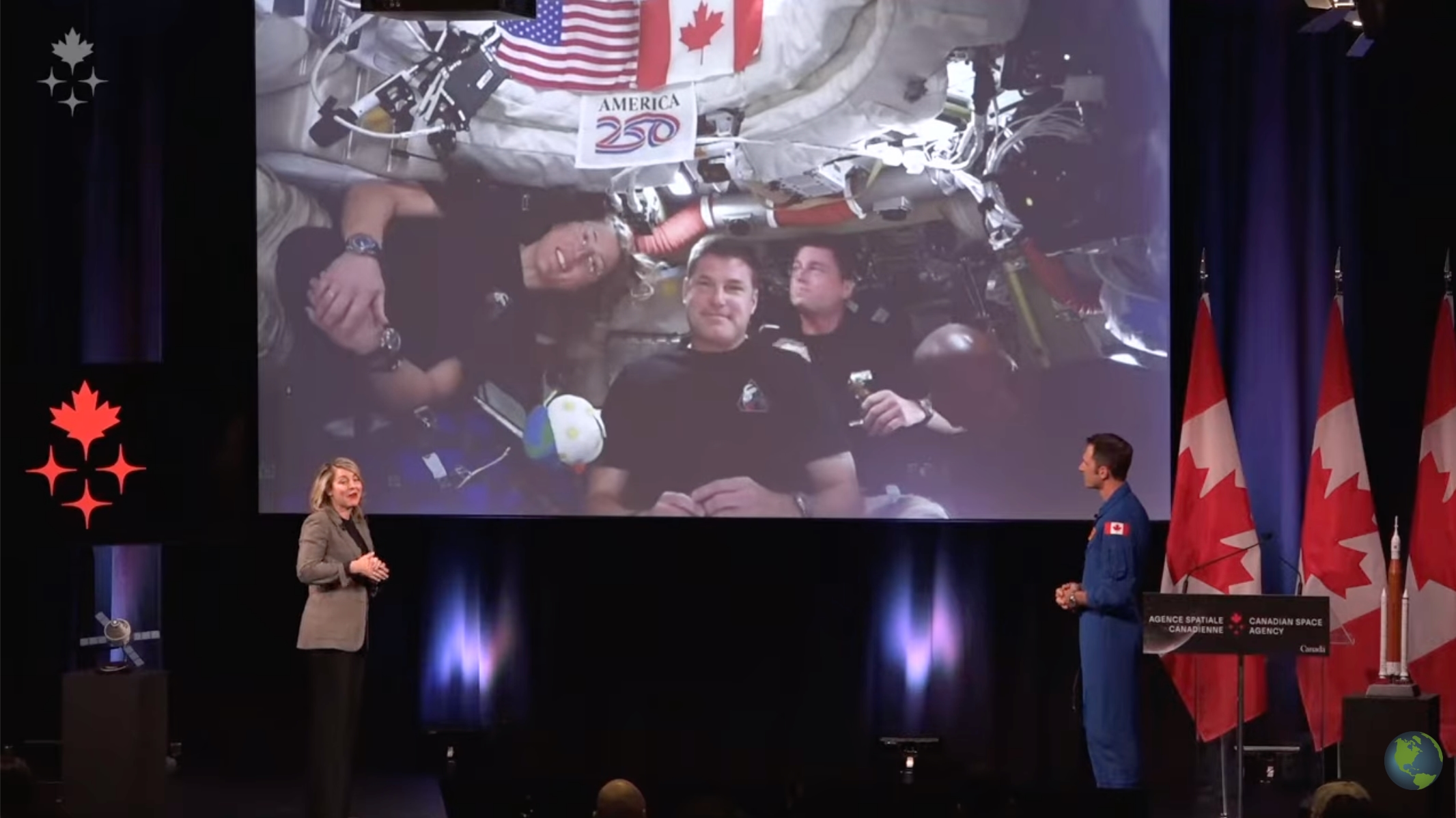
In a heartfelt link-up on Flight Day 8, CSA astronaut Jeremy Hansen and his crewmates spoke with Prime Minister Mark Carney, Industry Minister Mélanie J)oly, and students from across Canada. Reflecting on Canada’s deep involvement in the Artemis programme—from the Canadarm3 robotics system destined for the Lunar Gateway to Hansen’s historic role as the first non-American and first Canadian on a lunar mission—Carney expressed national pride, especially after hearing Hansen speak French in cislunar space.
Hansen reiterated that Canada “put in the work” to earn this opportunity. Demonstrating that Canadian touches extended beyond engineering, the crew confirmed they carried maple syrup—and even shared maple cookies during their pass behind the Moon. Hansen also revealed that Indigenous teachings influenced the crew’s decision to name their Orion capsule Integrity, inspired by Anishinaabe artist Henry Guimond’s mission patch and the Seven Sacred Laws.
When asked whether the deep-space perspective altered his worldview, Hansen said it affirmed his belief that “the purpose of humanity is joy and lifting one another up, creating together versus destroying.” This philosophical grounding, paired with technical execution, illustrates why human spaceflight remains culturally and scientifically vital.
Europe’s Celeste Achieves First LEO Navigation Signal
While astronauts prepare to return, European space infrastructure reaches a quiet but critical milestone. On April 8, the European Space Agency (ESA) confirmed the first-ever dual-frequency navigation signal from a European satellite in low-Earth orbit (LEO). Sent by the Celeste IOD-1 satellite—launched March 28 aboard a Rocket Lab Electron—the L- and S-band signal marks a historic first for European positioning, navigation, and timing (PNT) architecture.
Low-Earth orbit signals, ESA explains, offer stronger signal strength, improved geometry, and enhanced reliability in challenging environments like dense urban canyons. This early success supports the Celeste in-orbit demonstration phase, which will deploy a constellation of 11 LEO satellites to test next-generation PNT systems that complement the existing Galileo constellation in medium-Earth orbit.
Celeste forms a key pillar of ESA’s Resilience from Space initiative, endorsed by member states in 2025. According to programme manager Roberto Prieto-Cerdeira, this achievement “is a first step… to demonstrate how a satellite navigation constellation in LEO can further address current and future user needs.” While not involving Canadian hardware, the mission’s success could indirectly benefit future GPS-Galileo-Celeste interoperable receivers used in Canadian aerospace and transportation sectors.

Citations
- “NASA managers outline Artemis 2 reentry and address propulsion issue ahead of splashdown” – https://spaceq.ca/nasa-managers-outline-artemis-2-reentry-and-address-propulsion-issue-ahead-of-splashdown/
- “Artemis 2 crew discusses spaceflight risks and Canadian collaboration with Prime Minister Mark Carney” – https://spaceq.ca/artemission-2-crew-discusses-spaceflight-risks-and-canadian-collaboration-with-prime-minister-mark-carney/
- “ESA’s Celeste broadcasts first navigation signal from low Earth orbit” – https://www.esa.int/Applications/Satellite_navigation/Celeste/ESAs_Celeste_broadcasts_first_navigation_signal_from_low_Earth_orbit
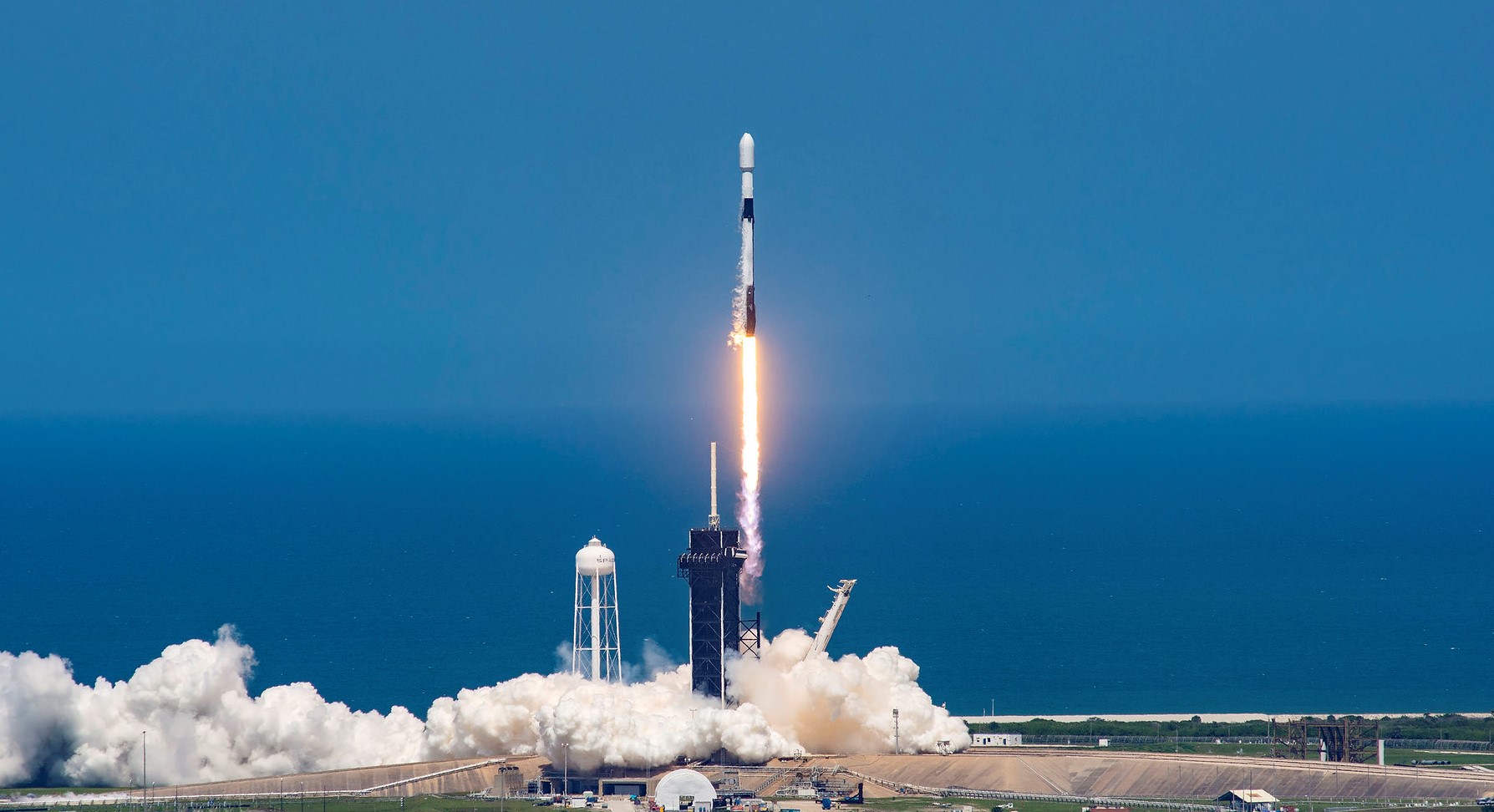
Starlink Group 17-21
Provider: SpaceX
Date: April 11, 2026
Time: 2:39 AM UTC
Vehicle: Falcon 9
🚀 Watch Livestream
A batch of 25 satellites for the Starlink mega-constellation – SpaceX’s project for space-based Internet communication system.

Unknown Payload
Provider: China Rocket Co. Ltd.
Date: April 11, 2026
Time: 11:30 AM UTC
Vehicle: Smart Dragon 3
📽️ No Livestream scheduled yet
Details TBD.
Cygnus CRS-2 NG-24 (S.S. Steven R. Nagel)
Provider: SpaceX
Date: April 11, 2026
Time: 11:41 AM UTC
Vehicle: Falcon 9
🚀 Watch Livestream
This is the 24th flight of the Orbital ATK’s uncrewed resupply spacecraft Cygnus and its 23rd flight to the International Space Station under the Commercial Resupply Services contract with NASA.
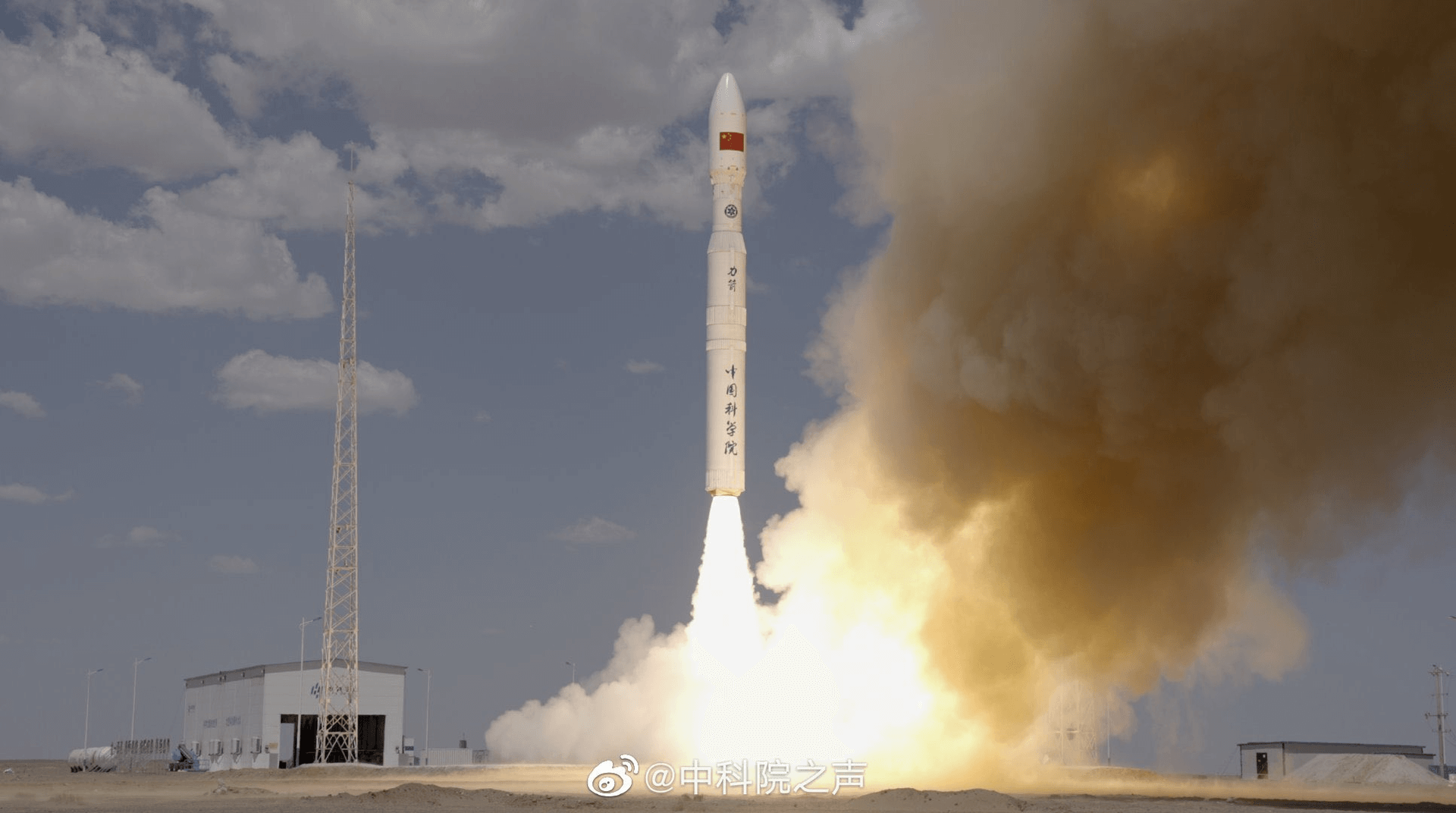
Unknown Payload
Provider: CAS Space
Date: April 14, 2026
Time: 4:00 AM UTC
Vehicle: Kinetica 1
📽️ No Livestream scheduled yet
Details TBD.
Starlink Group 10-24
Provider: SpaceX
Date: April 14, 2026
Time: 6:13 AM UTC
Vehicle: Falcon 9
🚀 Watch Livestream
A batch of 29 satellites for the Starlink mega-constellation – SpaceX’s project for space-based Internet communication system.
