
The Daily Broadcast: From Arctic Pads to Stellar Secrets: Canada’s Orbit and the Cosmos’ Clues

Canada Secures Sovereign Launch Capability with $200M Spaceport Nova Scotia Deal
On March 16, 2026, Canada took a major leap toward orbital independence with the announcement of a 10-year, $200 million agreement between the Department of National Defence and Maritime Launch Services. The deal secures a dedicated sovereign launch pad at Spaceport Nova Scotia—Canada’s first licensed commercial spaceport—giving the Canadian Armed Forces the ability to deploy national satellites without relying on foreign launch providers. Importantly, 90% of the investment will flow back into the domestic economy, supporting Canadian aerospace firms and reinforcing national security infrastructure.
This move complements other recent developments: MDA Space raised US$300 million in its New York Stock Exchange IPO, and $24.9 million was awarded to three Canadian startups—NordSpace (Markham), Canada Rocket Company (Toronto), and Reaction Dynamics (Montreal)—to accelerate homegrown launch vehicle development. As Melissa Quinn, VP of Spaceport Operations at MDA Space, noted in a recent op-ed, “We design here. We build here. We test here. Then we export for launch”—a vulnerability the new infrastructure aims to eliminate. Combined with Canada’s entry into NATO’s STARLIFT initiative and bilateral space defence pacts with Norway and Japan, these steps signal a strategic pivot from passive participation to active sovereignty in the space domain.
XRISM Mission Solves 50-Year Stellar Mystery with Canadian-Friendly Science
Astronomers have finally cracked a cosmic cold case that’s puzzled the scientific community since the 1970s—and the solution came from orbit. Using the X-Ray Imaging and Spectroscopy Mission (XRISM), an international collaboration led by the Japan Aerospace Exploration Agency (JAXA) with contributions from NASA and ESA, researchers confirmed that the peculiar X-ray emissions from the bright star gamma-Cas in the constellation Cassiopeia originate from a hidden white dwarf companion gorging on material from its stellar neighbour.
Gamma-Cas, easily visible to Canadian skywatchers on clear nights as the central point of the “W”-shaped Cassiopeia, belongs to a rare class of “Be” stars known for their luminous hydrogen discs. For decades, scientists debated whether its unusually hot (150-million-degree) X-ray glow came from magnetic interactions or accretion onto an unseen companion. XRISM’s high-resolution Resolve spectrometer settled the debate: the X-ray signatures shift in sync with the orbital motion of the white dwarf, proving accretion is the culprit. The findings, published in Astronomy & Astrophysics by lead author Yaël Nazé of the University of Liège, not only close a 50-year chapter but also reshape models of binary star evolution. For amateur astronomers across Canada—particularly in dark-sky preserves from Jasper to Kejimkujik—gamma-Cas remains a rewarding target, now with a clearer backstory.

Orbital Data Centres: The Next Frontier or a Trillion-Dollar Gamble?
Could the future of artificial intelligence float 500 kilometres above Earth? A provocative new analysis from Ars Technica explores the viability of orbital data centres—a concept championed by SpaceX—as AI’s insatiable demand for computing power strains terrestrial infrastructure. With data centres already consuming 4.4% of U.S. electricity in 2023 and projections suggesting 6.7–12% by 2028, companies are eyeing space for its unlimited solar energy (five to seven times more intense than on Earth) and absence of NIMBY opposition.
But the economics are daunting. Engineer Andrew McCalip estimates that deploying a megaconstellation of 1 million data-processing satellites—SpaceX’s stated ambition—could cost over a trillion dollars. Success hinges on ultra-cheap launch costs (below $1,000/kg), mass-produced satellite buses, and custom-made silicon, prompting Elon Musk to launch the $20 billion “Terafab” chip project. Environmental trade-offs also loom large: while orbital data centres use no water and produce no direct emissions, rocket launches emit black carbon and contribute to atmospheric metal pollution from satellite re-entries. Astronomers warn of a brightened night sky, threatening observatories like the Vera C. Rubin. As McCalip puts it: “This is not physically impossible… but it’s really close.” For now, orbital data centres remain a high-stakes hypothesis—one that could redefine computing or vanish like so much space debris.

Citations
- “In Defence of Canada Briefing (Issue 2)” – https://spaceq.ca/in-defence-of-canada-briefing-issue-2/
- “XRISM solves famous star’s 50-year mystery” – https://www.esa.int/Science_Exploration/Space_Science/XRISM_solves_famous_stars_50-year_mystery
- “Orbital data centers, part 1: There’s no way this is economically viable, right?” – https://arstechnica.com/space/2026/03/orbital-data-centers-part-1-theres-no-way-this-is-economically-viable-right/
Upcoming Launches
16 x Rassvet-3
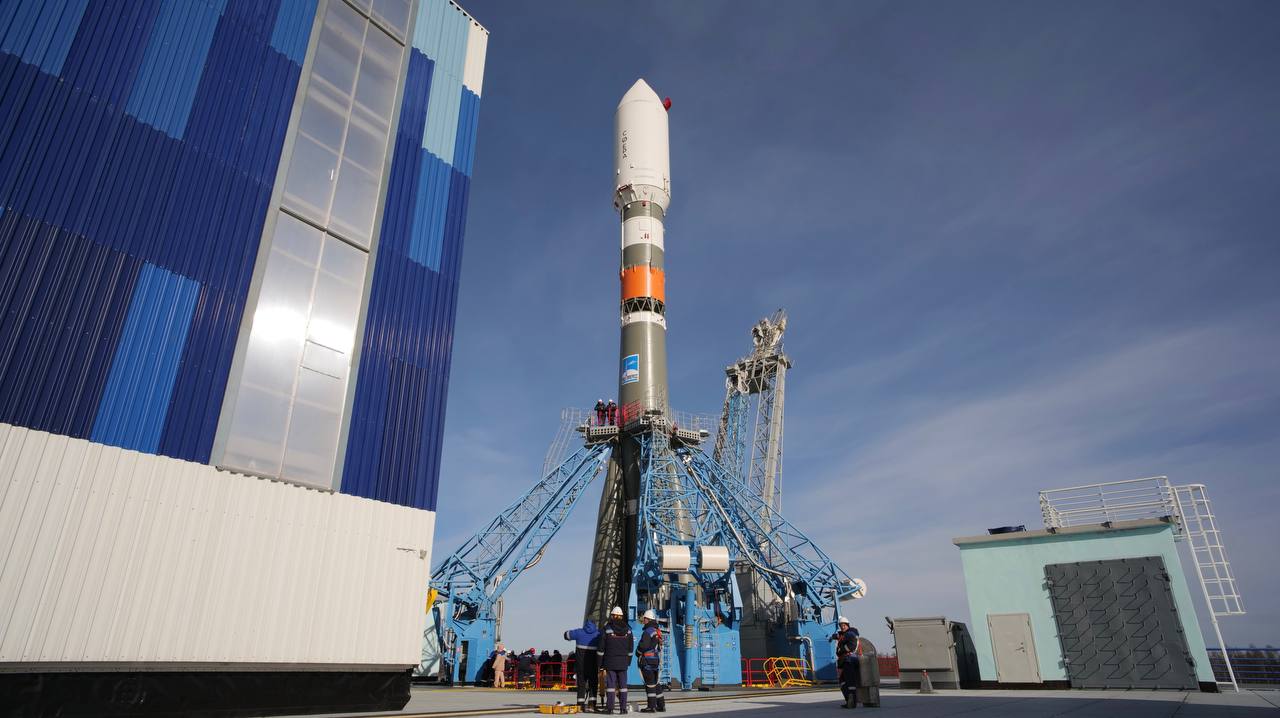
Launch Provider: Russian Federal Space Agency (ROSCOSMOS) – Government
Launch Date: March 23, 2026
Launch Time: 5:24 PM UTC
Vehicle: Soyuz 2.1b/Fregat-M
Brief: Note: Payload identities uncertain.
Batch of 16 Rassvet-3 Low Earth Orbit communication satellites for the Russian Byuro-1440 (Bureau 1440) constellation for broadband high-speed internet access in Russia.
📽️ No Livestream scheduled yet
Starlink Group 17-17

Launch Provider: SpaceX – Commercial
Launch Date: March 24, 2026
Launch Time: 11:03 PM UTC
Vehicle: Falcon 9
Brief: A batch of 25 satellites for the Starlink mega-constellation – SpaceX’s project for space-based Internet communication system.
Daughter Of The Stars (LEO-PNT Pathfinder A)
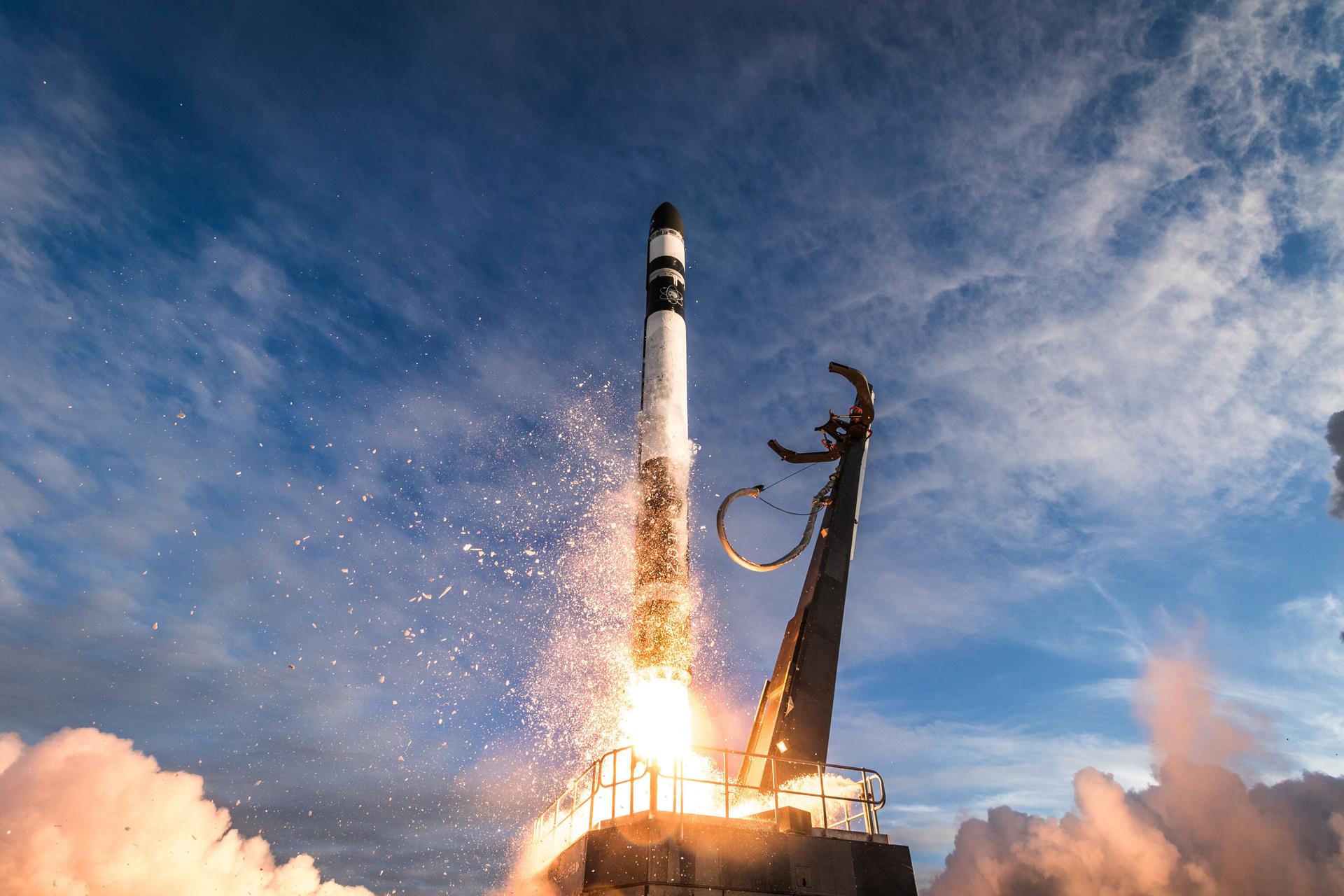
Launch Provider: Rocket Lab – Commercial
Launch Date: March 25, 2026
Launch Time: 9:14 AM UTC
Vehicle: Electron
Brief: The European Space Agency (ESA)’s LEO-PNT (Low Earth Orbit Positioning, Navigation and Timing) demonstrator mission will feature a 10-satellite constellation demonstration mission that will assess how a low Earth orbit fleet of satellites can work in combination with the Galileo and EGNOS constellations in higher orbits that provide Europe’s own global navigation system.
This launch will lift 2 “Pathfinder A” satellites built by Thales Alenia Space and GMV to a 510 km altitude Low Earth Orbit.
Onward and Upward
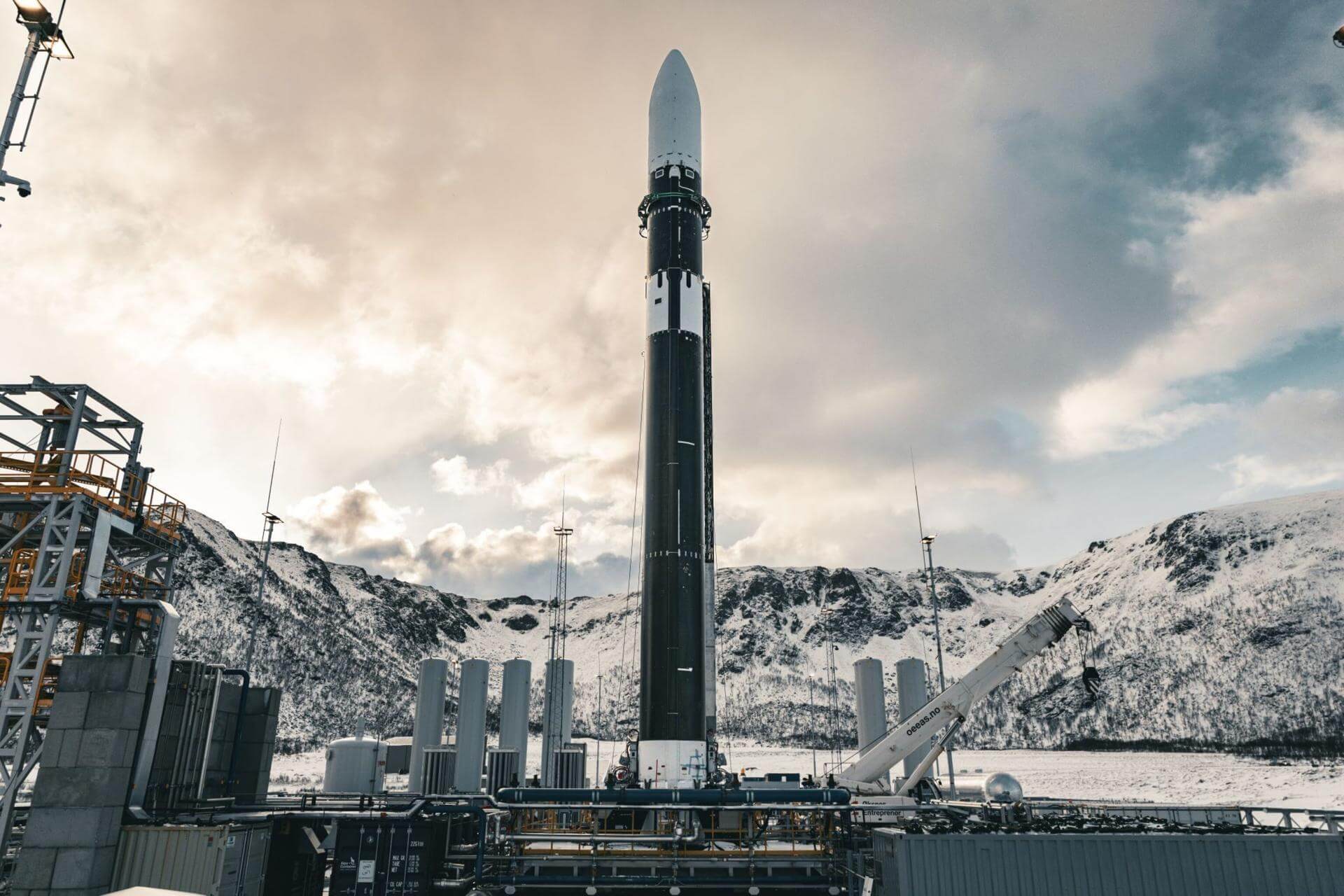
Launch Provider: Isar Aerospace – Private
Launch Date: March 25, 2026
Launch Time: 8:00 PM UTC
Vehicle: Spectrum
Brief: Second test flight of the Isar Spectrum launch vehicle. This launch will carry 5 cubesats and 1 non-separable experiment as part of European Space Agency (ESA)’s “Boost!” program:
* CyBEEsat (TU Berlin)
* TriSat-S (University of Maribor)
* Platform 6 (EnduroSat)
* FramSat-1 (NTNU)
* SpaceTeamSat1 (TU Wien Space Team)
* Let It Go (Dcubed, non-separable experiment)
Unknown Payload
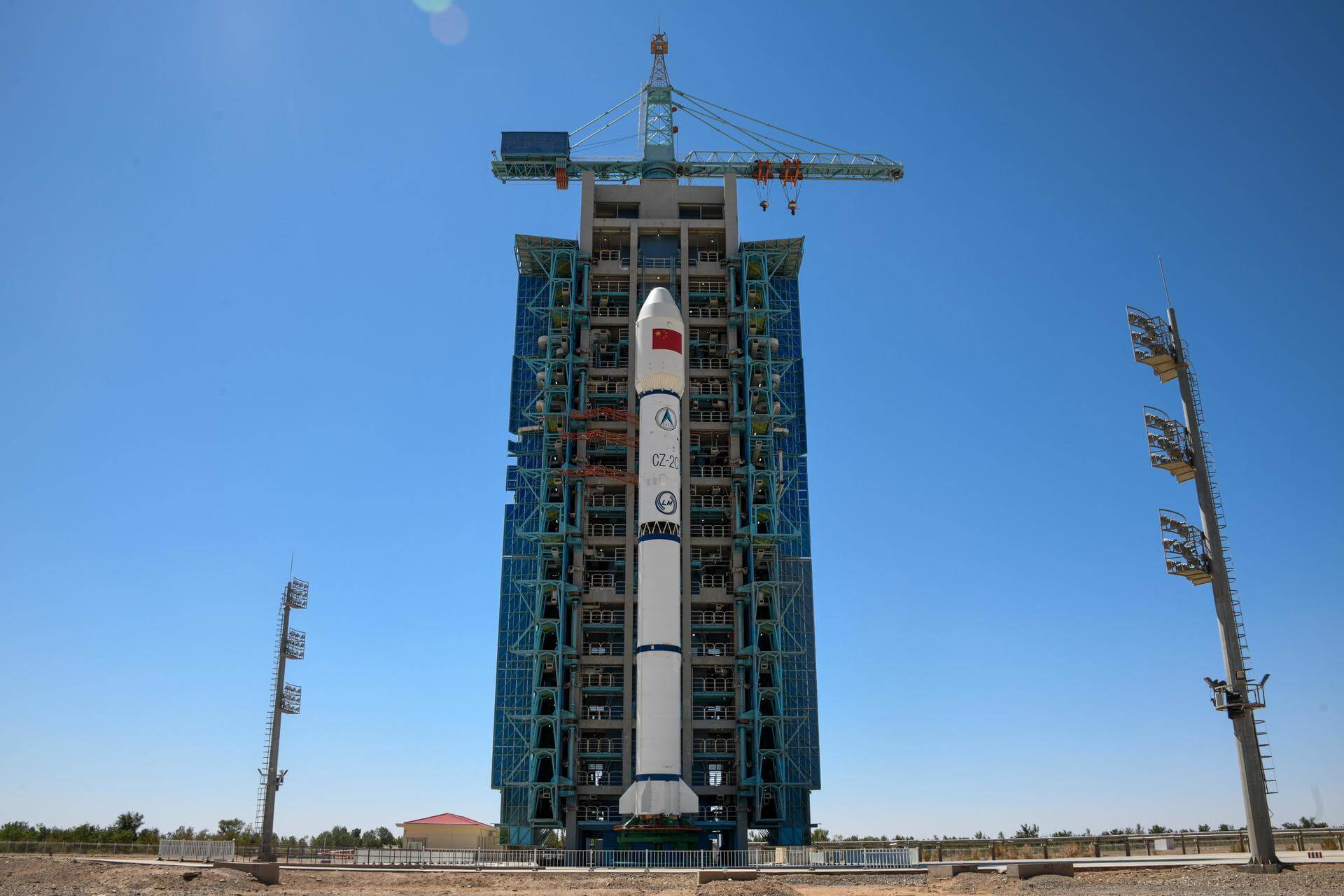
Launch Provider: China Aerospace Science and Technology Corporation – Government
Launch Date: March 25, 2026
Launch Time: 10:50 PM UTC
Vehicle: Long March 2C
Brief: Details TBD.
📽️ No Livestream scheduled yet
