
The Daily Broadcast: Canada’s Space Sovereignty Takes Flight—While AI and Tissue Chips Prep for Deep Space

Canada Bets Big on Sovereign Launch with $200M Spaceport Deal and Homegrown Rockets
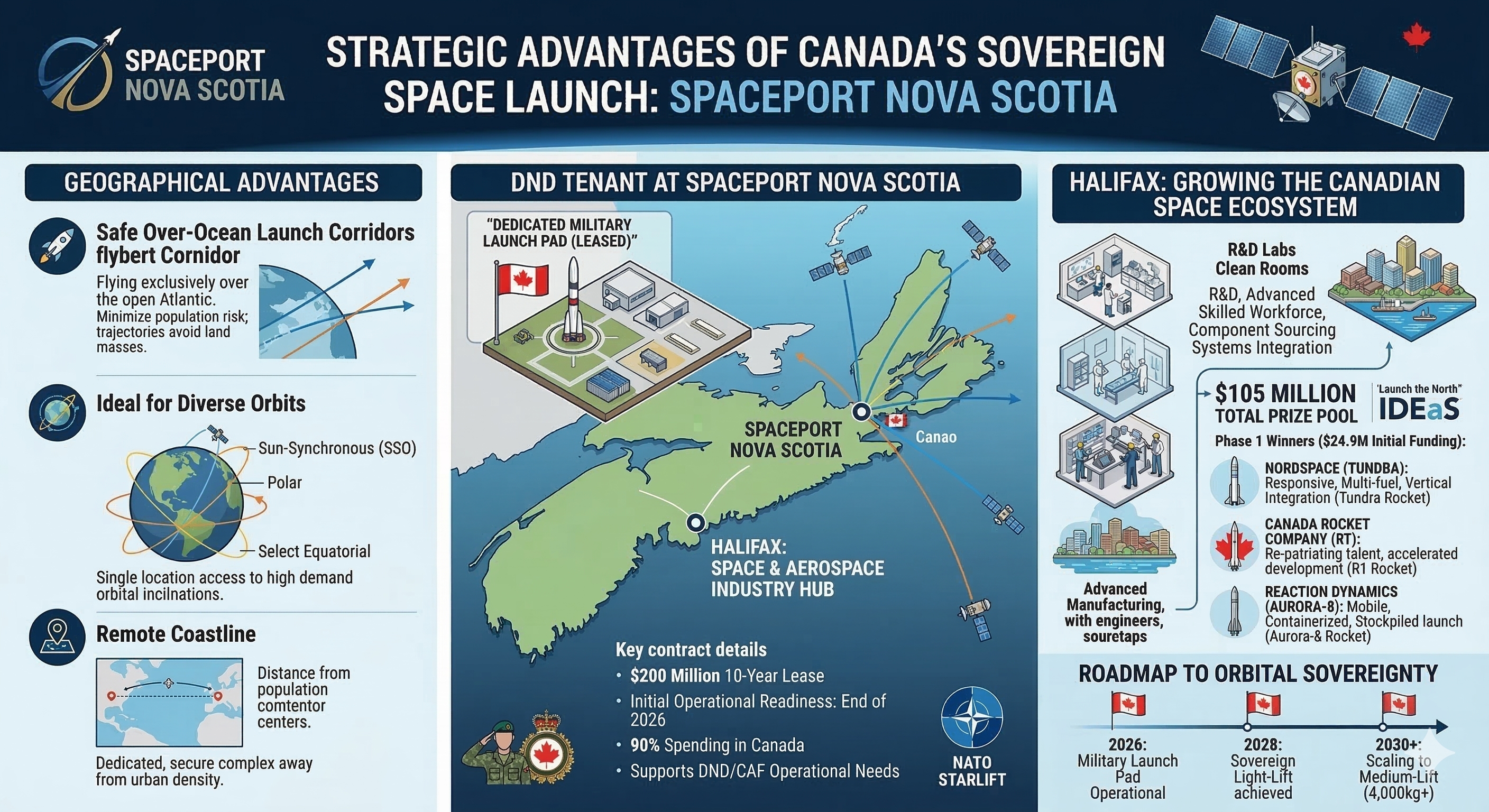
On March 16, 2026, the Canadian government made its most significant move in decades to secure independent access to space. The Department of National Defence (DND) announced a 10-year, $200-million lease agreement with Maritime Launch Services for a dedicated military launch pad at Spaceport Nova Scotia near Canso. This marks the first time Canada has committed to a sovereign orbital launch capability, aiming to reduce reliance on foreign providers for critical national security payloads.
Alongside the spaceport deal, DND unveiled the first phase of its “Launch the North” initiative, awarding $8.3 million each to three Canadian aerospace firms—Canada Rocket Company, NordSpace, and Reaction Dynamics—to develop responsive, small-lift launch vehicles capable of deploying 200-kilogram payloads within 96 hours. The goal is to have these systems operational by 2028.
Defence Minister David McGuinty emphasized that “access to space itself” is now a core component of Canadian sovereignty. The investment also aligns Canada with NATO’s Starlift initiative, a collaborative rapid-response launch programme involving 14 allied nations. Notably, Maritime Launch Services has committed to spending at least 90% of the lease funds within Canada, reinforcing the domestic economic impact.
Nvidia’s AI-Powered Space Module Aims to Bring Data Centres to Orbit
At its GTC conference on March 16, 2026, Nvidia unveiled the Space-1 Vera Rubin Module—an AI computing system designed specifically for the harsh environment of space. Built on the company’s IGX Thor and Jetson Orin platforms, the module promises significantly more processing power than the already space-tested H100 GPU and is intended to support future orbital data centres and onboard analytics for satellite constellations.
“Space computing, the final frontier, has arrived,” declared Nvidia CEO Jensen Huang. The move responds to a growing industry demand to process data in orbit rather than downlinking raw information to Earth—a bottleneck exacerbated by limited bandwidth. Companies like Planet Labs, Kepler Communications, and Starcloud are already integrating Nvidia hardware into their spacecraft, with Planet Labs aiming to cut Earth-imaging analysis time from hours to seconds.
Despite the promise, Huang acknowledged significant hurdles remain, particularly in thermal management and radiation hardening. The Space-1 module is not yet available but is expected to reach customers “in the near future.” If successful, it could transform satellites from passive data collectors into intelligent nodes capable of real-time decision-making—a critical step for deep-space exploration and autonomous operations.
Tissue Chips: Your Miniature Organs May Reach Space Before You Do
As NASA prepares for longer-duration Artemis missions to the Moon and eventually Mars, a new frontier in space health is emerging—not with astronauts, but with their microscopic stand-ins. Tissue chips, or microphysiological systems (MPS), are lab-grown models of human organs that replicate key biological functions. These tiny platforms could soon fly uncrewed missions to study the effects of cosmic radiation and microgravity, offering safer, more human-relevant data than traditional animal models.
According to Rihana Bokhari, scientific research director at the Translational Research Institute for Space Health (TRISH), these chips are vital for testing countermeasures against spaceflight risks without endangering crew members. TRISH’s SENTINEL initiative is already funding the development of multi-tissue systems capable of analyzing radiation dose responses—potentially paving the way for personalized space medicine.
With the International Space Station scheduled for decommissioning later this decade, autonomous, deep-space-ready tissue chips could fill the biomedical research gap. In the not-so-distant future, a “sentinel” made from your own cells might preview how your body would fare on a Mars mission—all from the comfort of a shoebox-sized payload aboard an uncrewed spacecraft.
Citations
- “Canadian military invests in sovereign launch” – https://spacenews.com/canadian-military-invests-in-sovereign-launch/
- “Launch the North: Canada bets $305M on domestic rockets and a Nova Scotia Spaceport to secure the high ground” – https://spaceq.ca/launch-the-north-canada-bets-305m-on-domestic-rockets-and-a-nova-scotia-spaceport-to-secure-the-high-ground/
- “Nvidia unveils AI computing module for space-based data centers” – https://spacenews.com/nvidia-unveils-ai-computing-module-for-space-based-data-centers/
- “An astronaut’s tiny stand-in: tissue chips in space health” – https://spacenews.com/an-astronauts-tiny-stand-in-tissue-chips-in-space-health/
Upcoming Launches
Starlink Group 17-24
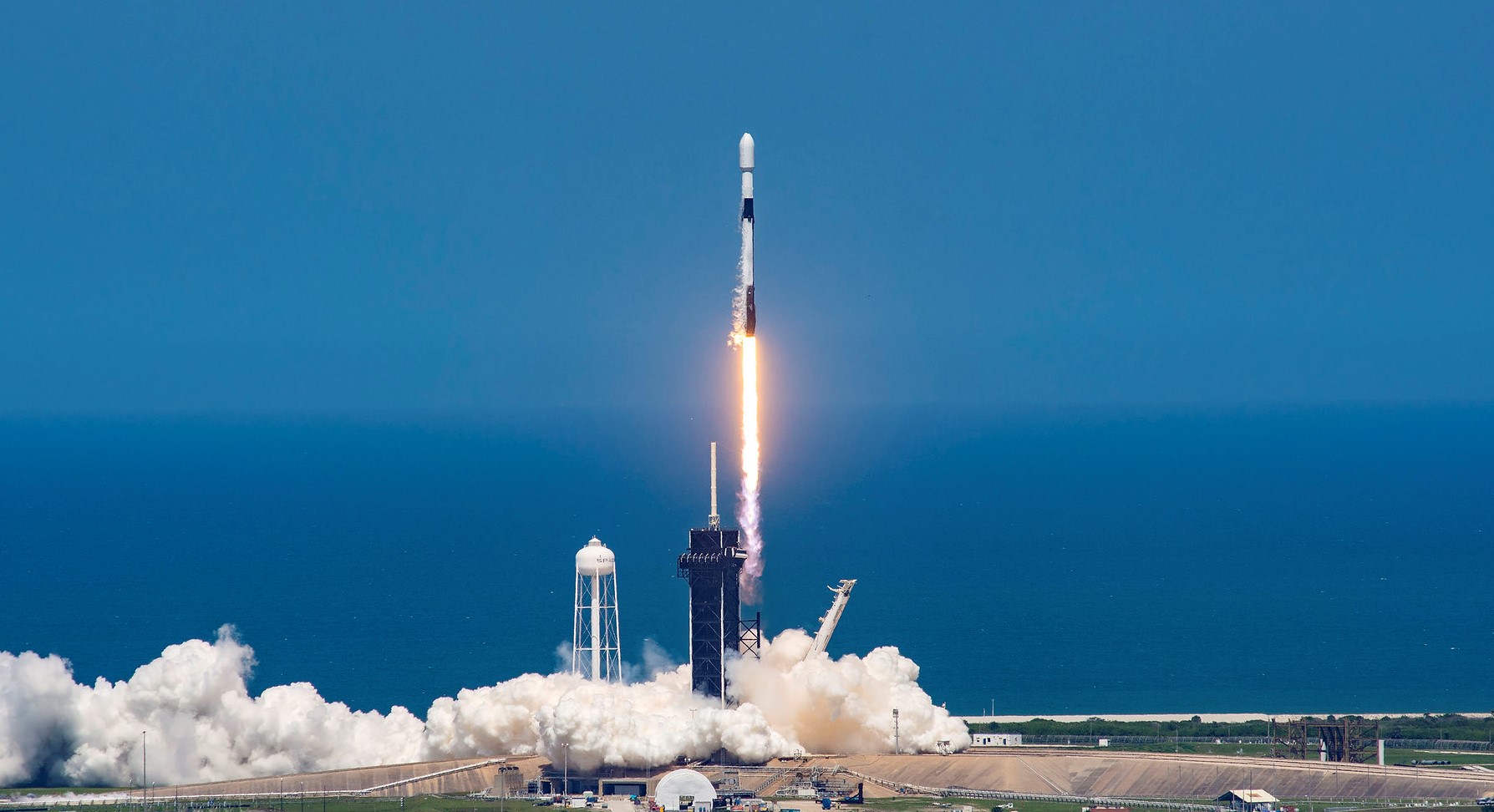
Launch Provider: SpaceX – Commercial
Launch Date: March 17, 2026
Launch Time: 5:19 AM UTC
Vehicle: Falcon 9
Brief: A batch of 25 satellites for the Starlink mega-constellation – SpaceX’s project for space-based Internet communication system.
Starlink Group 10-46
Launch Provider: SpaceX – Commercial
Launch Date: March 17, 2026
Launch Time: 1:27 PM UTC
Vehicle: Falcon 9
Brief: A batch of 29 satellites for the Starlink mega-constellation – SpaceX’s project for space-based Internet communication system.
Unknown Payload
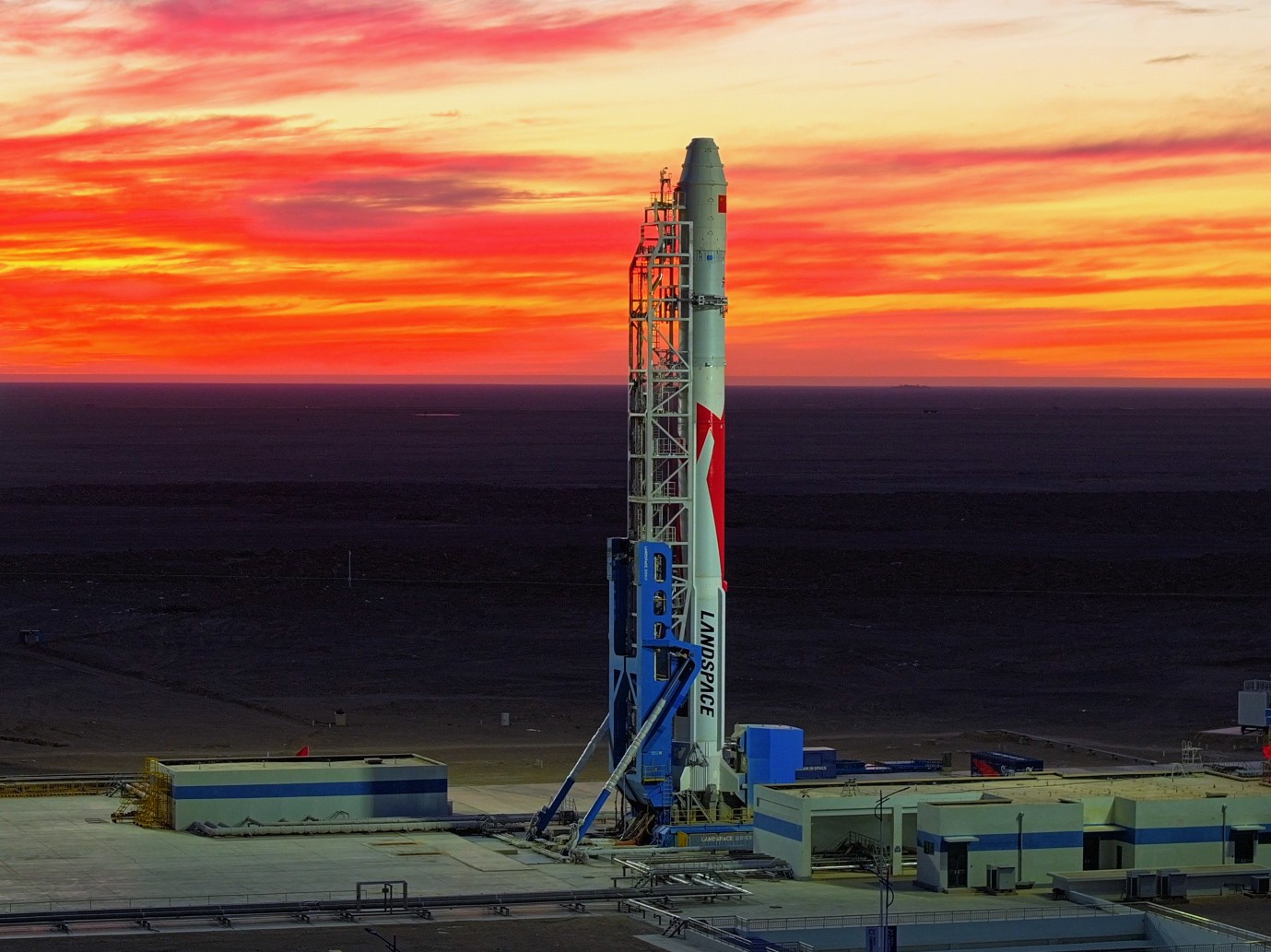
Launch Provider: LandSpace – Commercial
Launch Date: March 19, 2026
Launch Time: 4:00 AM UTC
Vehicle: Zhuque-2E
Brief: Details TBD.
📽️ No Livestream scheduled yet
Starlink Group 10-33
Launch Provider: SpaceX – Commercial
Launch Date: March 19, 2026
Launch Time: 10:35 AM UTC
Vehicle: Falcon 9
Brief: A batch of 29 satellites for the Starlink mega-constellation – SpaceX’s project for space-based Internet communication system.
Eight Days A Week (StriX Launch 8)
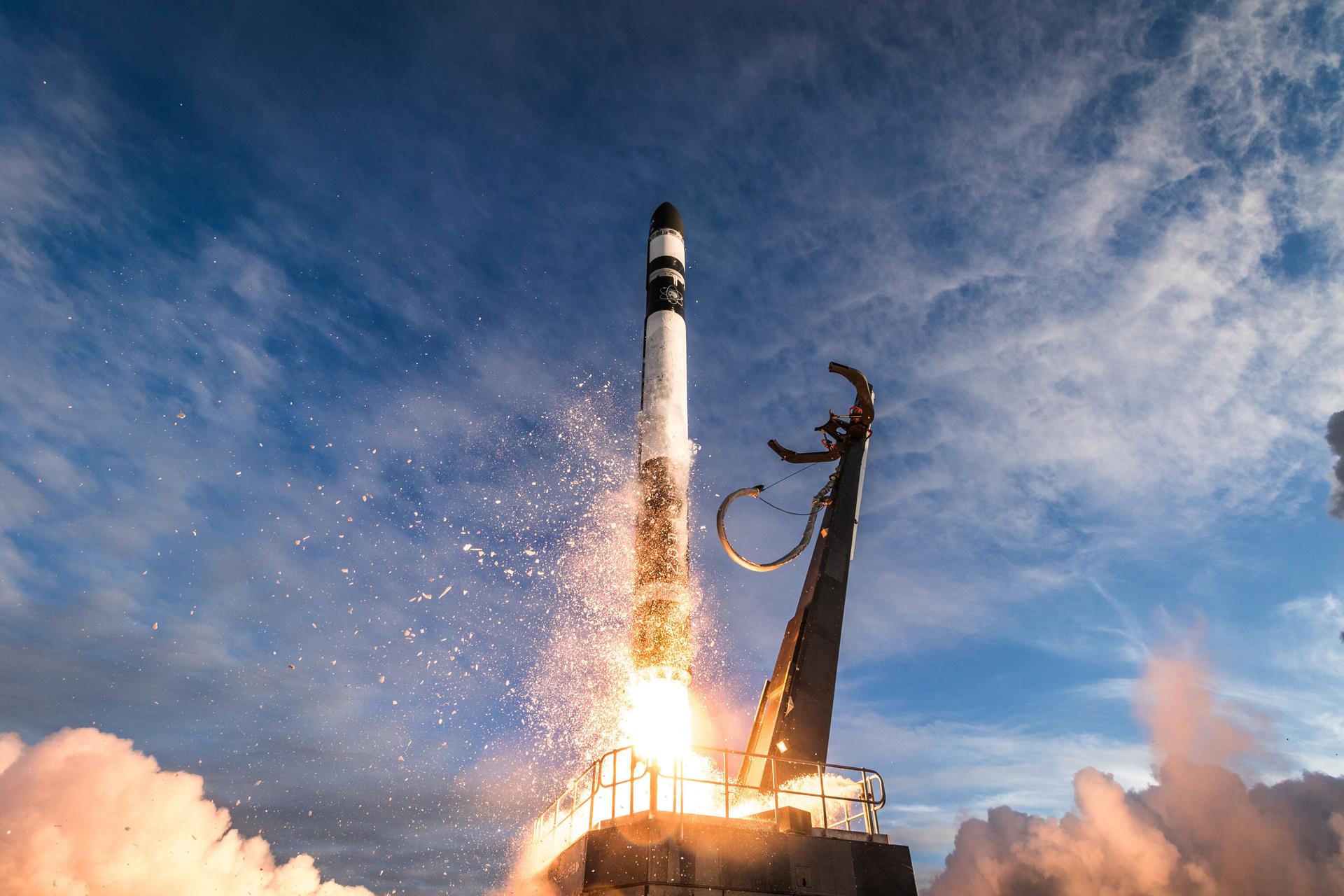
Launch Provider: Rocket Lab – Commercial
Launch Date: March 19, 2026
Launch Time: 5:45 PM UTC
Vehicle: Electron
Brief: Synthetic aperture radar satellite for Japanese Earth imaging company Synspective.
📽️ No Livestream scheduled yet
