
The SpaceX Report: Starship’s Block 3 Evolution and a Week of Relentless Falcon Flights
Starship’s Block 3: More Propellant, Smarter Systems
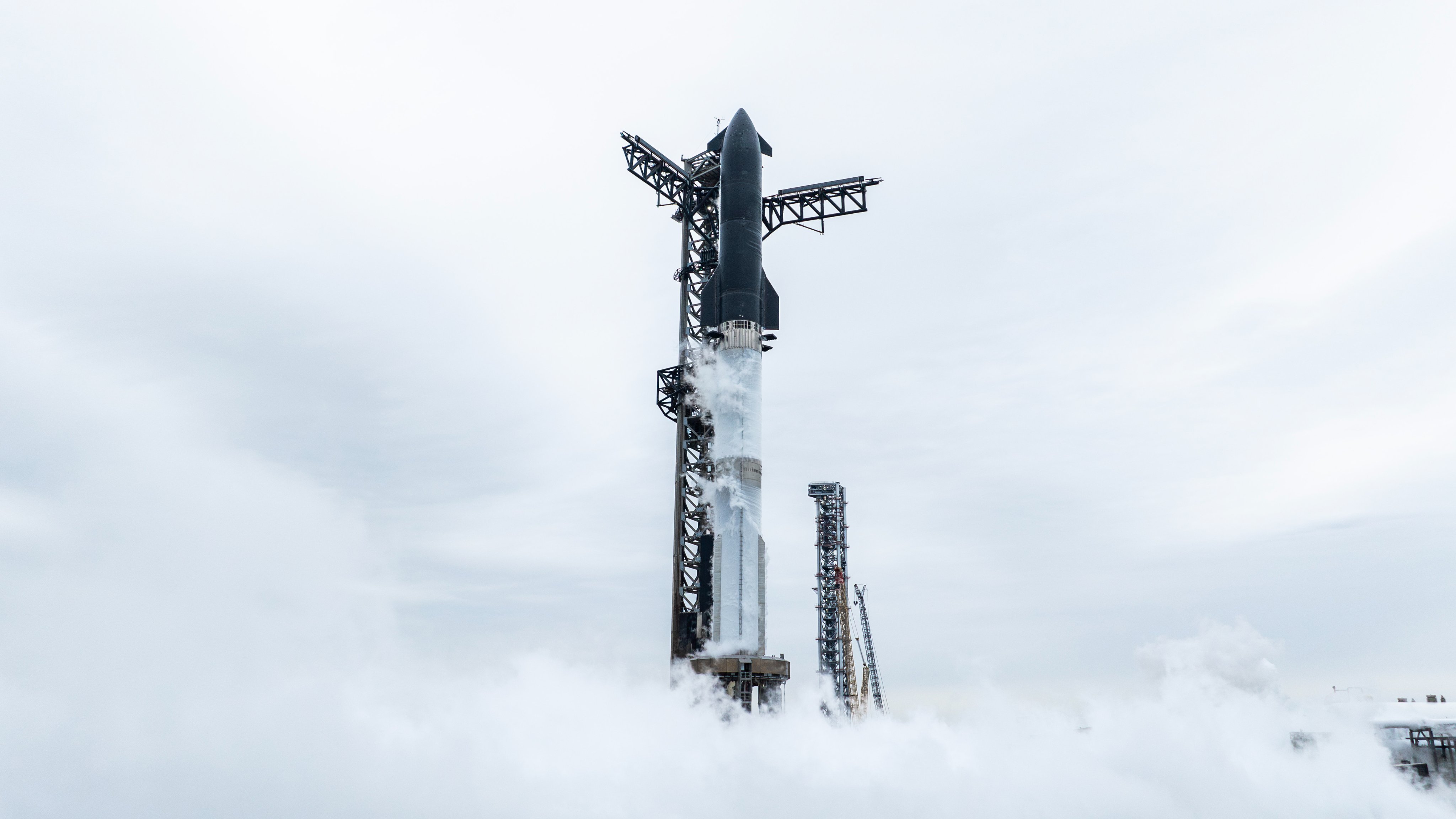
As of March 9, 2026, SpaceX is deep into preparations for Starship Flight 12, with Ship 39 undergoing a series of preflight tests at Massey’s test site near Starbase, Texas. The vehicle represents the first fully realized example of the Block 3 design—a subtle but significant evolution over Block 2 that prioritizes orbital refueling readiness and structural resilience.
Externally, Ship 39 appears nearly complete, with its thermal protection system (TPS) covering almost the entire vehicle. Only a few tiles are missing near the forward flaps, likely to accommodate load sensors during truss testing. Internally, SpaceX has re-engineered the tank architecture: both the common dome (separating liquid oxygen and liquid methane) and the aft dome have been lowered, boosting usable propellant capacity by roughly 100 metric tonnes. That extra fuel is critical for Starship’s next major objective—in-orbit refueling demonstrations.
Ship 39 will also debut the Raptor 3 engine in flight, featuring three sea-level and three vacuum variants. Raptor 3 is markedly simpler than earlier versions, eliminating bulky heat-shield blankets and relying instead on internal cryogenic cooling channels. The ship’s docking hardware is now clearly visible, and a redesigned quick disconnect plate splits liquid methane and liquid oxygen lines—key infrastructure for propellant transfer.
Testing has progressed rapidly since Ship 39’s rollout in late February, including ambient and full cryogenic loading on February 27–28 and March 1. However, SpaceX faces a logistical snag: the dedicated cryo-proof stand remains occupied, forcing the company to potentially skip full tank proofing or relocate the vehicle later. Despite this, engineers appear confident in Ship 39’s build quality.
Flight 12 is expected in the April 2026 timeframe. If successful, it will aim not only to validate ascent and re-entry but also to lay the groundwork for the first orbital refueling tests—a pivotal step toward lunar and Mars missions.
Starbase Infrastructure Rebounds After Anomaly
Starbase’s ground infrastructure continues to recover from the Ship 36 anomaly in late 2025, with recent upgrades focused on safety and catch-readiness. A new truss structure at Massey’s test site—installed during post-accident rebuilds—is now being used to simulate the aerodynamic and mechanical loads Ship 39 will experience during a tower catch attempt. The truss applies forces to the ship’s forward and aft flaps as well as its payload bay, mimicking the grip of the “chopstick” arms on the launch tower.
Support systems have also been reinforced: the tank farm has been upgraded, and pad hardware is more robust to handle the stresses of repeated cryogenic testing and eventual flight operations. Notably, Ship 39 already features newly designed catch points—hard mounting locations that will interface directly with the tower arms—replacing the bespoke lift points used on earlier prototypes.
On March 8, Booster 19 rolled out to the launch site, marking another step toward Flight 12. While it’s unclear whether Booster 19 will undergo static fire testing on Pad 2 before stacking with Ship 39, its appearance signals that SpaceX is pressing forward despite earlier setbacks. The integration of Block 3 vehicles with upgraded ground systems suggests Starbase is transitioning from rapid prototyping to operational readiness—even if some test stands remain bottlenecked.
Falcon 9 Keeps Canada Connected, Hits Recovery Milestones
SpaceX maintained its blistering launch cadence this week, flying four Starlink missions across Florida and California. Most relevant to Canadian readers: the Starlink constellation continues to expand, enhancing coverage and capacity across the country. Starlink service is already widely used in rural and remote Canadian communities, and these latest deployments support ongoing network upgrades.
On March 1, Falcon 9 launched Starlink Group 10-41 from Cape Canaveral, with booster B1078 completing its 26th flight. Three more missions followed: Starlink 10-40 on March 4 (B1080’s 25th flight), Starlink 17-18 on March 8 from Vandenberg (B1097’s 7th flight), and Starlink 17-31—also from Vandenberg—scheduled for March 9 at 10:58 UTC.
That final launch will be historic: booster B1071, flying its 32nd mission, will attempt to land on Of Course I Still Love You in the Pacific, marking SpaceX’s 600th Falcon booster recovery attempt. As of March 8, the company had successfully landed 582 boosters—B1097’s touchdown after the 17-18 mission was the most recent addition.

Starlink Mobile V2 Heads to Europe—with Canadian Precedent
While Canadians already enjoy Starlink’s satellite internet service, a new development hints at even broader connectivity on the horizon. On March 2, Deutsche Telekom announced plans to bring Starlink Mobile V2—SpaceX’s direct-to-smartphone service—to Europe by 2028, using upgraded satellites operating in Mobile Satellite Service (MSS) spectrum.
Canadians may find this familiar: since 2024, select smartphones in Canada have supported Starlink’s Direct-to-Cell service for basic messaging and emergency alerts. The next-generation V2 satellites, slated to begin launching in mid-2027 aboard Starship, promise peak speeds of up to 150 Mbps—effectively 5G from orbit. Each Starship could carry more than 50 of these larger satellites, enabling rapid global deployment.
For now, the service in Canada remains limited to text and select apps, but the European announcement reinforces SpaceX’s global ambitions. Regulatory approvals and compatible handset chips are still needed, but the groundwork—laid partly in Canadian skies—is well underway.

Citations
- “Former NASA chief turned ULA lobbyist seeks law to limit SpaceX funding” – https://arstechnica.com/space/2026/03/former-nasa-chief-turned-ula-lobbyist-seeks-law-to-limit-spacex-funding/
- “Launch Preview: Japan to launch Kairos as Falcon 9 launches Starlink missions” – https://www.nasaspaceflight.com/2026/03/launch-preview-030226/
- “SpaceX launches Falcon 9 rocket launch from Vandenberg SFB Sunday” – https://spaceflightnow.com/2026/03/06/live-coverage-spacex-plans-mid-afternoon-falcon-9-rocket-launch-from-vandenberg-sfb/
- “Deutsche Telekom aims to bring Starlink Mobile V2 to Europe in 2028” – https://spacenews.com/deutsche-telekom-aims-to-bring-starlink-mobile-v2-to-europe-in-2028/
- “Booster 19 Rollout to the Launch Site” – https://ll.thespacedevs.com/2.2.0/event/1339/
Upcoming Starship Launches
Flight 12

Launch Provider: SpaceX – Commercial
Launch Date: March 31, 2026
Launch Time: 12:00 AM UTC
Vehicle: Starship
Brief: 12th test flight of the two-stage Starship launch vehicle. Maiden Flight of Starship V3
📽️ No Livestream scheduled yet
Flight 13
Launch Provider: SpaceX – Commercial
Launch Date: June 30, 2026
Launch Time: 12:00 AM UTC
Vehicle: Starship
Brief: 13th test flight of the two-stage Starship launch vehicle. Second flight of Starship V3
📽️ No Livestream scheduled yet
Superbird-9
Launch Provider: SpaceX – Commercial
Launch Date: June 30, 2027
Launch Time: 12:00 AM UTC
Vehicle: Starship
Brief: Superbird-9 is a high throughput communication satellite. It is designed to deliver broadcast and broadband missions in Ku band primarily over Japan and Eastern Asia, in response to mobility and broadband demands.
📽️ No Livestream scheduled yet
Starlab
Launch Provider: SpaceX – Commercial
Launch Date: December 31, 2029
Launch Time: 12:00 AM UTC
Vehicle: Starship
Brief: Private space station developed by a joint venture between Voyager Space and Airbus.
📽️ No Livestream scheduled yet
Upcoming Falcon Heavy Launches
ViaSat-3 F3 (ViaSat-3 Asia-Pacific)
Launch Provider: SpaceX – Commercial
Launch Date: June 30, 2026
Launch Time: 12:00 AM UTC
Vehicle: Falcon Heavy
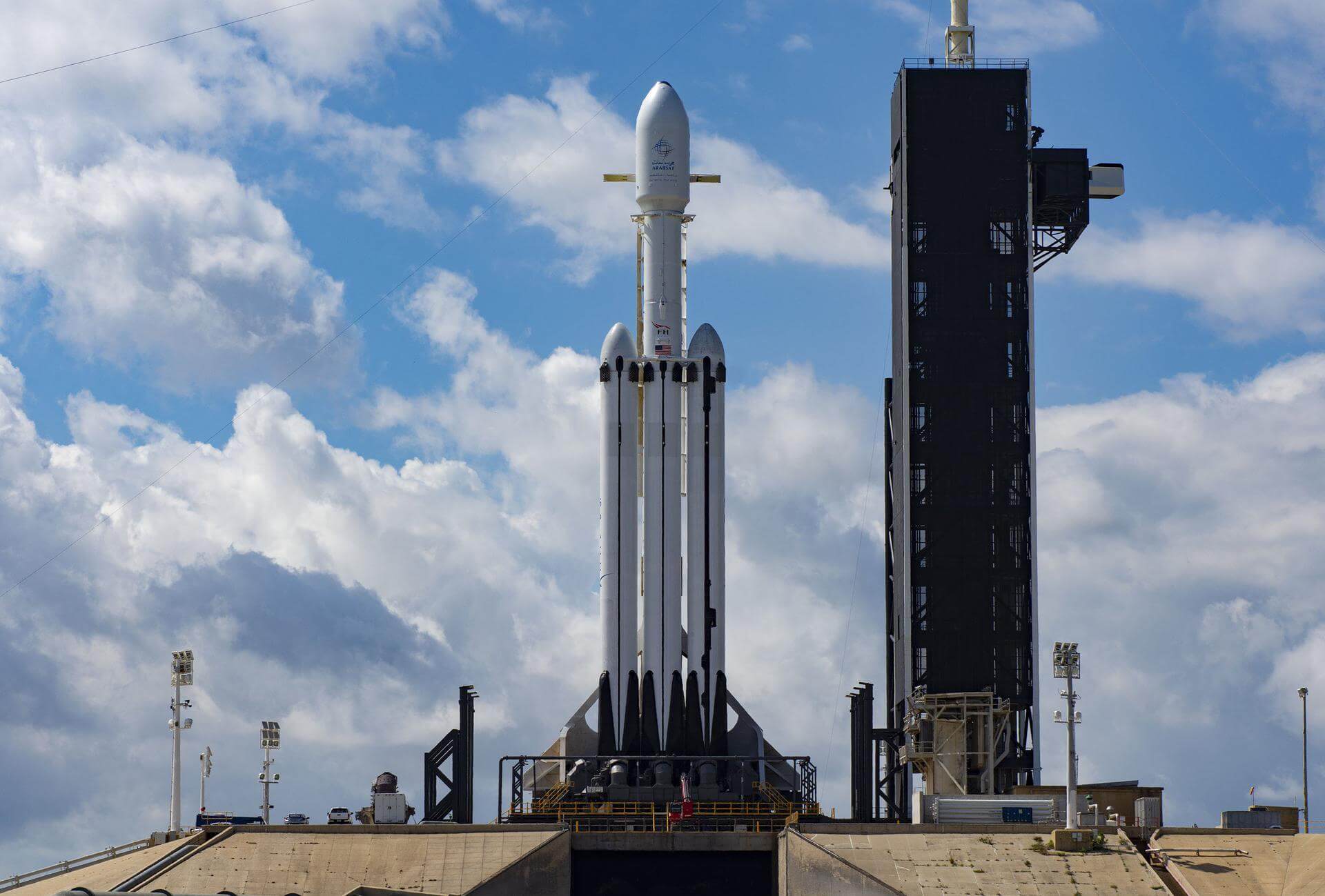
Brief: The ViaSat-3 is a series of three Ka-band satellites is expected to provide vastly superior capabilities in terms of service speed and flexibility for a satellite platform. Each ViaSat-3 class satellite is expected to deliver more than 1-Terabit per second of network capacity, and to leverage high levels of flexibility to dynamically direct capacity to where customers are located.
📽️ No Livestream scheduled yet
Griffin Mission One
Launch Provider: SpaceX – Commercial
Launch Date: July 31, 2026
Launch Time: 12:00 AM UTC
Vehicle: Falcon Heavy
Brief: Demonstration flight of the Astrobotic Griffin lander and its engines, initially contracted for the cancelled NASA VIPER (Volatiles Investigating Polar Exploration Rover) mission. The vacated payload spot will now host the FLIP (FLEX Lunar Innovation Platform) lunar rover from Astrolab.
📽️ No Livestream scheduled yet
Nancy Grace Roman Space Telescope
Launch Provider: SpaceX – Commercial
Launch Date: September 28, 2026
Launch Time: 12:00 AM UTC
Vehicle: Falcon Heavy
Brief: The Nancy Grace Roman Space Telescope is a NASA infrared space telescope with a 2.4 m (7.9 ft) wide field of view primary mirror and two scientific instruments. The Wide-Field Instrument (WFI) is a 300.8-megapixel multi-band visible and near-infrared camera, providing a sharpness of images comparable to that achieved by the Hubble Space Telescope over a 0.28 square degree field of view, 100 times larger than imaging cameras on the Hubble. The Coronagraphic Instrument (CGI) is a high-contrast, small field of view camera and spectrometer covering visible and near-infrared wavelengths using novel starlight-suppression technology. Roman objectives include a search for extra-solar planets using gravitational microlensing, and probing the expansion history of the Universe and the growth of cosmic structure, with the goal of measuring the effects of dark energy, the consistency of general relativity, and the curvature of spacetime.
📽️ No Livestream scheduled yet
USSF-70
Launch Provider: SpaceX – Commercial
Launch Date: December 31, 2026
Launch Time: 12:00 AM UTC
Vehicle: Falcon Heavy
Brief: Classified payload for the United States Space Force
📽️ No Livestream scheduled yet
USSF-75
Launch Provider: SpaceX – Commercial
Launch Date: December 31, 2026
Launch Time: 12:00 AM UTC
Vehicle: Falcon Heavy
Brief: Classified payload for the United States Space Force
📽️ No Livestream scheduled yet
