
The Daily Broadcast: From Pad Repairs to Rocket Rollouts: Global Space Activity Heats Up

Baikonur Pad Restored Ahead of Crucial Progress Cargo Mission
Russia’s Baikonur Cosmodrome has bounced back from a dramatic mishap late last year, with Roscosmos confirming that launch Site 31/6 is fully operational once again. The pad suffered significant damage on November 27, 2025, during the otherwise successful liftoff of Soyuz MS-28. Though the spacecraft safely delivered cosmonauts Sergey Kud-Sverchkov and Sergei Mikayev, along with NASA astronaut Christopher Williams, to the International Space Station (ISS), the rocket’s exhaust plume dislodged a 17-tonne service cabin—essentially a mobile maintenance platform—that collapsed into the flame trench below.
With Site 31/6 being Russia’s only active pad for both crewed Soyuz and uncrewed Progress missions to the ISS, swift repairs were essential. Drawing on spare parts dating back to Soviet-era refurbishment plans, Roscosmos completed extensive restoration work in under two months. Teams replaced fasteners, rewired electrical systems, welded over 250 metres of structure, and repainted more than 2,300 square metres of infrastructure.
The first test of the repaired pad will be the Progress MS-33 resupply mission, currently scheduled for March 22, 2026, at approximately 11:59 UTC. The cargo spacecraft will deliver roughly 2.5 tonnes of essentials to the ISS, including food, water, propellant, and scientific equipment. Engineers are reportedly scrutinizing the re-secured service cabin mechanisms to prevent a repeat of last year’s incident—because, frankly, spaceflight is hard enough without pads falling apart mid-launch.

SpaceX Rolls Out Booster 19 for Starship Testing
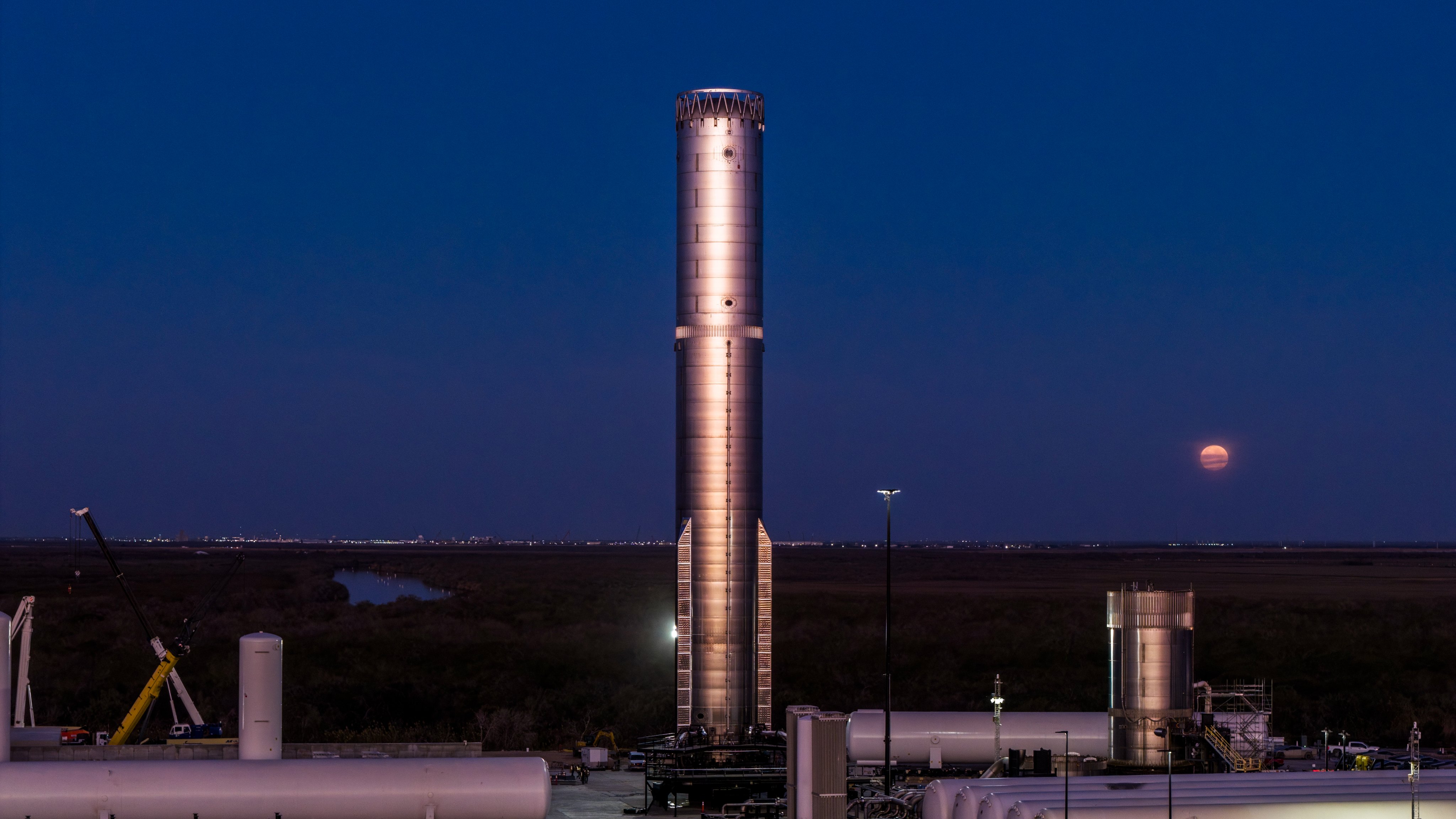
Over in Starbase, Texas, SpaceX marked March 8, 2026, with a significant milestone: the rollout of Starship Booster 19 to the launch site. This event, confirmed by tracking services and observed early this morning, signals the next phase in SpaceX’s relentless pursuit of orbital flight certification for its massive Starship system.
Booster 19—the latest in SpaceX’s evolving series of Super Heavy prototypes—is expected to undergo a series of ground tests, potentially including static fire firings of its 33 Raptor engines. While no specific launch date has been announced, this rollout aligns with SpaceX’s iterative development philosophy: build, test, learn, and repeat. Given the company’s pace, it’s reasonable to expect Booster 19 to support a future integrated Starship flight later this year, pending successful validation.
Notably, this activity comes as global interest in super-heavy lift capabilities intensifies. With NASA relying on Starship for Artemis lunar landings and commercial partners eyeing deep-space logistics, the progress at Starbase remains a key barometer for the future of space access. For Canadian observers, this is especially relevant: Canada’s contributions to the U.S.-led Gateway space station—via the Canadarm3 robotic system—will ultimately depend on vehicles like Starship for assembly and resupply.
German Startup RFA Advances Toward First Orbital Launch from Scotland
German launch company Rocket Factory Augsburg (RFA) has taken a concrete step toward its inaugural orbital flight, delivering the first and second stages of its RFA ONE rocket to SaxaVord Spaceport in Scotland as of March 6, 2026. The company now aims to conduct its first launch this summer, marking a potential milestone for European access to space.
The first stage arrived directly from RFA’s Augsburg factory, while the second stage came from Esrange, Sweden, where it underwent a successful hot-fire test. However, the nine Helix engines for the first stage remain in Sweden, undergoing final acceptance testing before shipment. Once assembled, the vehicle will undergo integration and additional testing at SaxaVord, likely including pad-based static fire trials—a necessary caution after a 2024 test incident destroyed a previous prototype due to an engine anomaly.
RFA is one of several European startups competing to fill the continent’s smallsat launch gap. It received €190.5 million in support from the European Space Agency’s Launcher Challenge, primarily funded by Germany. If successful, RFA’s summer launch would make SaxaVord—the UK’s first vertical launch spaceport—a key node in Europe’s emerging launch ecosystem. While Canada isn’t directly involved in this mission, the rise of new launch providers globally benefits Canadian satellite operators seeking flexible, responsive launch options for Earth observation and communications payloads.

Citations
- “Baikonur Launch Pad restored, clearing path for Progress MS-33 ISS Mission” – https://www.nasaspaceflight.com/2026/03/baikonur-launch-pad-restored-progress-ms-33/
- “RFA plans first launch this summer” – https://spacenews.com/rfa-plans-first-launch-this-summer/
- “Booster 19 Rollout to the Launch Site” – https://ll.thespacedevs.com/2.2.0/event/1339/
Upcoming Launches
Starlink Group 17-18

Launch Provider: SpaceX – Commercial
Launch Date: March 8, 2026
Launch Time: 11:00 AM UTC
Vehicle: Falcon 9
Brief: A batch of 25 satellites for the Starlink mega-constellation – SpaceX’s project for space-based Internet communication system.
Stairway to Seven
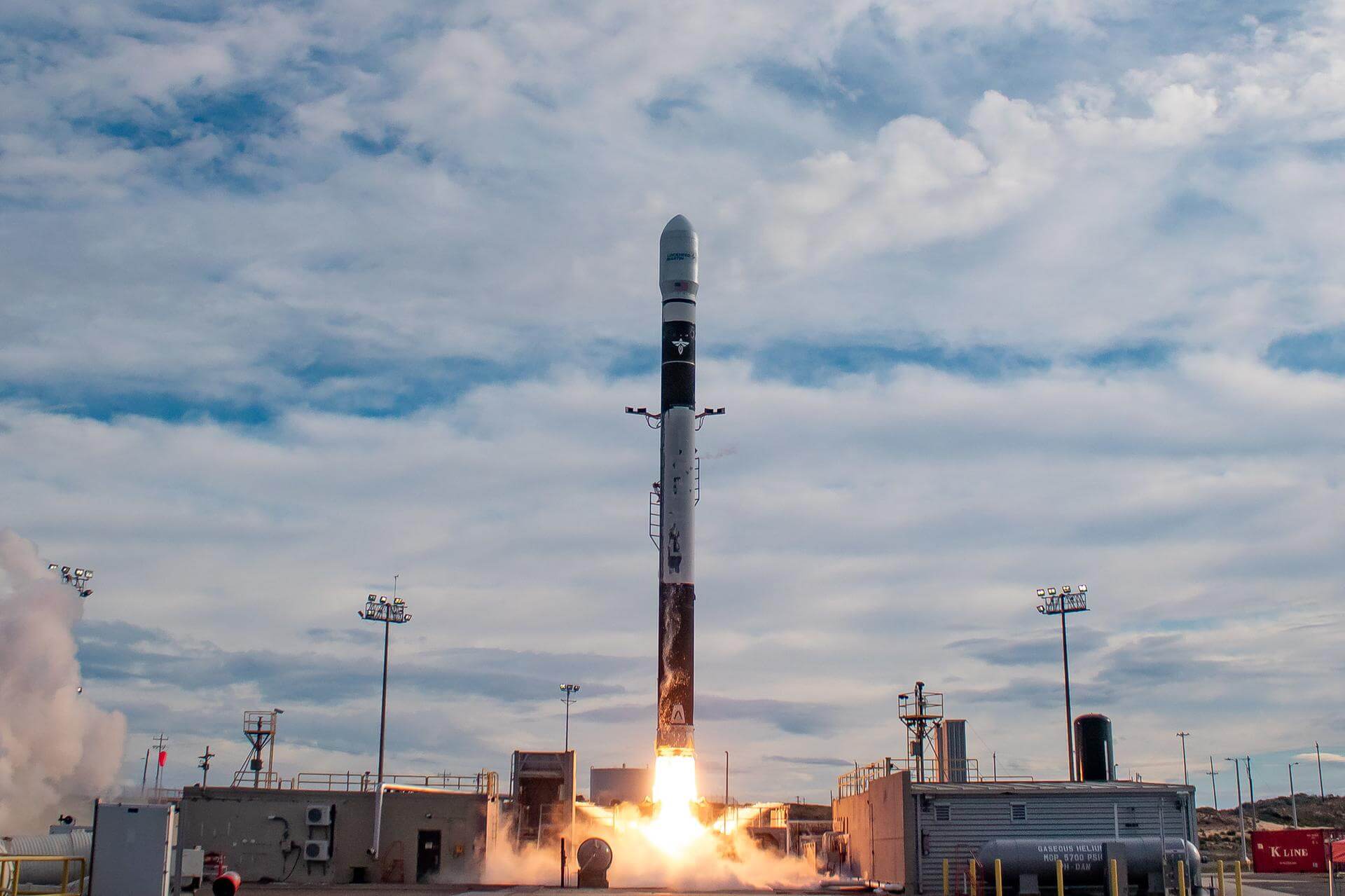
Launch Provider: Firefly Aerospace – Commercial
Launch Date: March 10, 2026
Launch Time: 12:50 AM UTC
Vehicle: Firefly Alpha
Brief: Firefly Alpha’s Flight 7 will be a test flight and return-To-Flight for the launch vehicle after its April 2025 launch failure. It will test and validate key systems ahead of Firefly’s Block II configuration upgrade on Flight 8 that’s designed to enhance reliability and manufacturability across the vehicle.
Flight 7 will be the last flown in Alpha’s current configuration and will test multiple Block II subsystems, including the in-house avionics and thermal improvements, to gain flight heritage and validate lessons learned ahead of the full configuration upgrade on Flight 8.
EchoStar 25
Launch Provider: SpaceX – Commercial
Launch Date: March 10, 2026
Launch Time: 3:14 AM UTC
Vehicle: Falcon 9
Brief: EchoStar 25 is a direct broadcast satellite, built on the proven Maxar 1300 series platform, which will deliver content across North America. It will be equipped with a high-power, multi-spot beam payload, allowing DISH to provide high-quality content to its customers.
Starlink Group 17-31
Launch Provider: SpaceX – Commercial
Launch Date: March 11, 2026
Launch Time: 10:58 AM UTC
Vehicle: Falcon 9
Brief: A batch of 25 satellites for the Starlink mega-constellation – SpaceX’s project for space-based Internet communication system.
Starlink Group 10-48
Launch Provider: SpaceX – Commercial
Launch Date: March 12, 2026
Launch Time: 10:00 AM UTC
Vehicle: Falcon 9
Brief: A batch of 29 satellites for the Starlink mega-constellation – SpaceX’s project for space-based Internet communication system.
