
The Daily Broadcast: Orbital Handoffs, Asteroid Deflections, and Europe’s Launch Ambitions
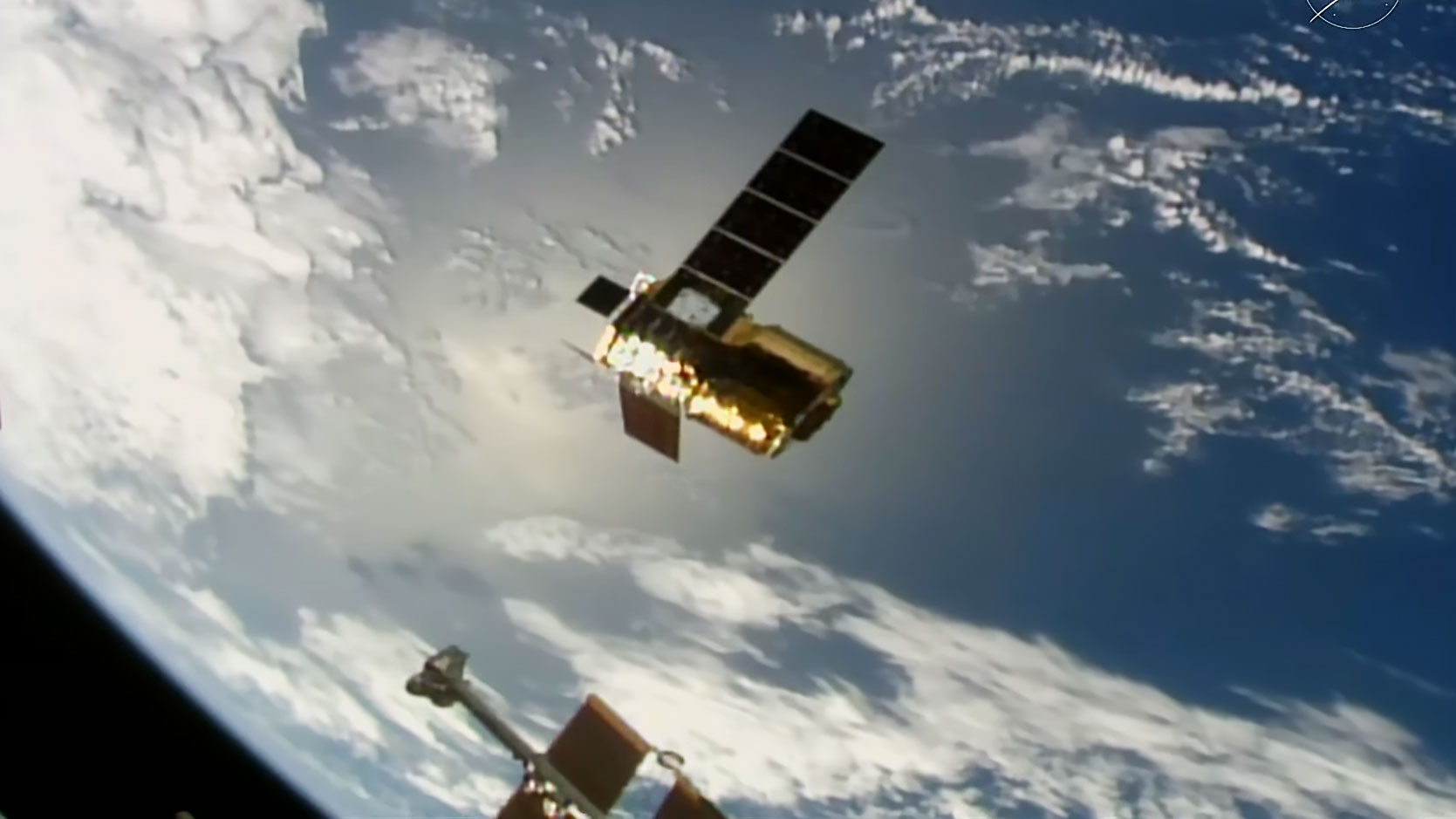
Canadarm2 Sends Japanese Cargo Craft on Its Final Journey
On March 6, 2026, at 12:00 p.m. EST, the International Space Station’s Canadian-built robotic arm, Canadarm2, released JAXA’s HTV-X1 cargo spacecraft after more than four months docked to the Harmony module. The unberthing marked the start of HTV-X1’s controlled departure from the orbiting laboratory, which occurred while the station flew approximately 260 miles over the Pacific Ocean. The spacecraft had delivered over 9,000 pounds of supplies, scientific hardware, and commercial cargo to the ISS and its international partners upon its arrival last November.
Following its release, HTV-X1 began its deorbit preparations and is expected to perform a destructive re-entry into Earth’s atmosphere in the coming days, safely disposing of station waste along with it. This mission represents the debut flight of Japan’s next-generation HTV-X cargo vehicle, designed to be more cost-effective and versatile than its predecessor, the HTV. The smooth handoff once again highlights the indispensable role of Canada’s robotic systems in maintaining ISS logistics—a legacy that continues to bolster Canada’s reputation in space robotics. With Canadarm3 development underway for the future Lunar Gateway, today’s operations offer a quiet but vital reminder of Canadian contributions to orbital operations.
DART’s Ripple Effect: NASA Confirms Asteroid System’s Solar Orbit Altered
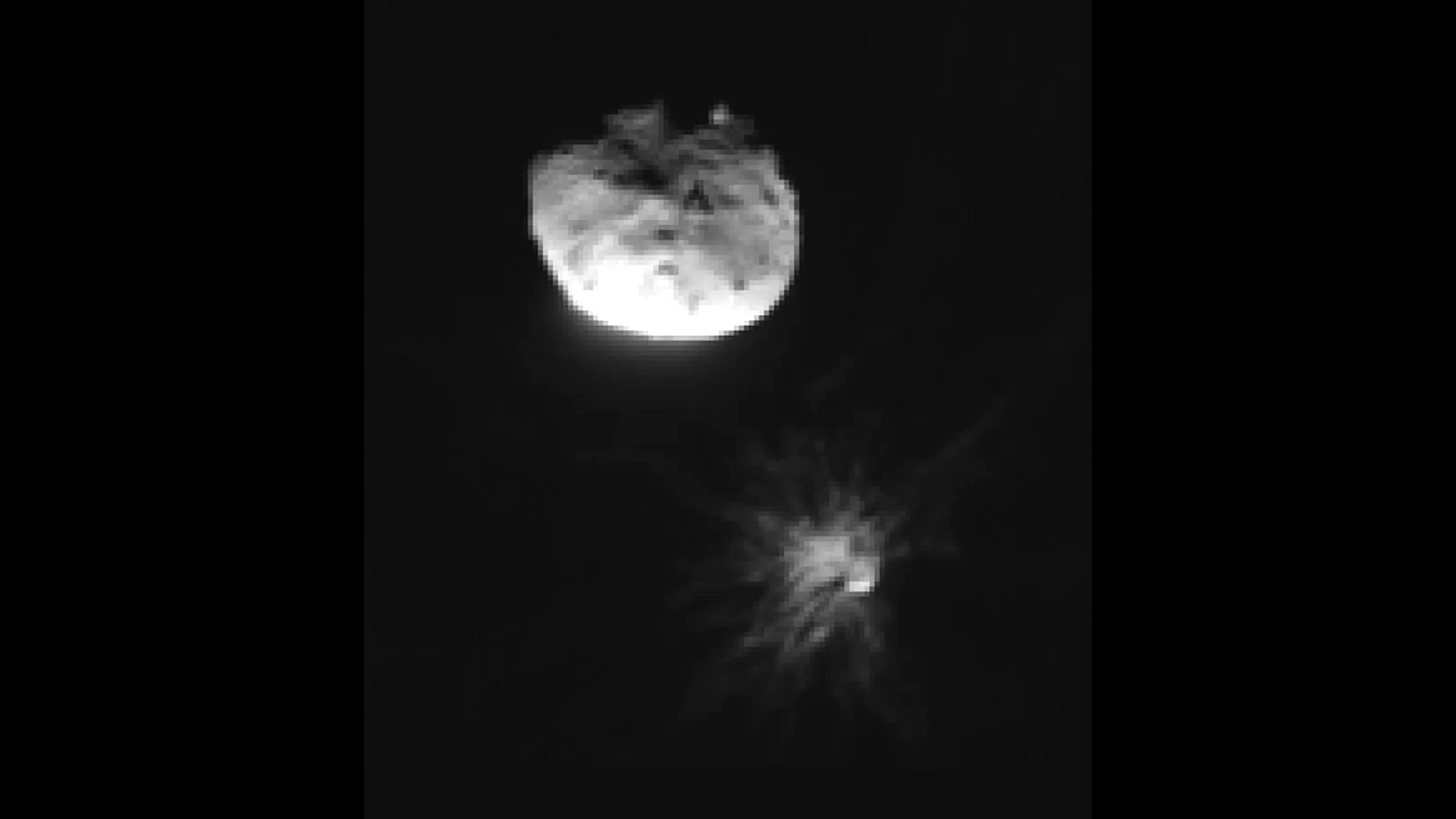
In a striking confirmation of planetary defence capabilities, NASA announced on March 6, 2026, that its 2022 Double Asteroid Redirection Test (DART) mission did more than just nudge a moonlet—it shifted the entire binary asteroid system’s path around the Sun. New research published in Science Advances reveals that the kinetic impact on Dimorphos, a small moonlet orbiting the larger asteroid Didymos, altered the pair’s 770-day solar orbit by 0.15 seconds. While seemingly minuscule, this change—equivalent to a velocity shift of just 11.7 microns per second—demonstrates that even modest interventions can, over time, significantly deflect a potentially hazardous object.
The study, led by researchers at the University of Illinois Urbana-Champaign and NASA’s Jet Propulsion Laboratory, relied on 22 stellar occultation observations between October 2022 and March 2025, gathered by a global network of volunteer astronomers. These precise measurements confirmed that the debris plume ejected during impact provided a “momentum enhancement factor” of about two—doubling the deflection effect beyond the spacecraft’s mass alone. Though Didymos posed no threat to Earth, the experiment validates kinetic impact as a viable planetary defence strategy. As NASA advances the NEO Surveyor mission—a space-based telescope designed to detect hard-to-see near-Earth objects—this success reinforces the importance of early detection and intervention. As one scientist put it: “Even a tiny change can grow to a significant deflection.”
UK’s First Orbital Launch Edges Closer as RFA Delivers Rocket Stages to Scotland
The United Kingdom is on the cusp of achieving orbital launch capability from its own soil, thanks to German firm Rocket Factory Augsburg (RFA). On March 6, 2026, RFA confirmed that both the first and second stages of its RFA ONE rocket have arrived at SaxaVord Spaceport in Scotland’s Shetland Islands—a remote but strategically advantageous site for polar launches. This delivery marks a major recovery milestone following a 2024 static fire test anomaly that destroyed the original first stage. Since then, RFA has overhauled its Helix engines, tank pressurization systems, and operational protocols.
The 30-meter-tall, stainless-steel RFA ONE is designed to carry up to 1,300 kilograms to low Earth orbit and features a staged-combustion engine cycle uncommon among small launchers. Final integration is now underway at SaxaVord’s newly completed Assembly, Integration, and Testing (AIT) hangar, while nine Helix engines undergo acceptance testing at Sweden’s Esrange Space Center before shipment. A 52-meter umbilical tower at Launch Pad Fredo is already standing, and commissioning activities—including a planned integrated hot-fire test—are progressing toward an inaugural orbital test flight currently targeted for summer 2026. Should it succeed, this mission would not only be the UK’s first domestic orbital launch but also a pivotal moment for Europe’s push toward independent access to space. With rivals like Orbex having folded, RFA now stands as the frontrunner in this historic endeavour.

Citations
- “Canadian Robotic Arm Releases Japan’s Spacecraft for Departure” – https://www.nasa.gov/blogs/spacestation/2026/03/06/canadian-robotic-arm-releases-japans-spacecraft-for-departure/
- “NASA’s DART Mission Changed Orbit of Asteroid Didymos Around Sun” – https://www.nasa.gov/missions/dart/nasas-dart-mission-changed-orbit-of-asteroid-didymos-around-sun/
- “UK domestic launch milestone as RFA ONE rocket arrives in Scotland” – https://www.nasaspaceflight.com/2026/03/uk-milestone-domestic-launch-rfa-one-scotland/
