
The Daily Broadcast: Storms, Sovereignty, and the Road to the Moon
 Sun in May 2024, it didn’t just dazzle Earth with auroras visible as far south as Mexico—it also slammed into Mars with extraordinary force. Thanks to the European Space Agency’s (ESA) Mars Express and ExoMars Trace Gas Orbiter (TGO), scientists have now documented the most intense atmospheric response to a solar storm ever observed on the Red Planet. A new study published today in Nature Communications reveals that the storm flooded Mars’s upper atmosphere with electrons, increasing their density by 45% at 110 km altitude and a staggering 278% at 130 km.
The TGO’s radiation monitor recorded a dose equivalent to 200 “normal” days in just 64 hours. Both orbiters experienced computer glitches—a common hazard during space weather events—but quickly recovered thanks to radiation-resistant components and built-in error-correction systems. Researchers used a novel technique called orbiter-to-orbiter radio occultation: Mars Express beamed a signal through Mars’s atmosphere to TGO as it disappeared over the horizon, allowing precise measurements of atmospheric layers. This method, combined with data from NASA’s MAVEN mission, is refining our understanding of how solar activity strips away planetary atmospheres over time—a key factor in Mars’s historical loss of water and air.

Canada’s Space Ambitions Shift from Exploration to Infrastructure
Space is no longer just about astronauts and moon landings—it’s about sovereignty, security, and economic resilience. In a compelling op-ed published today, defence strategist Jennifer Stewart argues that space has become foundational national infrastructure for Canada. From Arctic domain awareness to wildfire monitoring and financial transaction timing, roughly one-fifth of Canada’s economy now relies on space-based systems. With the space environment growing increasingly contested, Canadian military leaders warn that assured access to space is “a requirement of a sovereign, independent nation.”
This shift in perspective aligns with recent developments in Canada’s space sector. MDA Space reported record $1.6 billion in fiscal 2025 revenue, driven largely by defence contracts and satellite production, including work on the Telesat Lightspeed constellation and the U.S. Missile Defense Agency’s SHIELD program. Meanwhile, the Canadian Space Agency is deepening international ties, recently agreeing with India to expand collaboration in space robotics, human spaceflight, and quantum communications. The message is clear: Canada is moving beyond viewing space as a realm of aspiration and embracing it as critical infrastructure that underpins daily life, national security, and economic stability across its vast territory.
Artemis 2 Cleared for April Launch, with Canadian Voice in Mission Control
NASA’s long-awaited Artemis 2 mission—the first crewed lunar flight in over 50 years—is back on track for an April 2026 launch following repairs to a faulty helium seal in the Space Launch System’s ground umbilical system. Engineers have completed the fix, replaced flight batteries across the rocket’s stages, and are preparing for rollout to the launch pad. The mission will carry four astronauts, including Canadian Space Agency astronaut Jeremy Hansen, on a 10-day journey around the Moon.
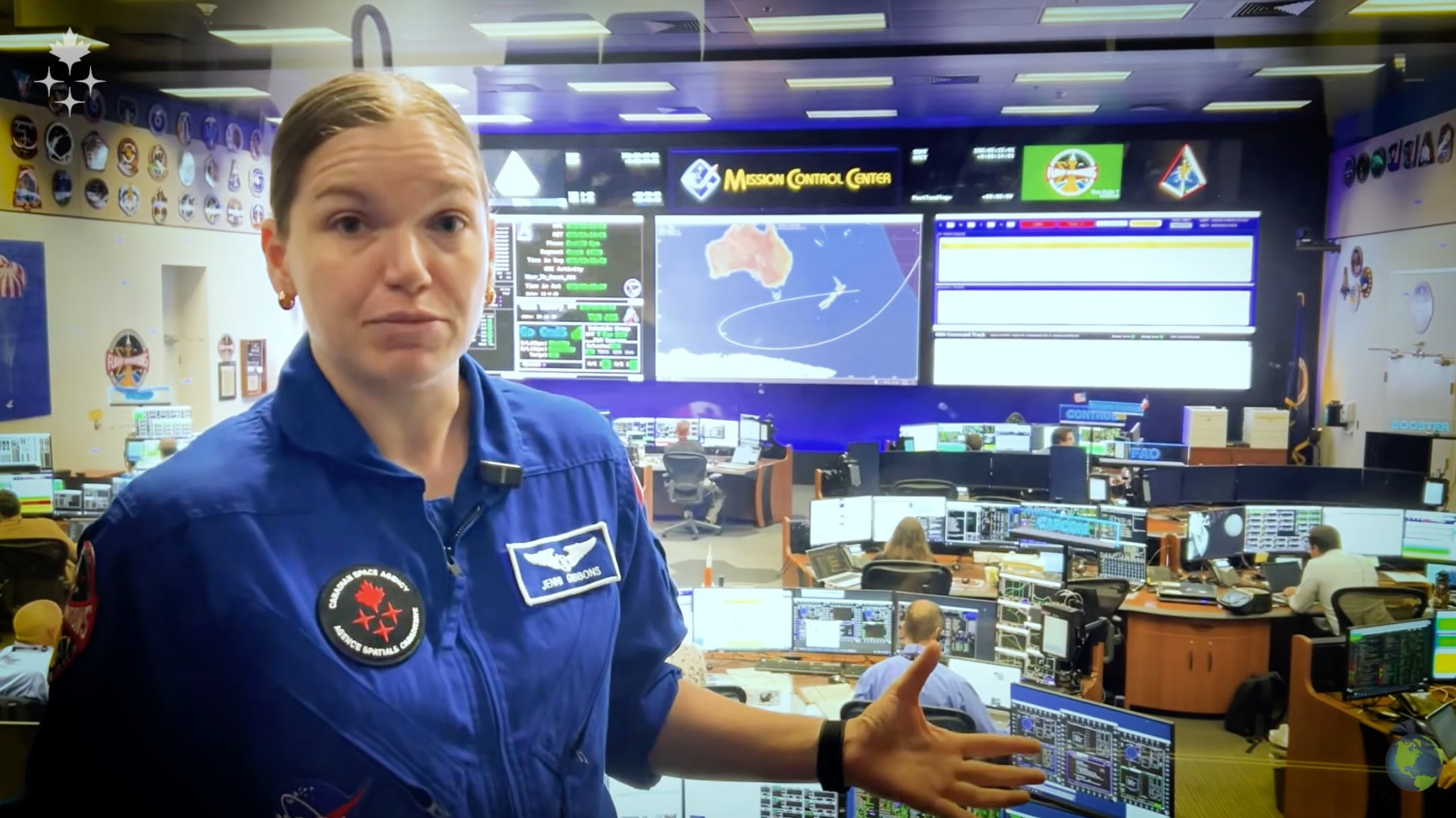
From the ground, another Canadian will play a pivotal role: astronaut Jenni Gibbons has been named Capsule Communicator (Capcom) for the mission, serving as the primary voice between Mission Control in Houston and the crew. In a recent CSA video, Gibbons emphasized the responsibility of distilling the expertise of an entire flight control team into clear, calm communication—especially during high-stakes phases of the mission. “Artemis II is just the beginning,” she said, underscoring Canada’s growing role in deep space exploration. With Artemis 2 targeting a launch window opening April 1, the world—and Canadian space watchers—will soon witness a historic leap forward in lunar exploration.
Citations
- “ESA’s Mars orbiters watch solar superstorm hit the Red Planet” – https://www.esa.int/Science_Exploration/Space_Science/ESAs_Mars_orbiters_watch_solar_superstorm_hit_the_Red_Planet
- “Space isn’t science fiction. It’s Canada’s sovereignty infrastructure” – https://spaceq.ca/space-isnt-science-fiction-its-canadas-sovereignty-infrastructure/
- “The voice of mission control: Jenni Gibbons on guiding Artemis 2 to the Moon” – https://spaceq.ca/the-voice-of-mission-control-jenni-gibbons-on-guiding-artemis-2-to-the-moon/
Upcoming Launches
Flight 3
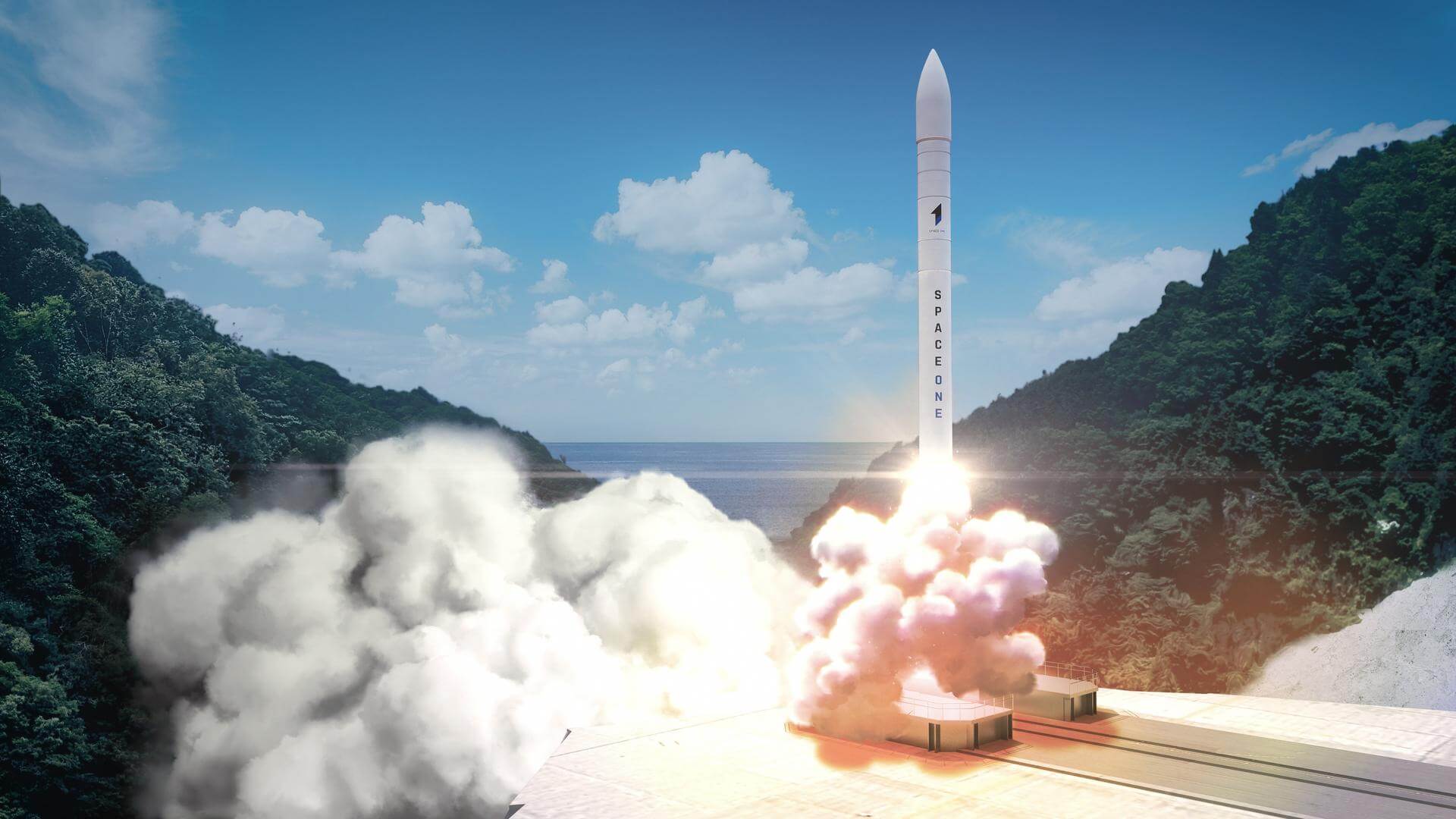
Launch Provider: Space One – Commercial
Launch Date: March 5, 2026
Launch Time: 2:10 AM UTC
Vehicle: KAIROS
Brief: Third flight of the KAIROS launch vehicle.
5 satellites will be on board:
* TATARA-1R
* SC-Sat1a
* HErO
* AETS-1
* Nutsat-3 (TASA/Taiwan)
Starlink Group 17-18
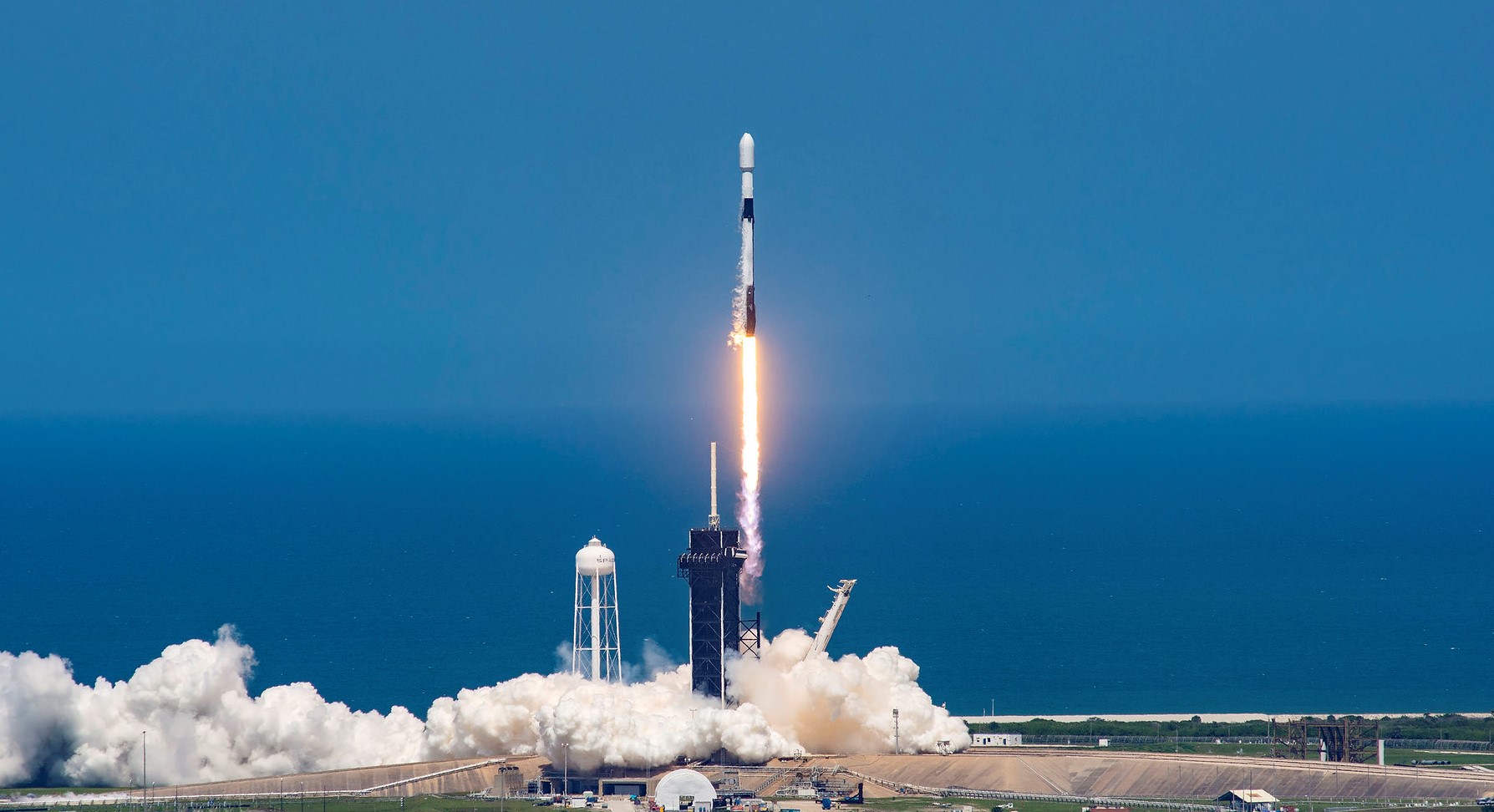
Launch Provider: SpaceX – Commercial
Launch Date: March 7, 2026
Launch Time: 10:58 AM UTC
Vehicle: Falcon 9
Brief: A batch of 25 satellites for the Starlink mega-constellation – SpaceX’s project for space-based Internet communication system.
EchoStar 25
Launch Provider: SpaceX – Commercial
Launch Date: March 10, 2026
Launch Time: 3:14 AM UTC
Vehicle: Falcon 9
Brief: EchoStar 25 is a direct broadcast satellite, built on the proven Maxar 1300 series platform, which will deliver content across North America. It will be equipped with a high-power, multi-spot beam payload, allowing DISH to provide high-quality content to its customers.
Starlink Group 17-31
Launch Provider: SpaceX – Commercial
Launch Date: March 10, 2026
Launch Time: 10:58 AM UTC
Vehicle: Falcon 9
Brief: A batch of 25 satellites for the Starlink mega-constellation – SpaceX’s project for space-based Internet communication system.
Starlink Group 10-48
Launch Provider: SpaceX – Commercial
Launch Date: March 12, 2026
Launch Time: 10:00 AM UTC
Vehicle: Falcon 9
Brief: A batch of 29 satellites for the Starlink mega-constellation – SpaceX’s project for space-based Internet communication system.
