
The Daily Broadcast: Testing, Turnarounds, and Trans-Pacific Ties: A Busy Week in Space

Ship 39 Rolls Out for Critical Starship Testing Ahead of Flight 12
On February 26, 2026, SpaceX’s Starship Ship 39—dubbed “V3 SN1” by Elon Musk—rolled out from Mega Bay 2 to the Masseys test site at Starbase, Texas, marking a significant step toward the upcoming Flight 12. This vehicle represents the first in SpaceX’s Block 3 iteration, featuring a suite of refinements aimed at improving reliability and reusability. Notably, its heat shield now uses standard tiles on the aft section, reducing the need for specialized components, and nearly all tiles are pinned rather than glued—a departure from past designs that struggled with tile adhesion.
At Masseys, Ship 39 will undergo cryogenic proof testing using the newly completed tank farm, followed by structural evaluations of its forward and aft flaps via a dedicated truss structure. Perhaps most forward-looking is the inclusion of drogue housings for in-space docking—critical for future refuelling operations in orbit. The vehicle’s quick disconnect plate has also been redesigned, splitting the liquid oxygen and liquid methane lines to support upcoming orbital refuelling demonstrations.
Meanwhile, Booster 19—the planned launch partner for Flight 12—remains in Mega Bay 1, where engine installation is underway. Recent sightings of grid fin handling and the removal of scaffolding at the launch mount suggest a rollout for static fire testing may occur in the coming weeks. While Flight 12 is still months away, these parallel testing campaigns underscore SpaceX’s methodical, albeit ambitious, push toward rapid, reusable heavy-lift capability.

NASA Overhauls Artemis Timeline: Artemis III Becomes LEO Test Flight, Moon Landing Pushed to 2028
In a major strategic shift announced on February 27, 2026, NASA has restructured its Artemis programme to prioritize flight frequency and system reliability over speed to the lunar surface. The agency confirmed that Artemis III—originally intended as the first crewed lunar landing since Apollo—will now serve as a low Earth orbit (LEO) test flight in mid-2027. Instead of descending to the Moon, the Orion spacecraft will rendezvous with one or both of the commercial Human Landing Systems (HLS) under development by SpaceX and Blue Origin to validate docking, life support, and spacesuit interfaces in microgravity.
This change buys time to standardize the Space Launch System (SLS) around a “near Block 1” configuration, abandoning the more complex—and delayed—Block 1B and Exploration Upper Stage. NASA Administrator Jared Isaacman emphasized that flying every 10 months, rather than every three years, is essential to maintaining workforce proficiency and mission safety. “We don’t want to turn every one of them into a work of art,” he said, advocating for production efficiency over bespoke upgrades.
Meanwhile, the Artemis II mission—currently rolled back to the Vehicle Assembly Building at Kennedy Space Center—faces a minor helium flow issue in its upper stage. Teams are addressing the problem while simultaneously performing other maintenance tasks, with a revised launch attempt still targeting early April 2026. The historic return of astronauts to the Moon is now officially slated for Artemis IV in 2028.
Canada and Japan Forge New Space Defence Partnership Through ETTA
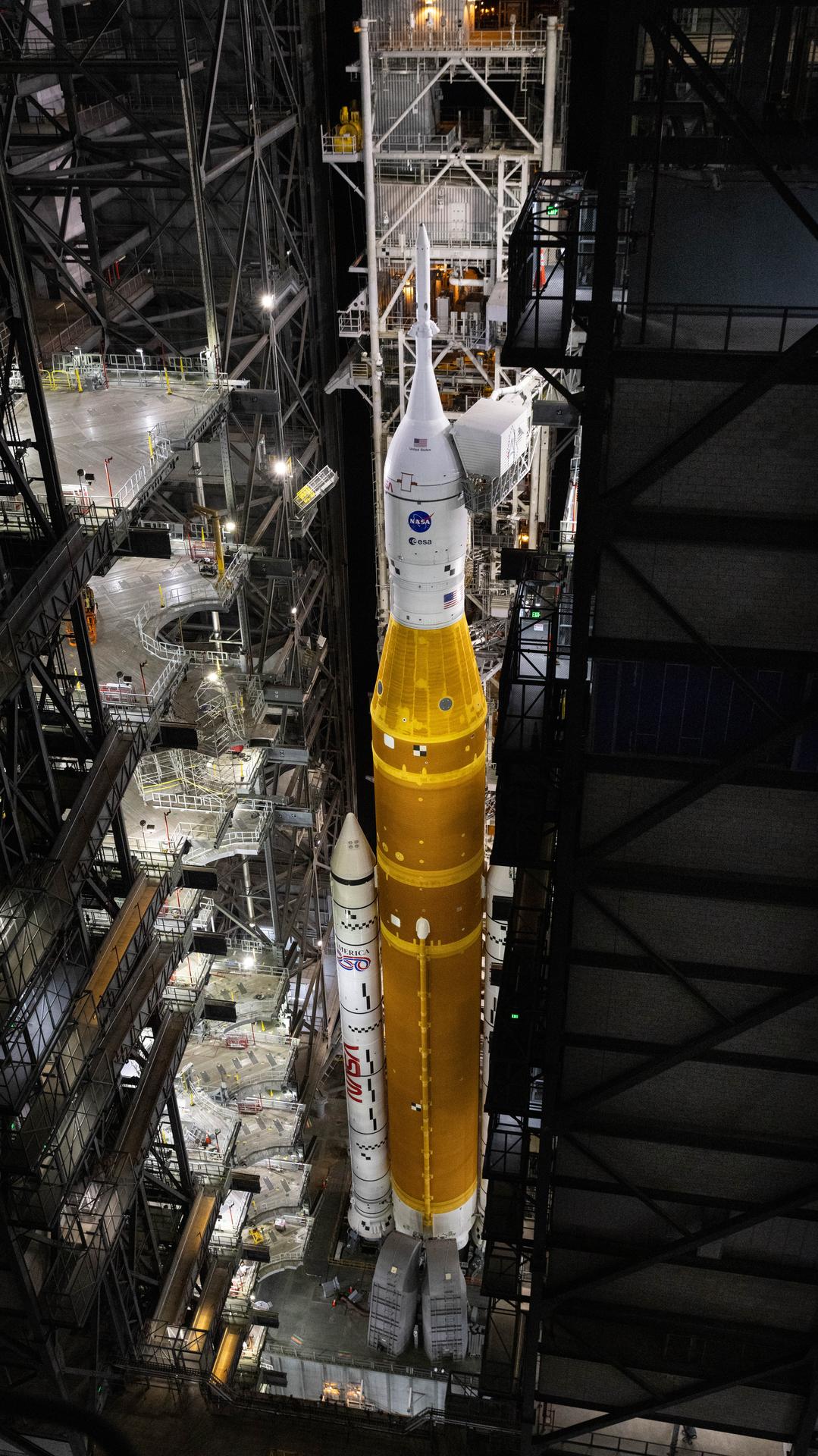
While much of the aerospace world focuses on lunar ambitions and launch cadences, a quieter but strategically significant development emerged from Ottawa: Canada and Japan have signed an Equipment and Technology Transfer Agreement (ETTA), paving the way for deeper collaboration in defence—and potentially space. Announced by Defence Minister David J. McGuinty on January 27 and detailed in a SpaceQ report on February 27, the agreement enables the transfer of defence-related technology, equipment, and intellectual property between the two nations.
Although still in its early stages, the ETTA could have meaningful implications for Canada’s space ambitions. The Canadian Armed Forces’ 3 Canadian Space Division, led by Brig. Gen. Chris Horner, is actively developing space domain awareness capabilities and seeking to reduce reliance on a single ally—namely, the United States. With Prime Minister Mark Carney’s government investing $182.6 million in sovereign launch infrastructure, access to Japanese sensor technology, satellite components, or even launch support could prove valuable.
Japan, for its part, is re-evaluating its defence posture under Prime Minister Sanae Takaichi, relaxing long-standing export restrictions and preparing for a more assertive role in regional security. Given rising threats in the Indo-Pacific—including counterspace capabilities from China and North Korea—both nations see space as a critical domain for future deterrence. As one DND spokesperson noted, this partnership is “forward-looking,” and while space-specific projects haven’t been confirmed, the foundation for future collaboration is now in place.
Citations
- “Flight 12: Ship 39 rolls out to Masseys to begin testing” – https://www.nasaspaceflight.com/2026/02/ship-39-masseys-testing/
- “NASA Adds Mission to Artemis Lunar Program, Updates Architecture” – https://www.nasa.gov/news-release/nasa-adds-mission-to-artemis-lunar-program-updates-architecture/
- “New alliances: The space defence implications of the Canada-Japan ETTA” – https://spaceq.ca/new-alliances-the-space-defence-implications-of-the-canada-japan-etta/
Upcoming Launches
That’s Not A Knife (DART AE)
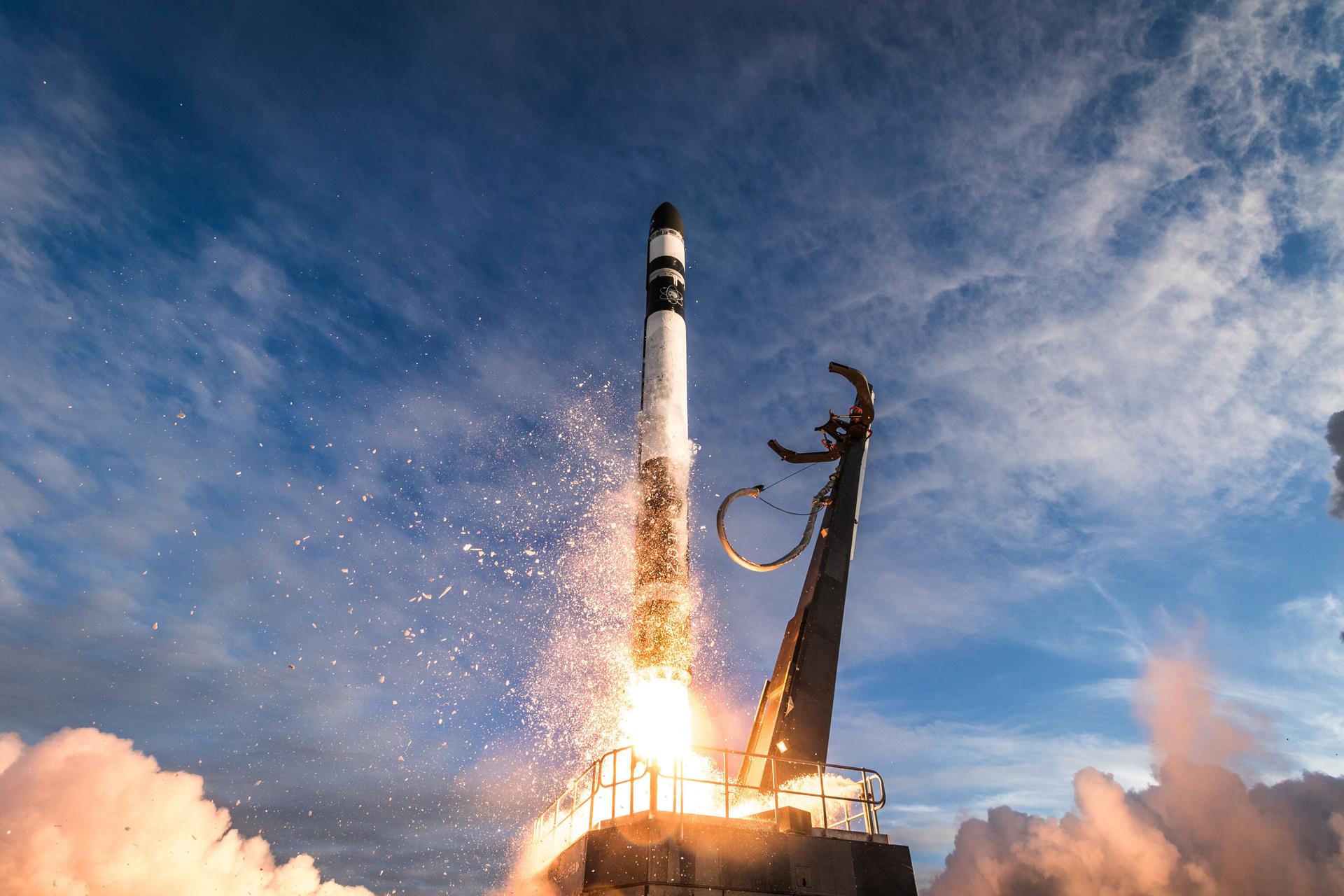
Launch Provider: Rocket Lab – Commercial
Launch Date: February 28, 2026
Launch Time: 12:00 AM UTC
Vehicle: Electron
Brief: Payload is a scramjet-powered hypersonic vehicle developed by by Australian company Hypersonix.
Stairway to Seven
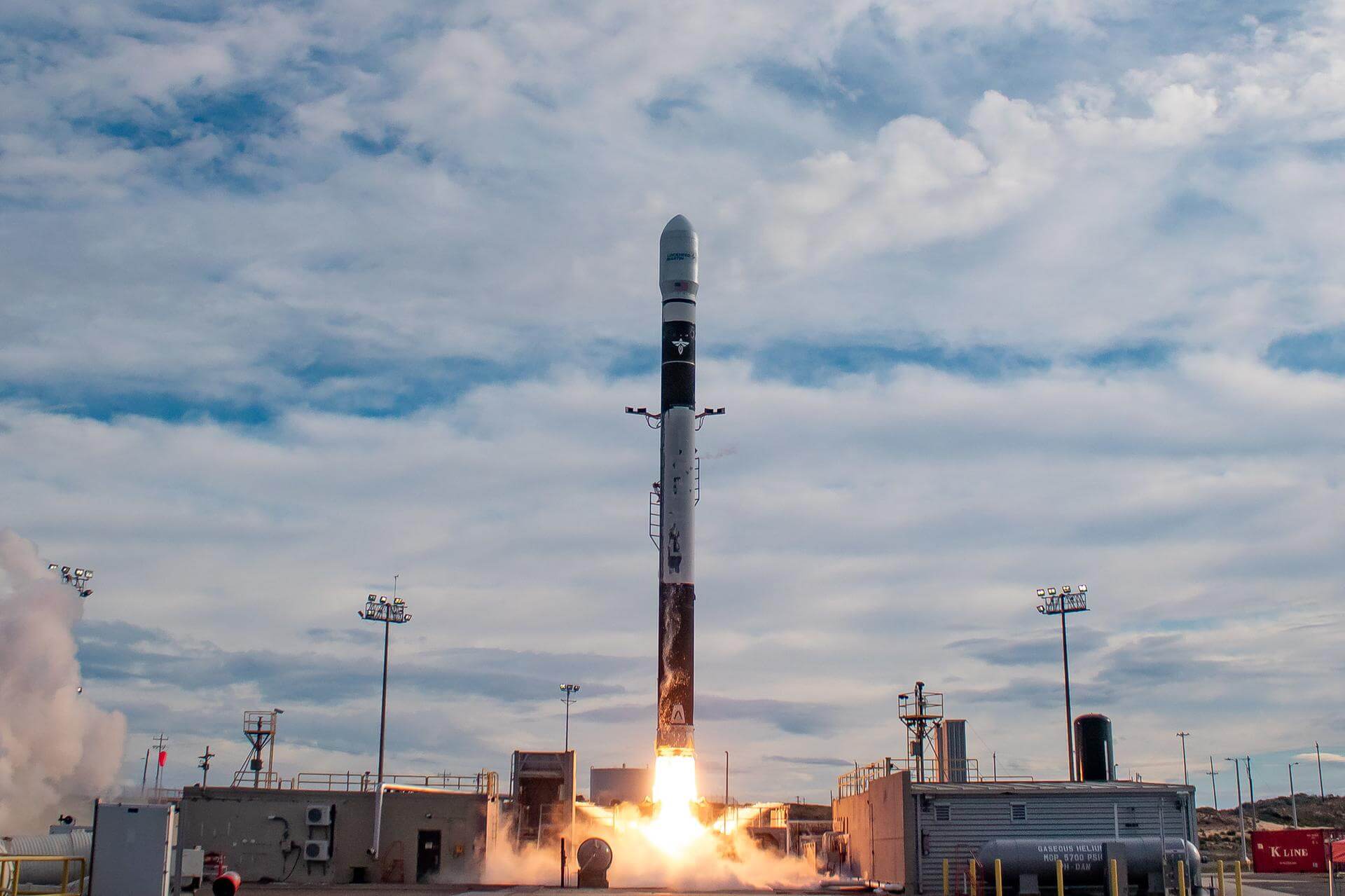
Launch Provider: Firefly Aerospace – Commercial
Launch Date: March 1, 2026
Launch Time: 12:50 AM UTC
Vehicle: Firefly Alpha
Brief: Firefly Alpha’s Flight 7 will be a test flight and return-To-Flight for the launch vehicle after its April 2025 launch failure. It will test and validate key systems ahead of Firefly’s Block II configuration upgrade on Flight 8 that’s designed to enhance reliability and manufacturability across the vehicle.
Flight 7 will be the last flown in Alpha’s current configuration and will test multiple Block II subsystems, including the in-house avionics and thermal improvements, to gain flight heritage and validate lessons learned ahead of the full configuration upgrade on Flight 8.
Flight 3
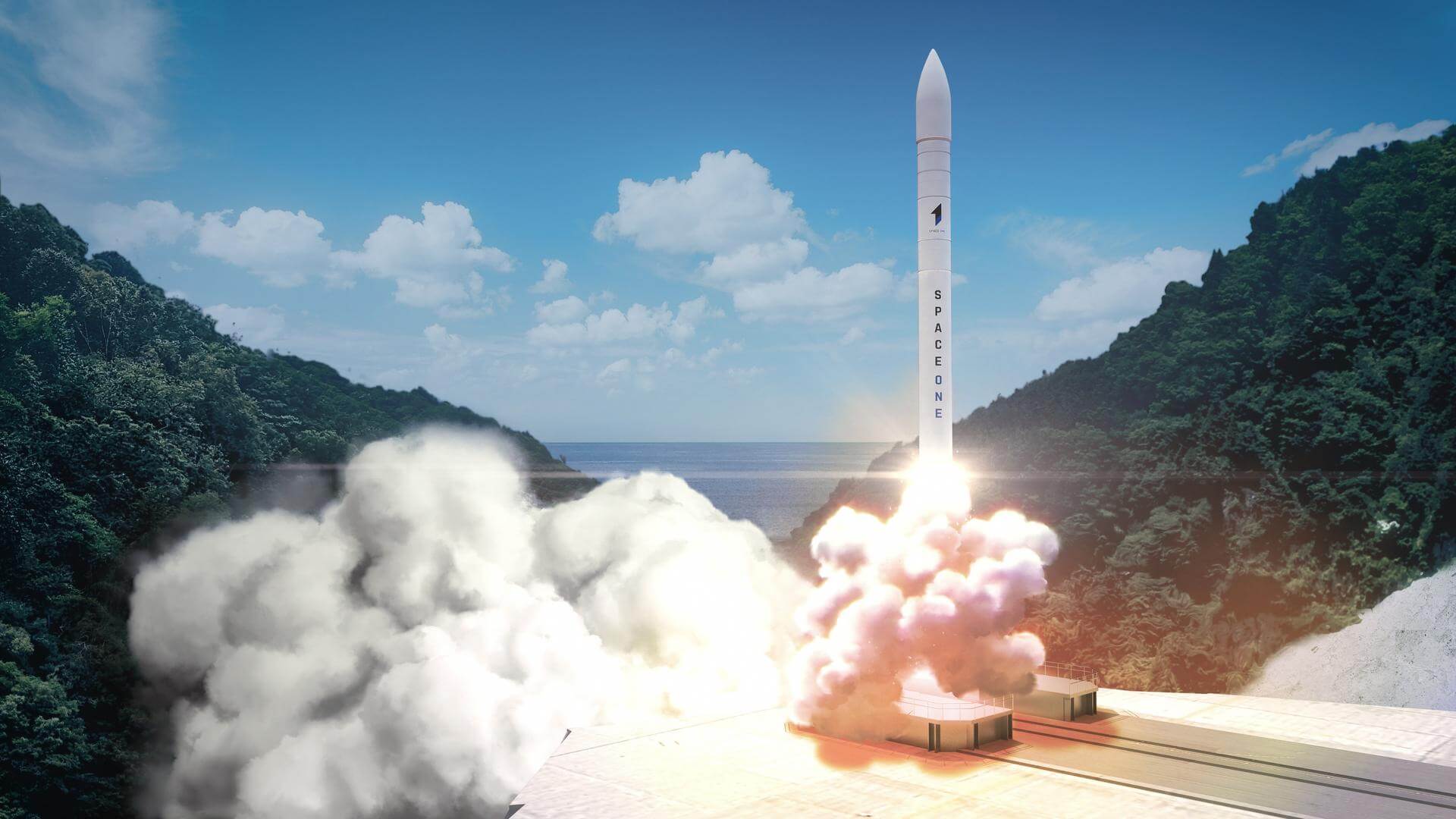
Launch Provider: Space One – Commercial
Launch Date: March 1, 2026
Launch Time: 2:00 AM UTC
Vehicle: KAIROS
Brief: Third flight of the KAIROS launch vehicle.
5 satellites will be on board:
* TATARA-1R
* SC-Sat1a
* HErO
* AETS-1
* Nutsat-3 (TASA/Taiwan)
Starlink Group 17-23
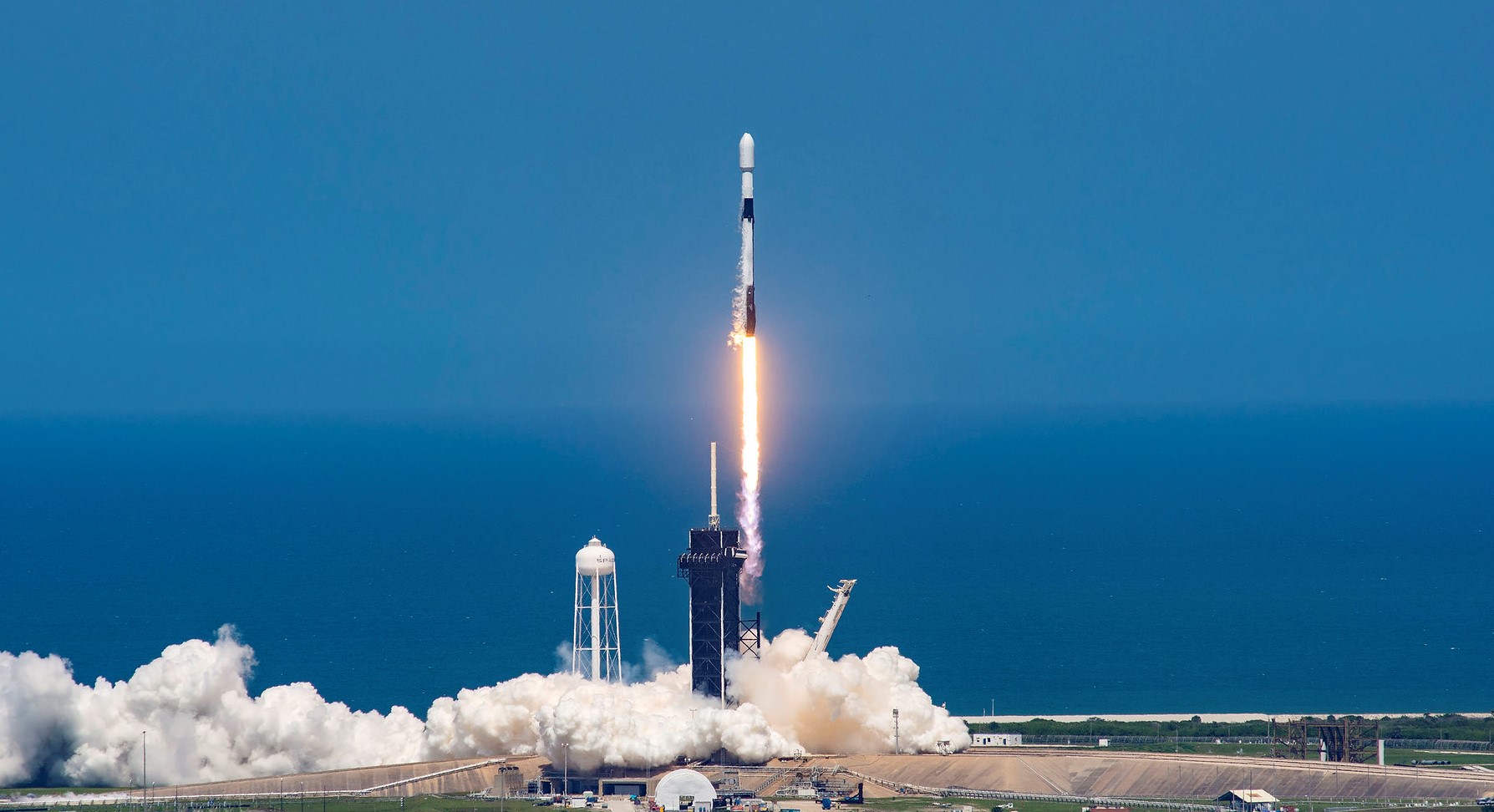
Launch Provider: SpaceX – Commercial
Launch Date: March 1, 2026
Launch Time: 8:00 AM UTC
Vehicle: Falcon 9
Brief: A batch of 25 satellites for the Starlink mega-constellation – SpaceX’s project for space-based Internet communication system.
Starlink Group 10-41
Launch Provider: SpaceX – Commercial
Launch Date: March 2, 2026
Launch Time: 12:07 AM UTC
Vehicle: Falcon 9
Brief: A batch of 29 satellites for the Starlink mega-constellation – SpaceX’s project for space-based Internet communication system.
