
The Daily Broadcast: Orbit, Innovation, and Coordination: A Busy Day in the Life of Space
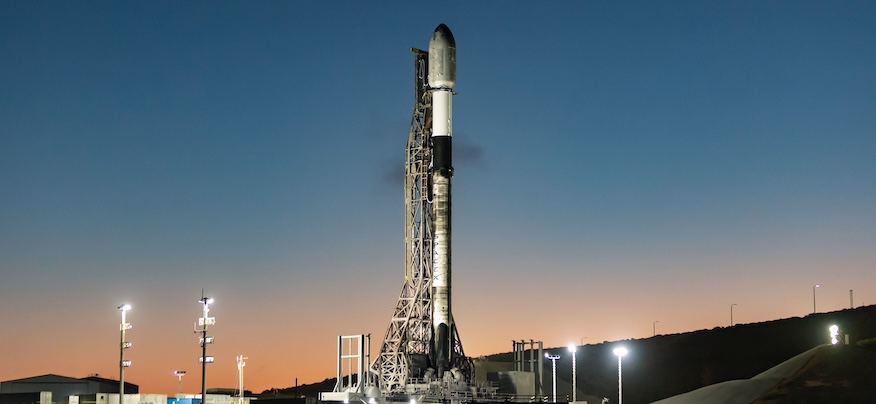
Starlink Fleet Approaches 500 for 2026 with Wednesday Launch
SpaceX is scheduled to launch its 500th Starlink satellite of 2026 this morning from Vandenberg Space Force Base in California. The Starlink 17-26 mission, set for liftoff at 6:17:49 a.m. PST (9:17:49 a.m. EST / 1417:49 UTC), will deploy 25 additional broadband satellites into low Earth orbit. This flight will bring the total number of Starlink satellites launched this year to 512, as the constellation edges closer to 10,000 operational spacecraft.
The mission will use Falcon 9 booster B1093, which is making its 11th flight—having previously supported two missions for the Space Development Agency and eight Starlink launches. About eight minutes after liftoff, the booster is expected to land on the drone ship Of Course I Still Love You in the Pacific Ocean. If successful, this will mark the 180th landing on that vessel and SpaceX’s 577th overall booster recovery.
With Starlink continuing its rapid deployment cadence, the mission underscores the growing complexity of managing orbital traffic—a challenge echoed in recent international coordination efforts (more on that below). For now, all eyes are on Vandenberg as another batch of internet-beaming satellites prepares to join the swarm.
Canada Seeks Industry Input on Next-Gen Space Tech Priorities
The Canadian Space Agency (CSA) is inviting feedback from domestic industry on its upcoming Space Technology Development Program (STDP) opportunity—a move that highlights both ambition and constraint in Canada’s space innovation landscape. An official Request for Information (RFI), titled Enabling Technologies for Future Missions, was issued on February 19 and remains open for submissions until March 12, 2026.
The draft list of priority technologies includes four key areas: a lightweight athermal reflecting telescope for CubeSats, readout electronics for astronomical low-light imagers, technologies supporting a Terrestrial Snow Mass Mission, and a Fourier Transform Spectrometer for atmospheric monitoring. Budgets range from $1.0 to $2.0 million per project, with timelines of 12 to 24 months and targets of Technology Readiness Levels 4 or 5.
Notably, the CSA’s annual STDP funding—averaging just $17.1 million over the past five years—falls far short of recommendations made in the 2012 Emerson Report, which advised a $40 million annual budget (inflation-adjusted to roughly $52 million today). While Canada has committed significant funds to lunar exploration and launch infrastructure, this RFI offers a rare window for smaller firms to help shape the next wave of homegrown space tech. For Canadian innovators, it’s a chance to ensure their expertise isn’t left behind as the global space economy accelerates.

Orbital Crowding Demands Better Coordination—and Maybe APIs
As constellations like Starlink grow, a quieter but critical issue is coming to the fore: the difficulty of contacting other satellite operators to avoid collisions. At the 12th Annual Space Traffic Conference last week, UN officials revealed they’ve been called in twice in the past 14 months to mediate potential conjunctions—once between U.S. and Chinese satellites, and another involving a Malaysian satellite and one from North Korea.
“The biggest challenge may be coordination,” noted a recent SpaceNews report. While major operators maintain contact lists, many smaller or state-run entities—particularly from countries like China and North Korea—lack publicly available points of contact. In one anecdote, an Italian operator struggled to reach the team behind a non-maneuverable U.S. cubesat, AeroCube 7, eventually routing the message through Aerospace Corporation’s UK office before it reached the right person at a conference in Texas.
Experts now argue that human-mediated coordination is no longer scalable. “We really need to change the conversation from phone numbers and email addresses to, what is your API endpoint for coordination,” said Araz Feyzi of Kayhan Space. As SpaceX prepares to add more satellites today, the urgency for automated, interoperable space traffic management has never been clearer—especially as LEO becomes increasingly congested.

Citations
- “Live coverage: SpaceX to launch 500th Starlink satellite in 2026 during Wednesday Falcon 9 flight” – https://spaceflightnow.com/2026/02/25/live-coverage-spacex-to-launch-500th-starlink-satellite-in-2026-during-wednesday-falcon-9-flight/
- “Industry input wanted for next Canadian Space Agency priority technologies” – https://spaceq.ca/industry-input-wanted-for-next-canadian-space-agency-priority-technologies/
- “In space traffic coordination, the biggest challenge may be coordination” – https://spacenews.com/in-space-traffic-coordination-the-biggest-challenge-may-be-coordination/
Upcoming Launches
Starlink Group 6-110

Launch Provider: SpaceX – Commercial
Launch Date: February 24, 2026
Launch Time: 11:04 PM UTC
Vehicle: Falcon 9
Brief: A batch of 29 satellites for the Starlink mega-constellation – SpaceX’s project for space-based Internet communication system.
Starlink Group 17-26
Launch Provider: SpaceX – Commercial
Launch Date: February 25, 2026
Launch Time: 2:17 PM UTC
Vehicle: Falcon 9
Brief: A batch of 25 satellites for the Starlink mega-constellation – SpaceX’s project for space-based Internet communication system.
That’s Not A Knife (DART AE)
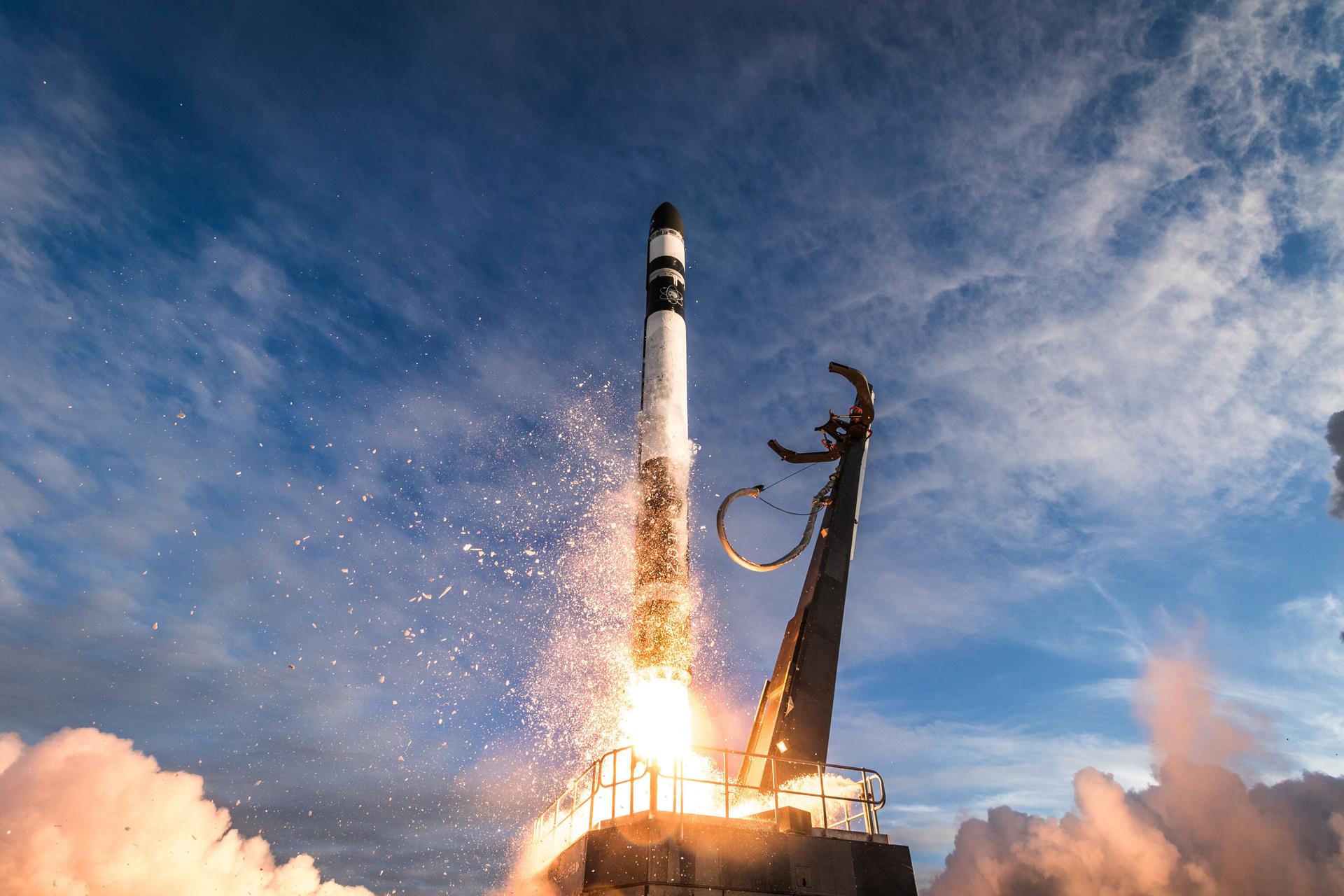
Launch Provider: Rocket Lab – Commercial
Launch Date: February 25, 2026
Launch Time: 9:00 PM UTC
Vehicle: Electron
Brief: Payload is a scramjet-powered hypersonic vehicle developed by by Australian company Hypersonix.
Starlink Group 6-108
Launch Provider: SpaceX – Commercial
Launch Date: February 27, 2026
Launch Time: 9:52 AM UTC
Vehicle: Falcon 9
Brief: A batch of 29 satellites for the Starlink mega-constellation – SpaceX’s project for space-based Internet communication system.
Unknown Payload
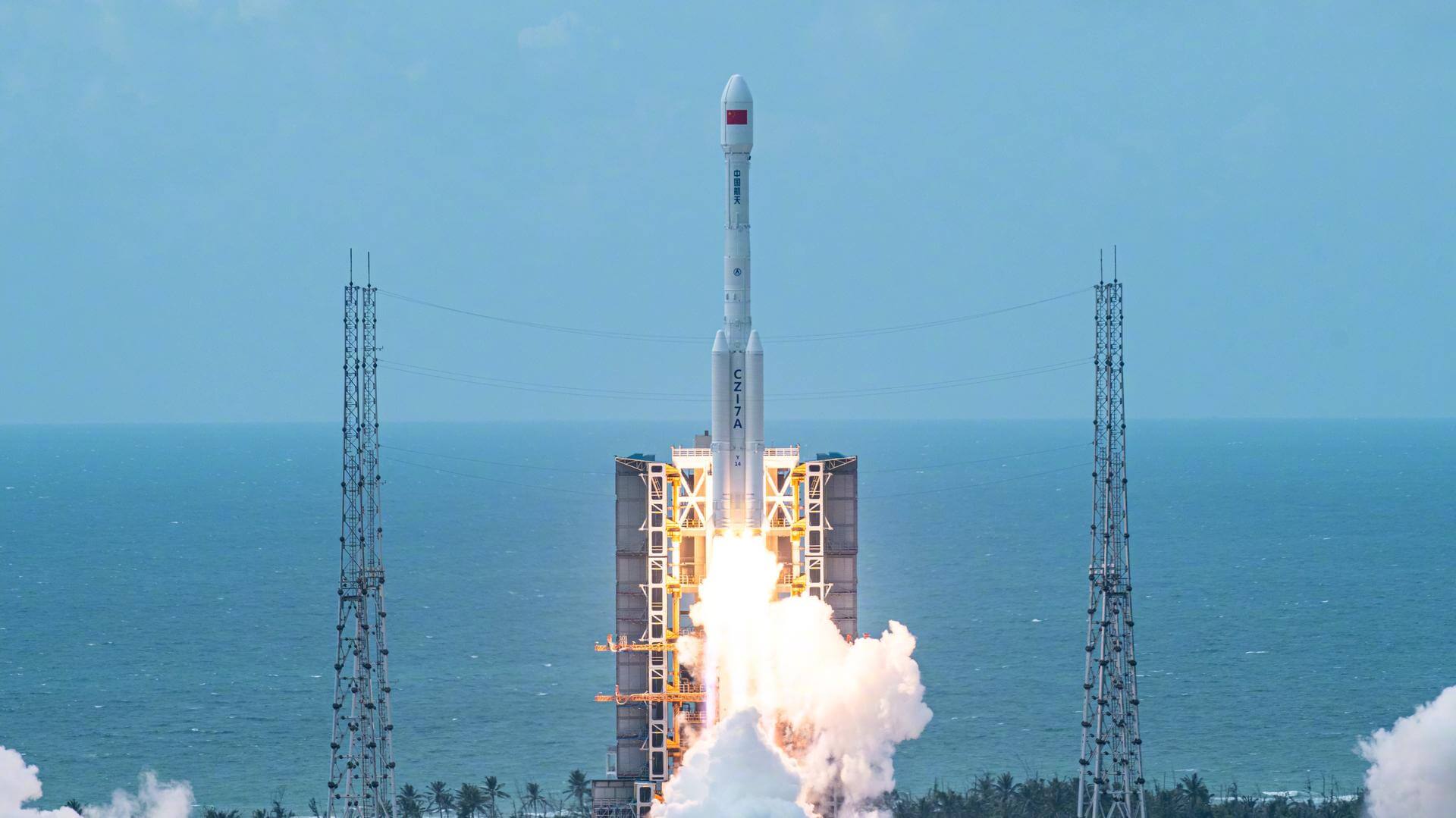
Launch Provider: China Aerospace Science and Technology Corporation – Government
Launch Date: February 28, 2026
Launch Time: 12:00 AM UTC
Vehicle: Long March 7A
Brief: Details TBD.
📽️ No Livestream scheduled yet
