
The Daily Broadcast: From Quiet Collapses to Cosmic Mining: Aerospace Advances Beyond Explosions

Stellar Silence: Infrared Data Reveals a Black Hole’s Quiet Birth
Not all massive stars go out with a bang. In a compelling discovery published in the journal Science, astronomers have used nearly two decades of infrared and optical data to reconstruct the uneventful demise of a star in the Andromeda galaxy—2.5 million light years from Earth. Catalogued as M31-2014-DS1, this star underwent what’s known as a “failed supernova”: instead of a brilliant explosion, it simply faded from view after expelling a thick shell of gas and dust in 2014. By 2023, it had dimmed by more than a factor of 10 in visible light, effectively vanishing, while infrared emissions from the lingering dust cloud told the rest of the story.
The team relied heavily on archival data from NASA’s Near-Earth Object Wide-field Infrared Survey Explorer (NEOWISE), alongside observations from other space- and ground-based telescopes spanning 2005 to 2023. The evidence strongly suggests the star’s core collapsed directly into a black hole, with most of its mass falling inward rather than being blasted outward. This rare observational case offers one of the clearest confirmations yet of a long-theorized stellar death pathway. Researchers now suspect such quiet collapses may be more common than previously thought—meaning many black holes in nearby galaxies may have formed without the cosmic fireworks we typically associate with stellar deaths.
Microbes as Cosmic Miners: Fungi Extract Precious Metals in Microgravity
Aboard the International Space Station, humble fungi have proven their worth as potential partners in deep-space exploration. In a study published January 30 in npj Microgravity, researchers from Cornell University and the University of Edinburgh revealed that the fungus Penicillium simplicissimum efficiently extracted palladium, platinum, and other valuable metals from an L-chondrite meteorite in microgravity. NASA astronaut Michael Scott Hopkins carried out the experiment as part of the BioAsteroid project, which also tested the bacterium Sphingomonas desiccabilis.

Surprisingly, the microbes maintained consistent metal-extraction performance in space—a contrast to nonbiological leaching methods, which proved less effective in microgravity. The fungus, in particular, ramped up production of carboxylic acids, molecules that help release metals from rock. This suggests microbes could play a vital role in future in-situ resource utilization, reducing our reliance on Earth-supplied materials during long-duration missions. As lead author Rosa Santomartino noted, the results are complex and species-dependent, but they underscore a key insight: “In space, the microbe doesn’t improve extraction—it keeps it steady, regardless of gravity.” Beyond spaceflight, these findings could also inspire greener, more efficient biomining techniques on Earth.
China Recovers Long March 10 Booster After Successful Test Flight
China took a significant step toward reusable launch capability this week with the successful maritime recovery of the first-stage booster from its new Long March 10 rocket. Following a test flight on Wednesday, February 11, 2026, the booster performed a controlled descent using grid fins and engine thrust before splashing down gently in a preselected zone in the South China Sea. On Friday, February 13, a recovery vessel retrieved the stage—marking China’s first-ever ocean recovery of a major orbital-class rocket component.

The test integrated the booster with the Mengzhou crewed spacecraft, a key element in China’s plan to land astronauts on the Moon by 2030. Standing 92.5 metres tall in its lunar configuration, the Long March 10 is designed to deliver at least 27 metric tons to a lunar transfer orbit. A shorter variant—67 metres tall—will support missions to the Tiangong space station and is also intended to feature a reusable first stage. While Chinese officials have not yet disclosed plans for refurbishing or re-flying the recovered hardware, the operation brings China closer to matching U.S. capabilities in launch vehicle reusability, currently dominated by SpaceX. This milestone underscores Beijing’s accelerating ambitions in human spaceflight and its determination to close the gap in launch efficiency and cost.
Citations
- “Infrared archive reveals quiet birth of new black hole in Andromeda” – https://www.spacedaily.com/reports/Infrared_archive_reveals_quiet_birth_of_new_black_hole_in_Andromeda_999.html
- “Microbes harvest metals from meteorites aboard space station” – https://www.spacedaily.com/reports/Microbes_harvest_metals_from_meteorites_aboard_space_station_999.html
- “China retrieves Long March 10 booster from South China Sea after test flight” – https://www.spacedaily.com/reports/China_retrieves_Long_March_10_booster_from_South_China_Sea_after_test_flight_999.html
Upcoming Launches
Starlink Group 6-103
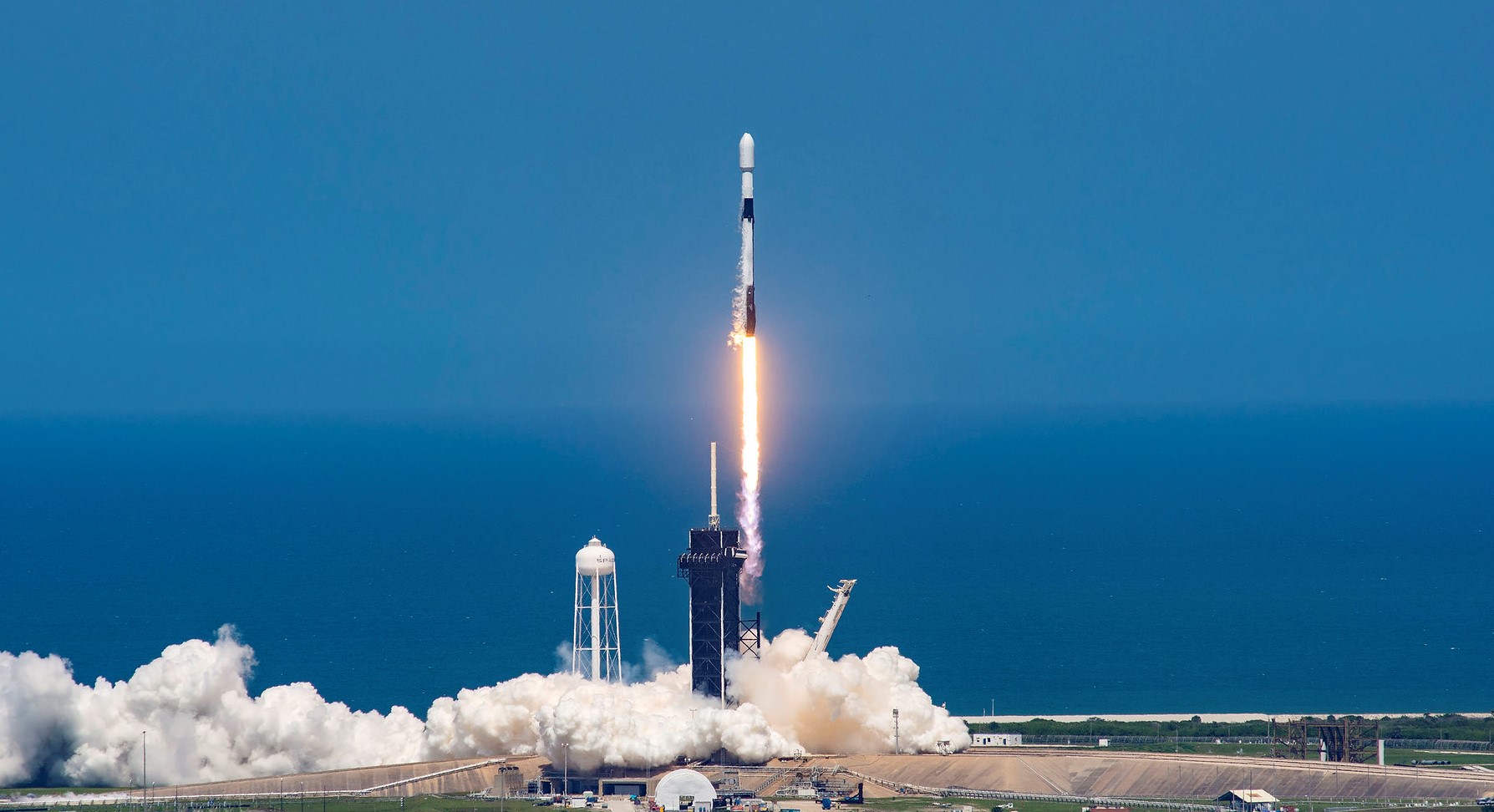
Launch Provider: SpaceX – Commercial
Launch Date: February 16, 2026
Launch Time: 7:59 AM UTC
Vehicle: Falcon 9
Brief: A batch of 29 satellites for the Starlink mega-constellation – SpaceX’s project for space-based Internet communication system.
Starlink Group 17-25
Launch Provider: SpaceX – Commercial
Launch Date: February 18, 2026
Launch Time: 8:00 AM UTC
Vehicle: Falcon 9
Brief: A batch of 25 satellites for the Starlink mega-constellation – SpaceX’s project for space-based Internet communication system.
Starlink Group 10-36
Launch Provider: SpaceX – Commercial
Launch Date: February 18, 2026
Launch Time: 10:00 PM UTC
Vehicle: Falcon 9
Brief: A batch of 29 satellites for the Starlink mega-constellation – SpaceX’s project for space-based Internet communication system.
First Starlink launch to feature a Falcon 9 booster landing within The Bahamas waters operationally, after the trajectory was tested during launch of Starlink Group 10-12 in February 2025.
Stairway to Seven
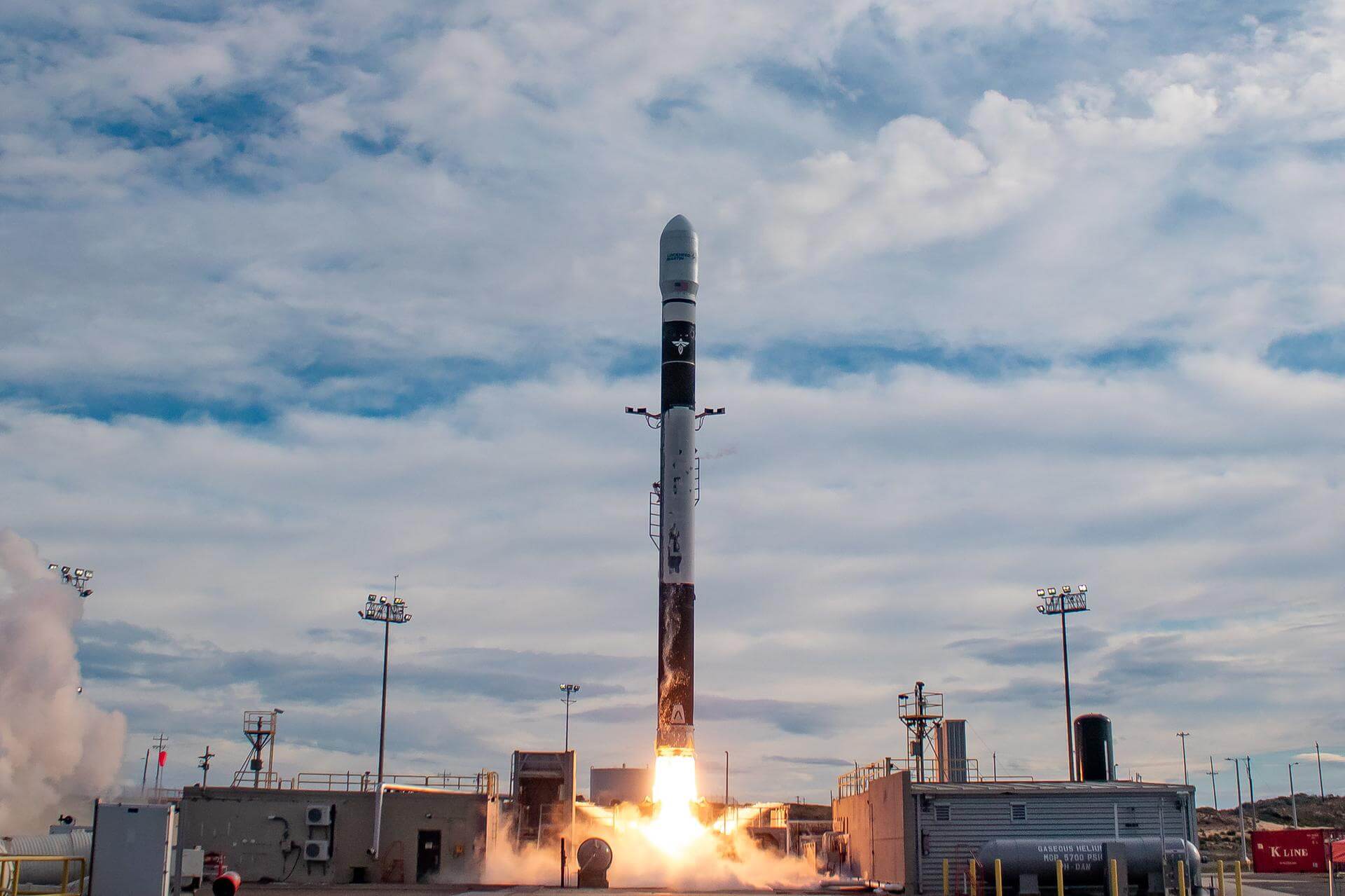
Launch Provider: Firefly Aerospace – Commercial
Launch Date: February 21, 2026
Launch Time: 12:20 AM UTC
Vehicle: Firefly Alpha
Brief: Firefly Alpha’s Flight 7 will be a test flight and return-To-Flight for the launch vehicle after its April 2025 launch failure. It will test and validate key systems ahead of Firefly’s Block II configuration upgrade on Flight 8 that’s designed to enhance reliability and manufacturability across the vehicle.
Flight 7 will be the last flown in Alpha’s current configuration and will test multiple Block II subsystems, including the in-house avionics and thermal improvements, to gain flight heritage and validate lessons learned ahead of the full configuration upgrade on Flight 8.
📽️ No Livestream scheduled yet
Starlink Group 17-26
Launch Provider: SpaceX – Commercial
Launch Date: February 21, 2026
Launch Time: 8:00 PM UTC
Vehicle: Falcon 9
Brief: A batch of 25 satellites for the Starlink mega-constellation – SpaceX’s project for space-based Internet communication system.
