
Canada From Orbit: Canada’s Gateway to Orbit Clears Critical Milestones
Artemis II and the Canadian Presence Beyond Low Earth Orbit
As February unfolds, Canada’s role in human space exploration is taking tangible shape—not just in orbit, but on the cusp of returning to the Moon. The Canadian Space Agency (CSA) continues to spotlight the historic Artemis II mission, which will carry CSA astronaut Jeremy Hansen around the lunar far side, making him the first Canadian to venture beyond low Earth orbit.
Though the mission’s launch date has shifted slightly, with NASA now targeting no earlier than March 6, 2026, preparations are accelerating. The revised timeline follows the successful completion of the Artemis II wet dress rehearsal on February 2, a critical test simulating launch day procedures without the crew aboard. As a result, the Artemis II crew—including Hansen—has been released from quarantine, allowing them to resume public engagements and training.
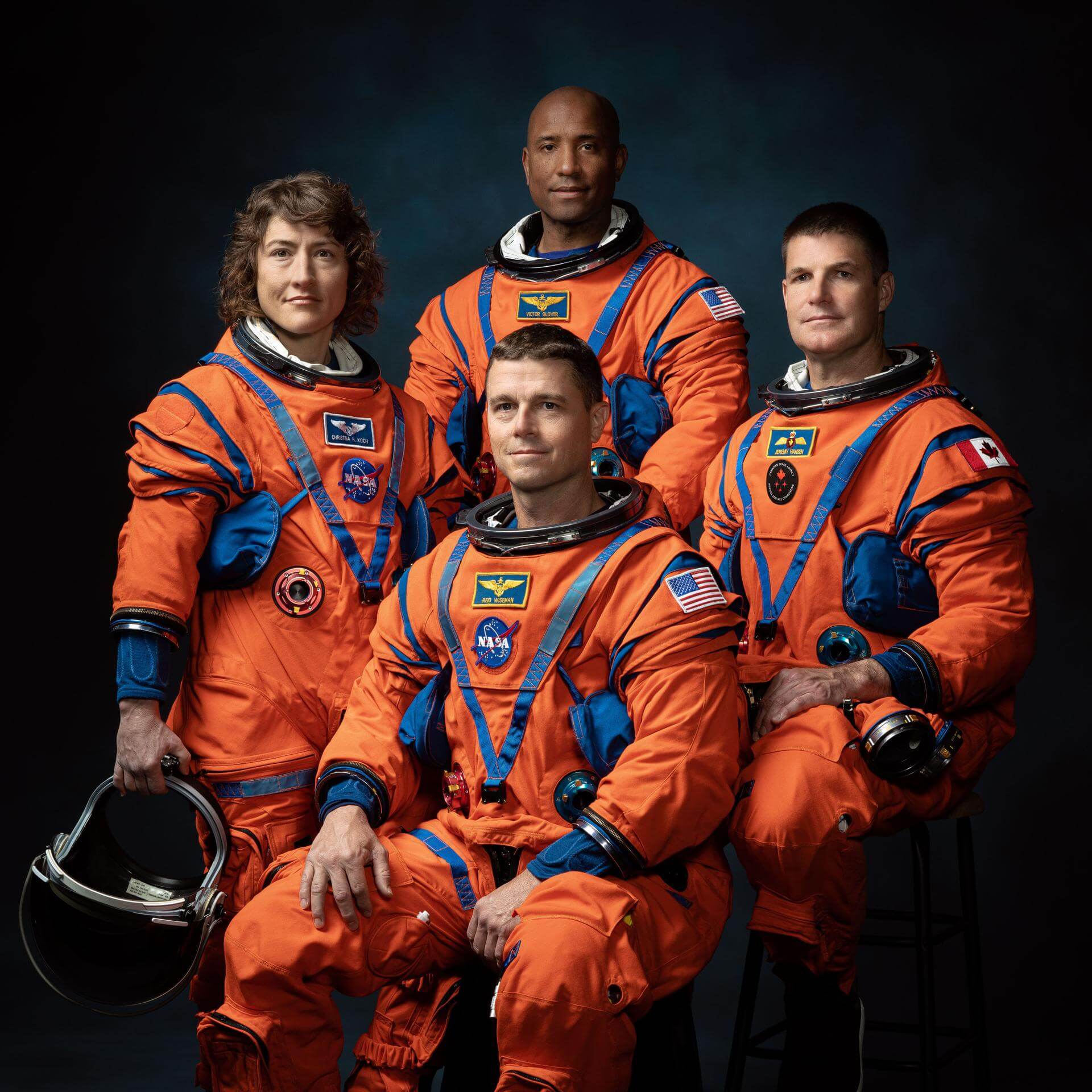
Hansen has been actively demystifying the mission for Canadians through the CSA’s engaging Destination: Moon vlog series, where he breaks down everything from spacecraft systems to radiation shielding. Meanwhile, the CSA marked the February Full Moon—traditionally known as the Snow Moon—with a gentle reminder that “the Moon is about to get some company,” underscoring the nearness of Canada’s lunar debut.
On the ground, the Artemis II Space Launch System (SLS) rocket was rolled out to Launch Complex 39B at Kennedy Space Center in early February, a 12-hour procession that signalled the mission’s transition from assembly to active launch readiness. The rollout was accompanied by a media event featuring the full crew, including Hansen, who fielded questions about their training and the significance of the mission for Canada and international space collaboration.
While Artemis II captures the spotlight, the CSA also took a moment to celebrate one of its veteran astronauts. On January 6, the agency wished David Saint-Jacques a happy birthday, highlighting his enduring contributions to Canadian space science and inspiration for future generations. Saint-Jacques, who spent over 200 days aboard the International Space Station (ISS) during Expedition 57/58, remains a key figure in Canada’s astronaut corps and public outreach efforts.
Though the ISS continues to operate smoothly, a brief medical concern involving a single crew member led NASA to postpone a U.S. spacewalk originally scheduled for January 8. The matter was resolved without incident, and normal operations resumed—another reminder of the complex choreography required to keep humans safe in space. Canadians may not be aboard the station right now, but the CSA’s robotics expertise, particularly through the Canadarm2 and Dextre, remains integral to station maintenance and logistics.
Atlantic Spaceport Complex Clears Environmental Hurdle
Canada’s ambition to launch rockets from its own soil has taken a major leap forward. On January 6, 2026, NordSpace Corp. announced that its Atlantic Spaceport Complex (ASX) in Newfoundland and Labrador has been released from the provincial environmental assessment process—a crucial regulatory milestone clearing the path for Canada’s first commercial orbital launch site.

The decision, confirmed by the Newfoundland and Labrador Minister of Environment, Conservation and Climate Change on December 19, 2025, follows more than two years of technical studies and consultations with Indigenous communities, local stakeholders, and federal agencies. The ASX, located near St. Lawrence on the province’s southern coast, now proceeds to fulfilling the Minister’s conditions while advancing construction.
Strategically positioned at 46°N, the spaceport offers launch inclinations from 44° to 105°, enabling access to polar, sun-synchronous, and even select equatorial orbits. With over 5 km of safety distance from the nearest town and infrastructure to support up to 20 annual launches, ASX is designed to accommodate NordSpace’s family of launch vehicles: Tundra (500 kg to LEO), Tundra+ (1,100 kg), and the future reusable Titan (5,000 kg).
Recent federal investments—including $182.6 million for sovereign space launch and $357.7 million through the Regional Defence Investment Initiative—underscore the national priority of securing independent access to space. NordSpace is also deepening its technical capabilities, recently launching an in-house vibration testing facility and partnering with Germany’s Fraunhofer ILT on advanced rocket engine manufacturing using multi-material additive techniques.
Maritime Launch Services Strengthens Leadership Team
While NordSpace advances in Newfoundland, Maritime Launch Services (MLS) in Nova Scotia is bolstering its leadership ahead of its own orbital ambitions. On January 5, the company announced the appointment of Melissa Quinn as Vice President of Spaceport Operations.

Quinn brings extensive experience in licensed spaceport infrastructure and team development, which MLS says is “instrumental as we prepare for historic orbital missions from Nova Scotia.” Her hiring signals renewed momentum for the Canso spaceport, which aims to become Canada’s first licensed orbital launch site using Ukrainian Cyclone-4M rockets.
Although MLS has faced delays and funding challenges in recent years, Quinn’s appointment suggests a strategic refocusing on operational readiness. With federal support for sovereign launch growing and competition heating up between Atlantic provinces, MLS’s ability to execute on its vision will be closely watched in 2026.
Canadian News From Orbit
While headlines focus on launch sites and Moon missions, Canadian space activity continues to thrive in orbit and in labs across the country. Though no new CSA articles were published this month, the agency’s social media presence has been active—not just in English and French, but occasionally in Japanese and other languages, reflecting Canada’s growing international collaborations in space science and public engagement.
On the ISS front, January saw several key events, including the Expedition 74 Change of Command Ceremony, where NASA astronaut Michael Fincke handed over command to Roscosmos cosmonaut Sergey Kud-Sverchkov. Though no Canadians were directly involved, the station remains a cornerstone of Canada’s space programme, with Canadarm2 and Dextre performing routine maintenance and cargo operations.
Meanwhile, the SpaceX Crew-11 mission concluded successfully in early January, with four astronauts undocking from the ISS and splashing down in the Pacific Ocean after a six-month stay. While the crew was entirely American, the mission highlights the routine cadence of commercial crew operations that Canada hopes to join in future Artemis-era flights.
Back on Earth, NordSpace’s participation in international forums—such as the NATO STARLIFT meeting in the Netherlands and the Global Spaceport Alliance Summit in Orlando—demonstrates Canada’s emerging role in allied space mobility discussions. The company’s presence at these events marks a “first for Canada,” according to its leadership, and signals that Canadian space strategy is increasingly intertwined with global security and logistics networks.
As the year progresses, all eyes will be on Atlantic Canada, where two competing visions for sovereign launch are taking shape. Whether from Newfoundland or Nova Scotia, Canada’s first orbital launch from domestic soil now appears not just possible, but imminent.
Citations
- “Canada’s First Commercial Spaceport clears major hurdle with Environmental Approval” – https://www.nasaspaceflight.com/2026/01/canadas-first-commercial-spaceport-approval/
- “NordSpace’s Atlantic Spaceport Complex (ASX) Receives Landmark Environmental Approval, Prepares for First Orbital Launch” – https://www.einpresswire.com/article/783421051/nordspace-s-atlantic-spaceport-complex-asx-receives-landmark-environmental-approval-prepares-for-first-orbital-launch
- “We are pleased to welcome Melissa Quinn as Vice President, #Spaceport Operations” – https://x.com/maritimelaunch/status/2008188151249199492
- “NASA concluded the Artemis II wet dress rehearsal earlier this morning…” – https://x.com/csa_asc/status/2018663503381594565
- “Happy birthday to CSA astronaut David Saint-Jacques!” – https://x.com/csa_asc/status/2008552688460382346
