
The Daily Broadcast: Constellations, Cash, and Connectivity: The Business of Space Heats Up

Amazon Doubles Down on Falcon 9 for Project Kuiper
Amazon has just added another 10 Falcon 9 launches to its manifest in a move to accelerate the deployment of its Project Kuiper broadband satellite constellation. The deal, announced on February 1, 2026, brings Amazon’s total contracted Falcon 9 launches to 38 with SpaceX—a clear sign that the company is racing to catch up with Starlink’s growing global footprint. Each launch will carry multiple Kuiper satellites into low Earth orbit, with the goal of beginning beta service later this year. While Amazon hasn’t disclosed the financial details, the move underscores the intensifying competition in the satellite internet market. Notably, this surge in commercial demand for reliable, high-frequency launch services continues to favour SpaceX’s proven track record—especially as other launch providers work to scale up their cadence. For Canadian readers, it’s worth remembering that while Project Kuiper is a U.S.-led initiative, the global nature of satellite internet means services like this could eventually complement or compete with domestic connectivity solutions in rural and northern regions where traditional infrastructure remains limited.
CesiumAstro Secures $470 Million to Scale Space-Based Communications
Space hardware startup CesiumAstro has announced a major funding round totaling $470 million—comprising $270 million in equity and $200 million in debt—to scale its operations and expand its suite of active phased array antenna systems. Based in San Francisco, the company specializes in modular, software-defined radio technology that enables satellites to communicate more efficiently and flexibly. This investment, revealed on February 2, 2026, positions CesiumAstro to meet growing demand from both commercial and government clients seeking adaptable communications payloads. In an era where in-orbit reconfigurability is becoming a premium feature, CesiumAstro’s approach could significantly influence how future satellite networks are designed. While the company isn’t Canadian, its technology may find its way onto international missions that include Canadian partners—especially as Canada’s own satellite communications ecosystem, led by companies like MDA and Honeywell, continues to evolve. The funding round also reflects a broader trend: investors are increasingly backing space infrastructure with tangible, scalable hardware, rather than just downstream applications.

Starlink’s Role in Iran Sparks Global Debate on Digital Sovereignty
A recent report from SpaceNews examines how Starlink terminals played a covert role in sustaining internet access during the Iranian government’s nationwide communications blackout in January 2026. As authorities shut down landline and mobile networks to stifle protests, activists reportedly used discreetly installed Starlink dishes to bypass the restrictions—highlighting the growing tension between state control and private satellite networks. This incident has reignited debates about “digital sovereignty,” with some governments now viewing mega-constellations like Starlink not just as commercial ventures but as potential geopolitical tools. While Canada isn’t directly involved in this particular scenario, the conversation is relevant to Canadian policymakers and telecom regulators, especially as the country considers how to manage access to foreign satellite internet services and ensure both national security and digital equity. Starlink is already licensed to operate in Canada and has been used in remote communities, but cases like Iran’s underscore the dual-use nature of such technology—offering connectivity where it’s needed most, while also challenging traditional notions of national control over information flows.

Citations
- “Amazon buys 10 more Falcon 9 launches” – https://spacenews.com/amazon-buys-10-more-falcon-9-launches/
- “CesiumAstro to scale operations with $470 million in equity and debt financing” – https://spacenews.com/cesiumastro-to-scale-operations-with-450-million-in-equity-and-debt-financing/
- “Starlink and the unravelling of digital sovereignty” – https://spacenews.com/starlink-and-the-unravelling-of-digital-sovereignty/
Upcoming Launches
Kosmos (Unknown Payload)
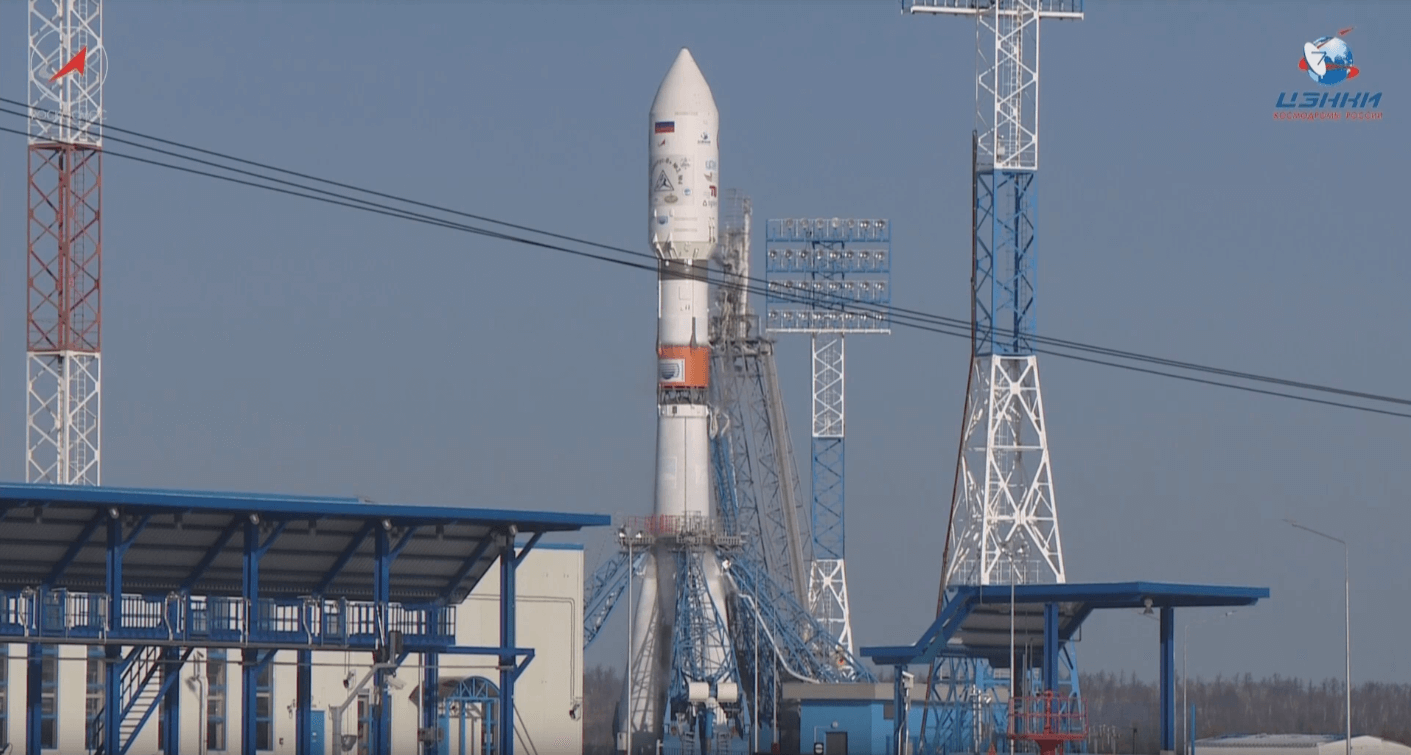
Launch Provider: Russian Space Forces – Government
Launch Date: February 2, 2026
Launch Time: 3:00 PM UTC
Vehicle: Soyuz 2.1a/Fregat-M
Brief: Unknown classified payload(s) for the Russian military.
Starlink Group 17-32

Launch Provider: SpaceX – Commercial
Launch Date: February 2, 2026
Launch Time: 3:38 PM UTC
Vehicle: Falcon 9
Brief: A batch of 25 satellites for the Starlink mega-constellation – SpaceX’s project for space-based Internet communication system.
Starlink Group 6-103
Launch Provider: SpaceX – Commercial
Launch Date: February 3, 2026
Launch Time: 10:12 PM UTC
Vehicle: Falcon 9
Brief: A batch of 29 satellites for the Starlink mega-constellation – SpaceX’s project for space-based Internet communication system.
Starlink Group 17-33
Launch Provider: SpaceX – Commercial
Launch Date: February 6, 2026
Launch Time: 5:05 PM UTC
Vehicle: Falcon 9
Brief: A batch of 25 satellites for the Starlink mega-constellation – SpaceX’s project for space-based Internet communication system.
Starlink Group 6-104
Launch Provider: SpaceX – Commercial
Launch Date: February 7, 2026
Launch Time: 9:41 AM UTC
Vehicle: Falcon 9
Brief: A batch of 29 satellites for the Starlink mega-constellation – SpaceX’s project for space-based Internet communication system.
